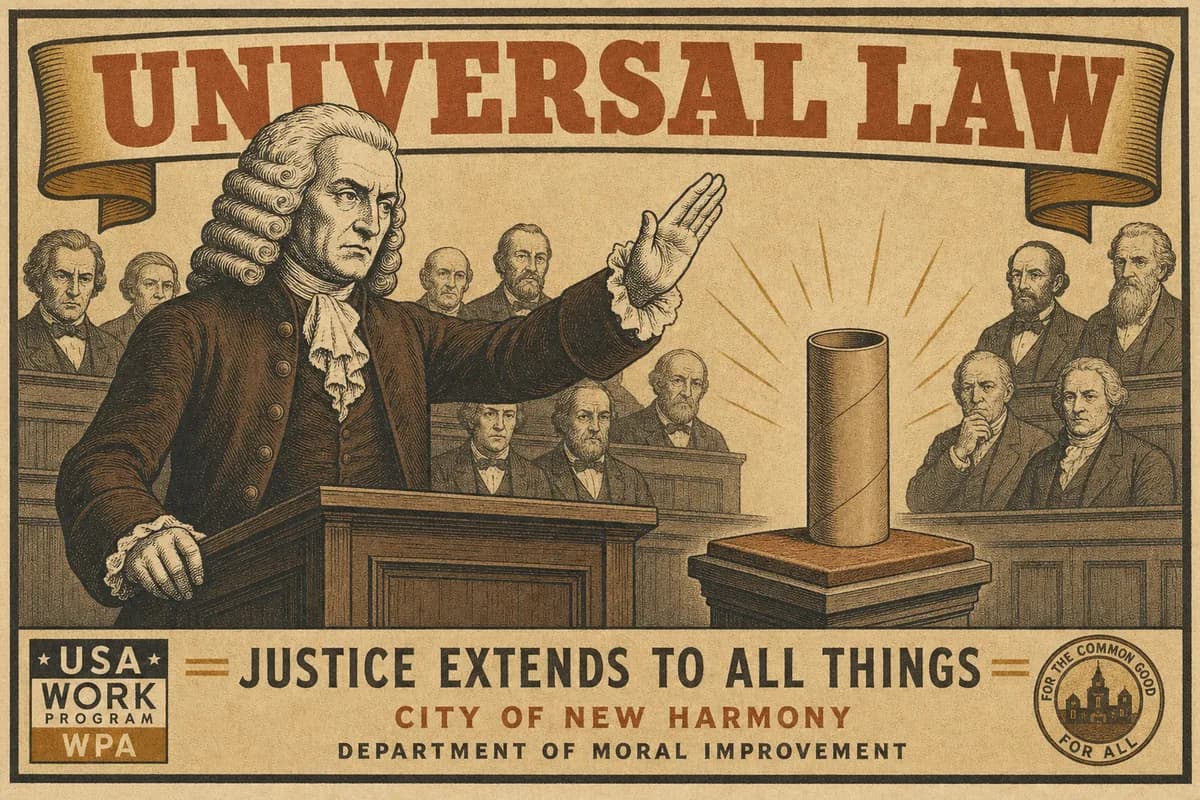
Kant's Categorical Imperative to Replace the Roll
Kant's categorical imperative, applied at last to the person who exhausts the communal roll and departs, yields a perfect duty of replacement.
Serious thought from unserious places.
Kant's categorical imperative, applied at last to the person who exhausts the communal roll and departs, yields a perfect duty of replacement.
Locke's labor theory of property, applied to the occupied stall, resolves at last whether the sitting man owns the enclosure or merely borrows it.
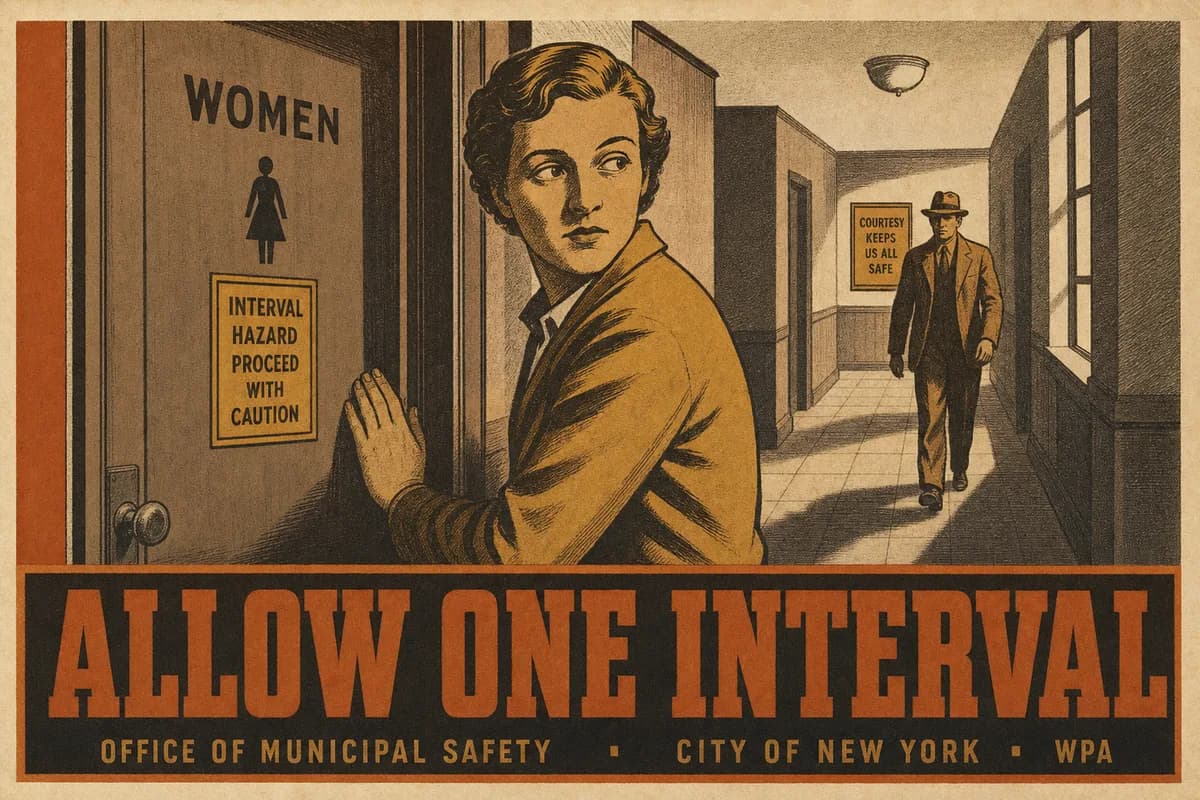
Sartre's account of the objectifying gaze finds its purest case in the single-occupancy restroom, where the line outside becomes the Look made architecture.
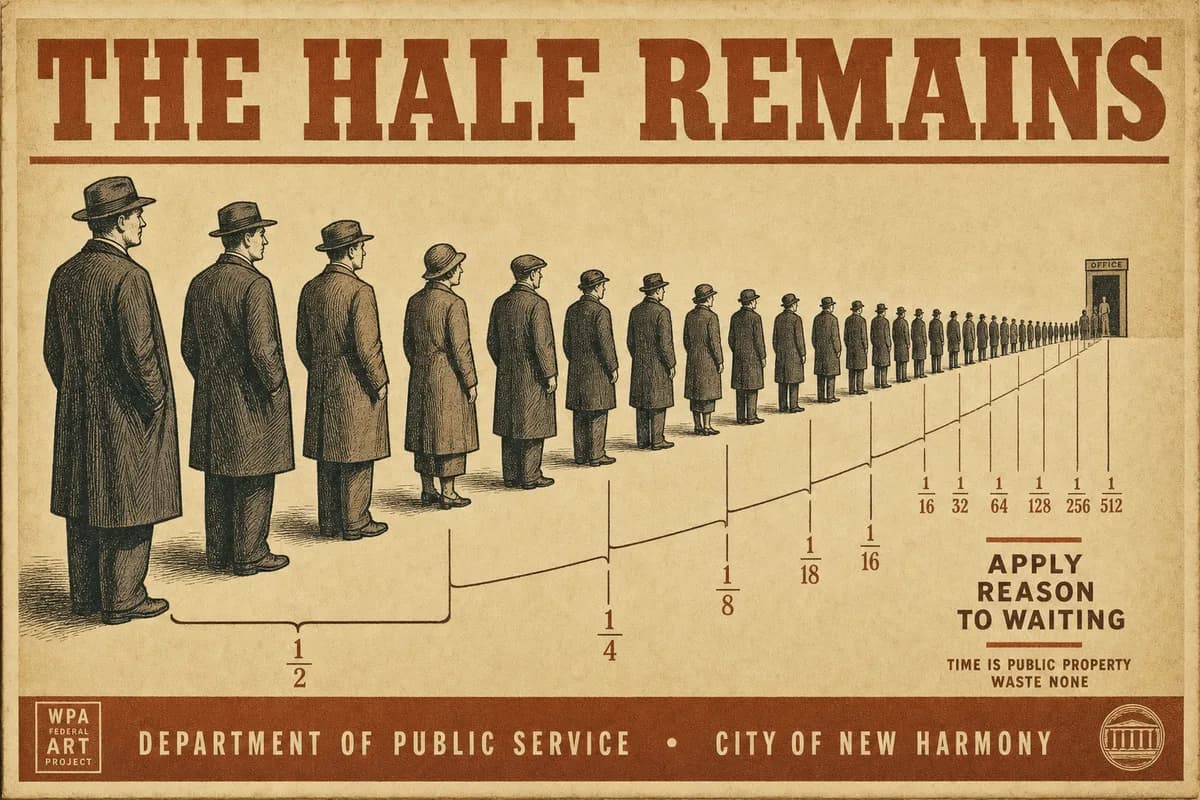
Zeno's paradoxes of motion, restaged in the bathroom line, expose why the standard calculus consolation fails exactly where the queue-stander needs it most.
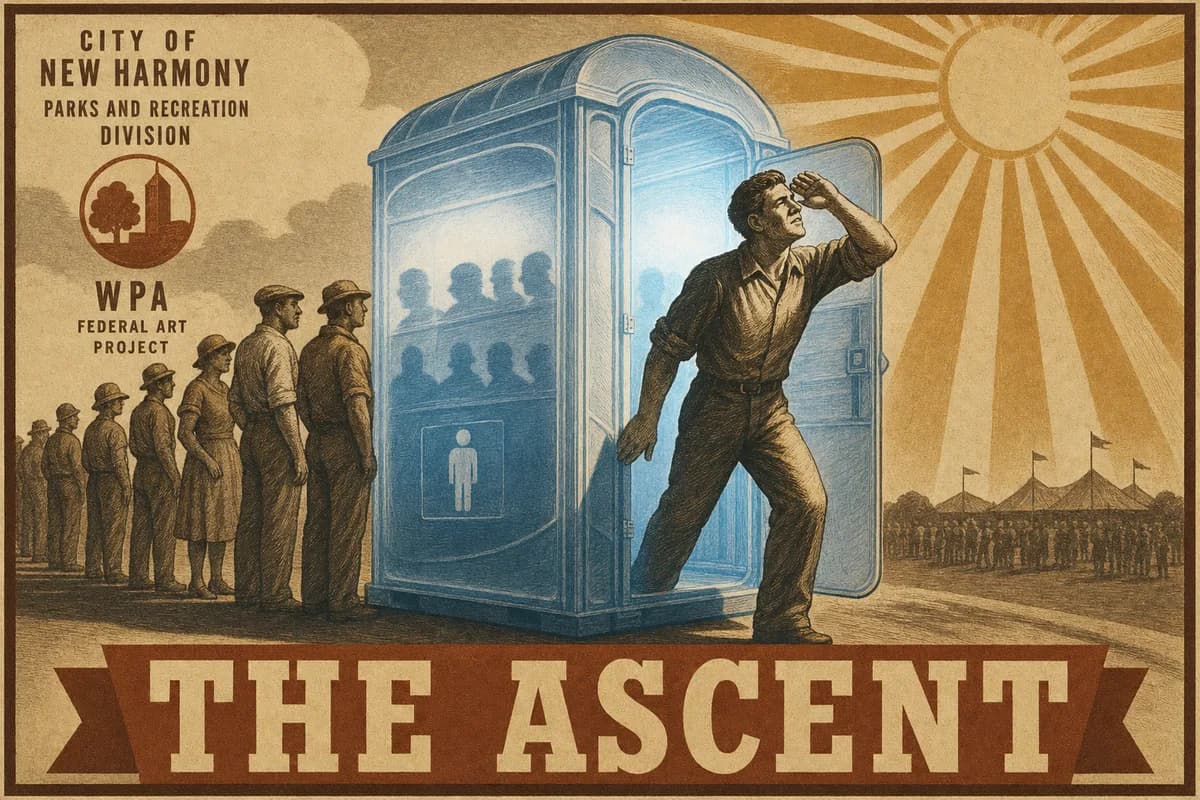
The Allegory of the Cave has always wanted a venue; the festival portable restroom satisfies its every structural demand.
The courtesy flush, examined theologically, is a costly gift offered to an absent stranger — a rite of supererogation performed for the eyes of no one.
The duty to warn the next occupant of a compromised restroom, surveyed across four moral theories, resolves into a qualified obligation defended here.
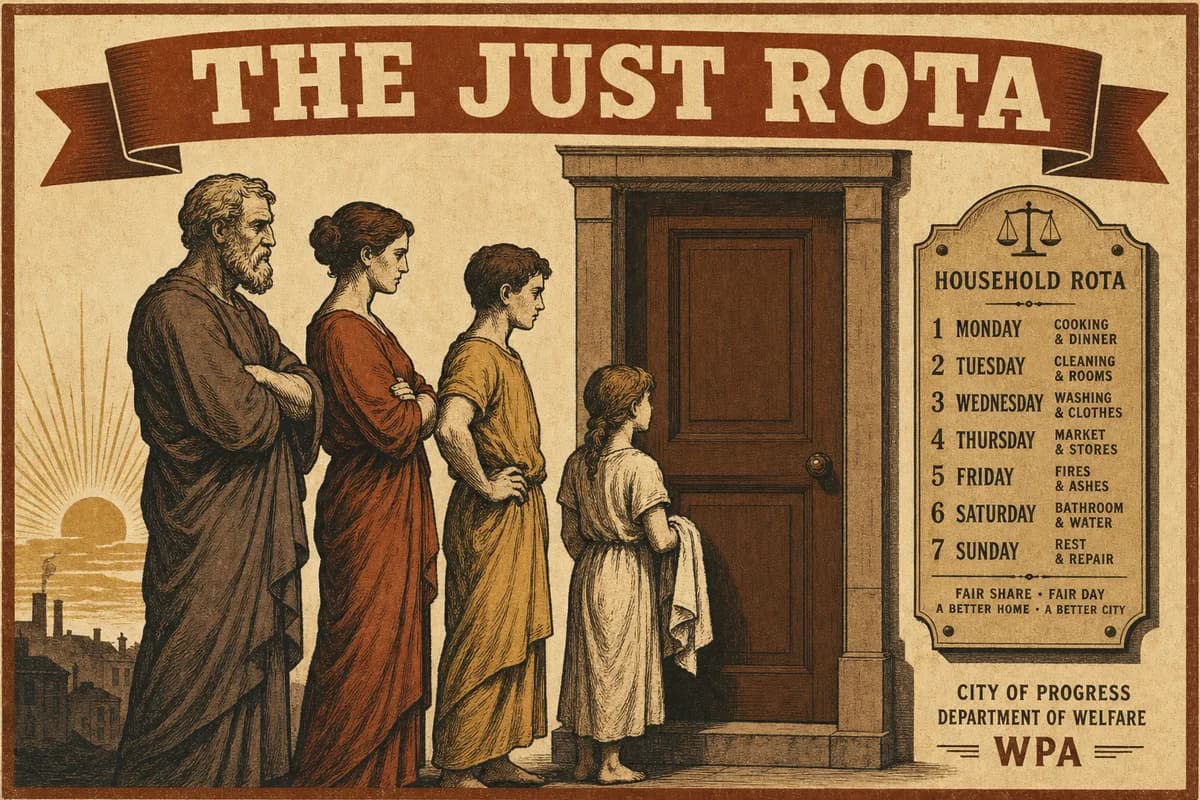
Priority to the single household bathroom at the morning peak, tested against four theories of justice, yields a lexical rule this essay defends outright.
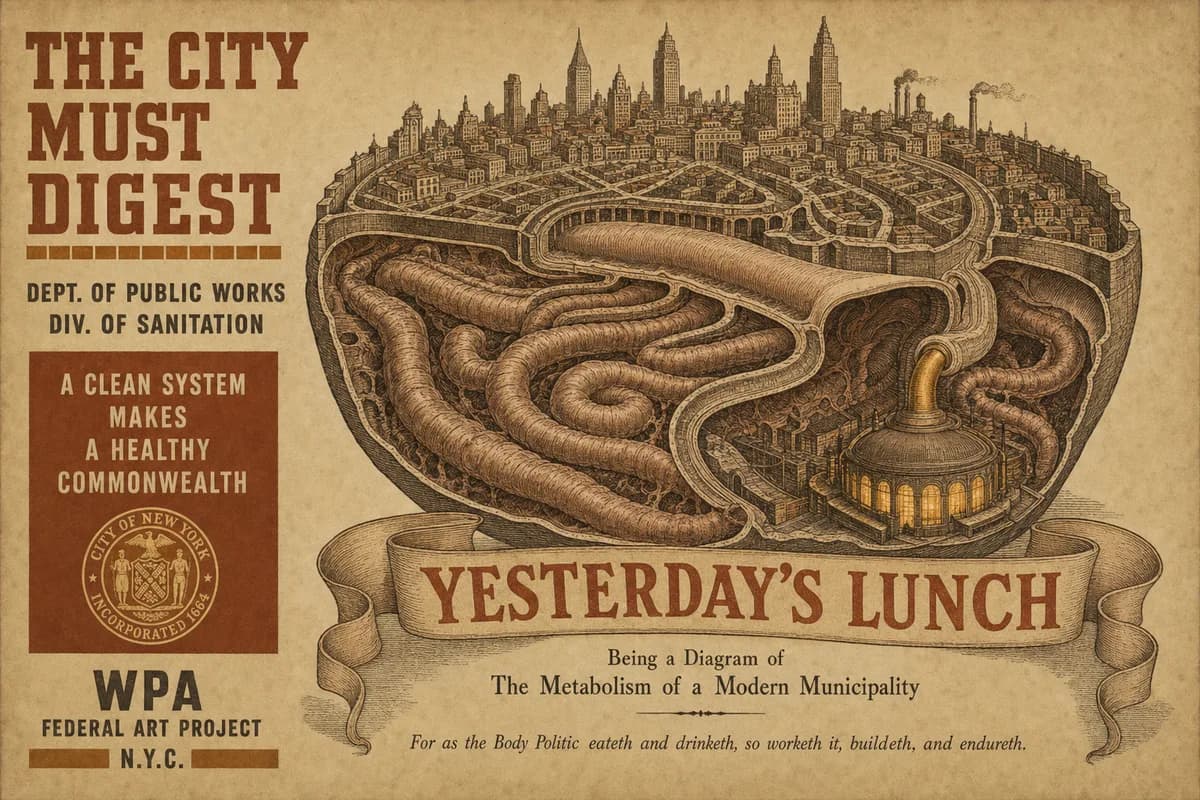
On metabolic urbanism, and the discovery that a city can only ever power itself on its own digested past — never on the present, always on the meal of the day before.
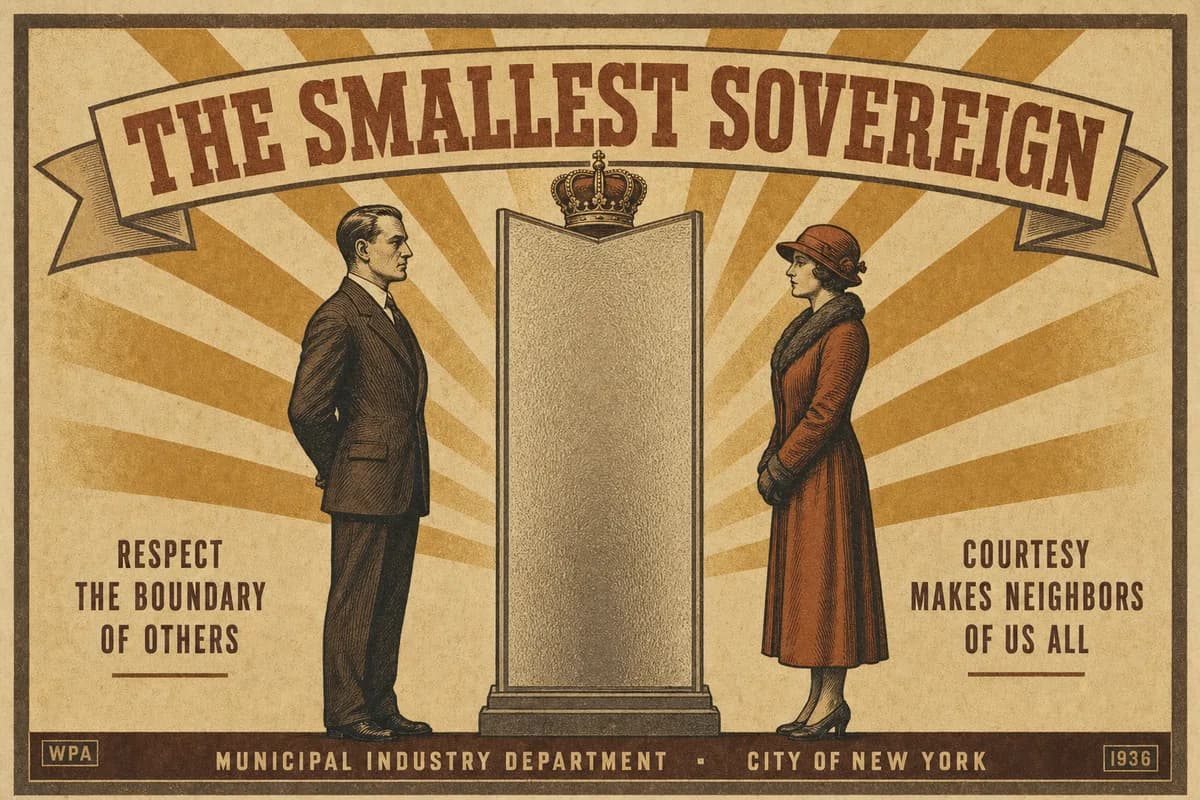
The urinal divider, read through social-contract theory, is the smallest instrument of government yet devised — a Leviathan of frosted acrylic.
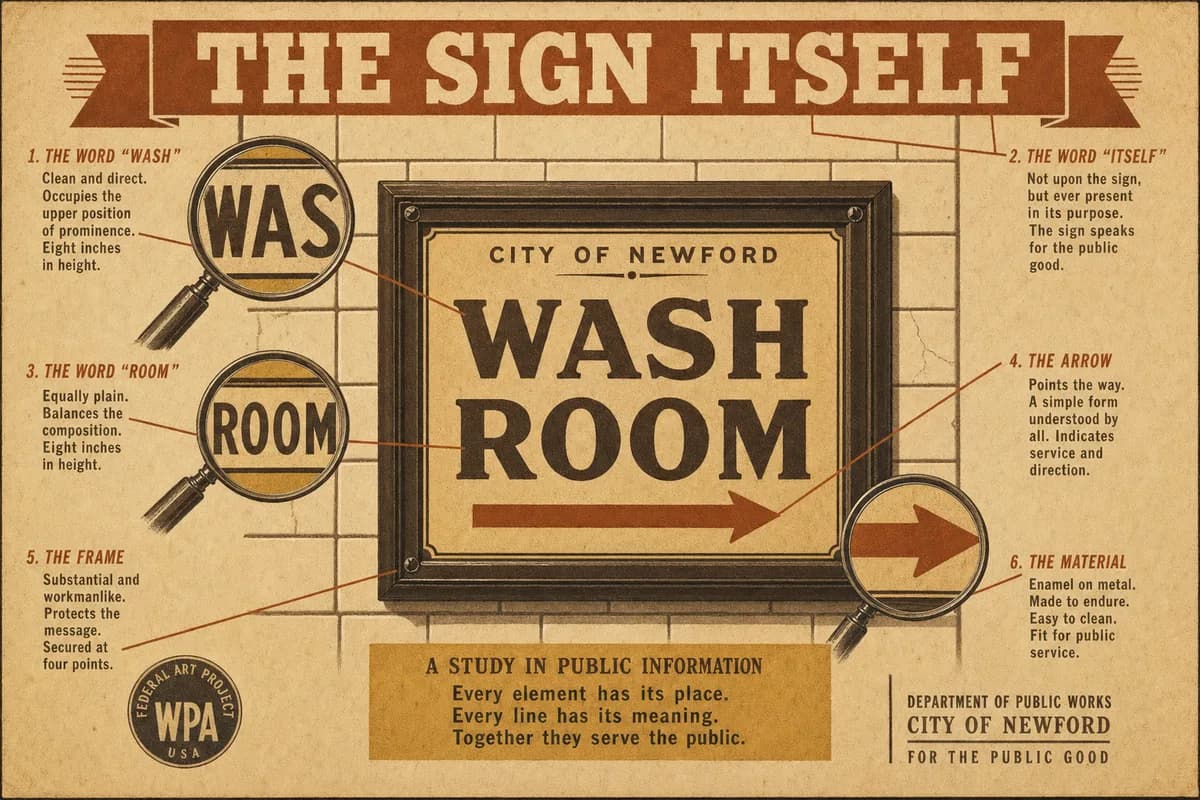
A close reading of the workplace's most-read and least-studied text: its addressee, its unenforceable imperative, and its studied silence about everyone who is not an employee.
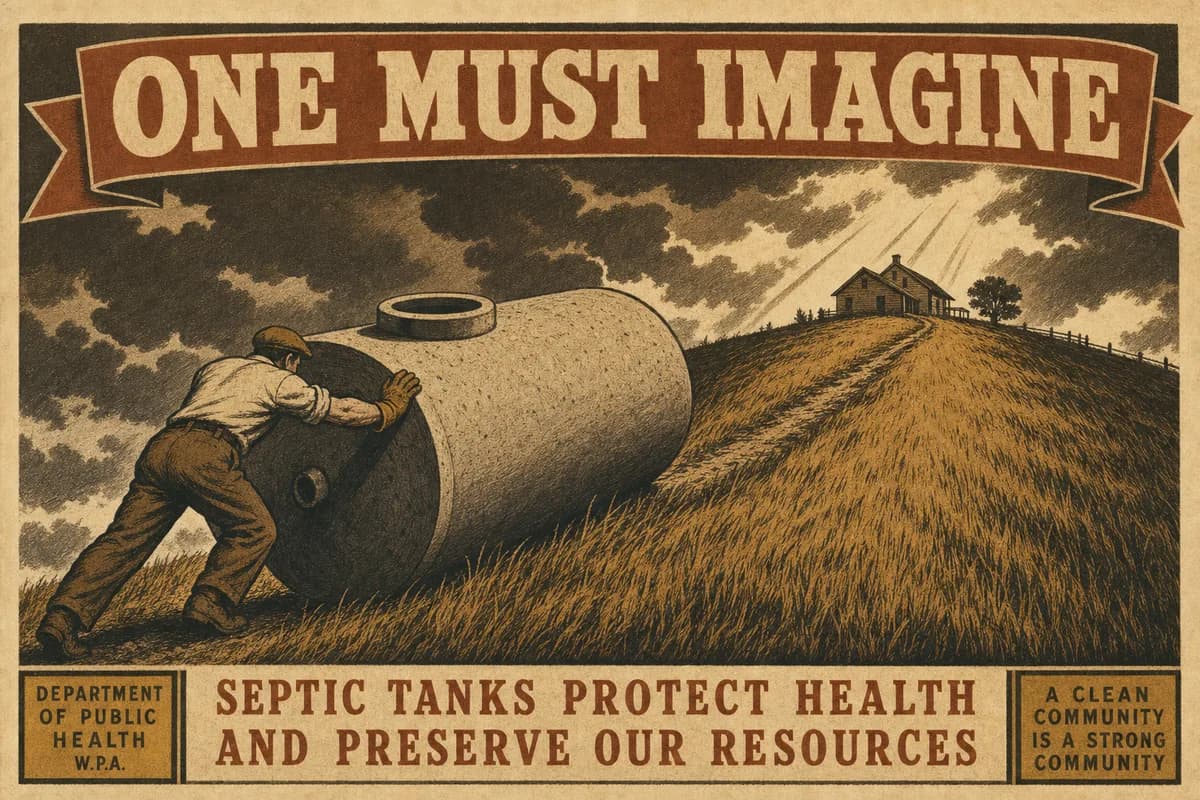
Camus's absurd hero, correctly identified at last as the rural homeowner on a two-compartment tank and a three-year service interval.
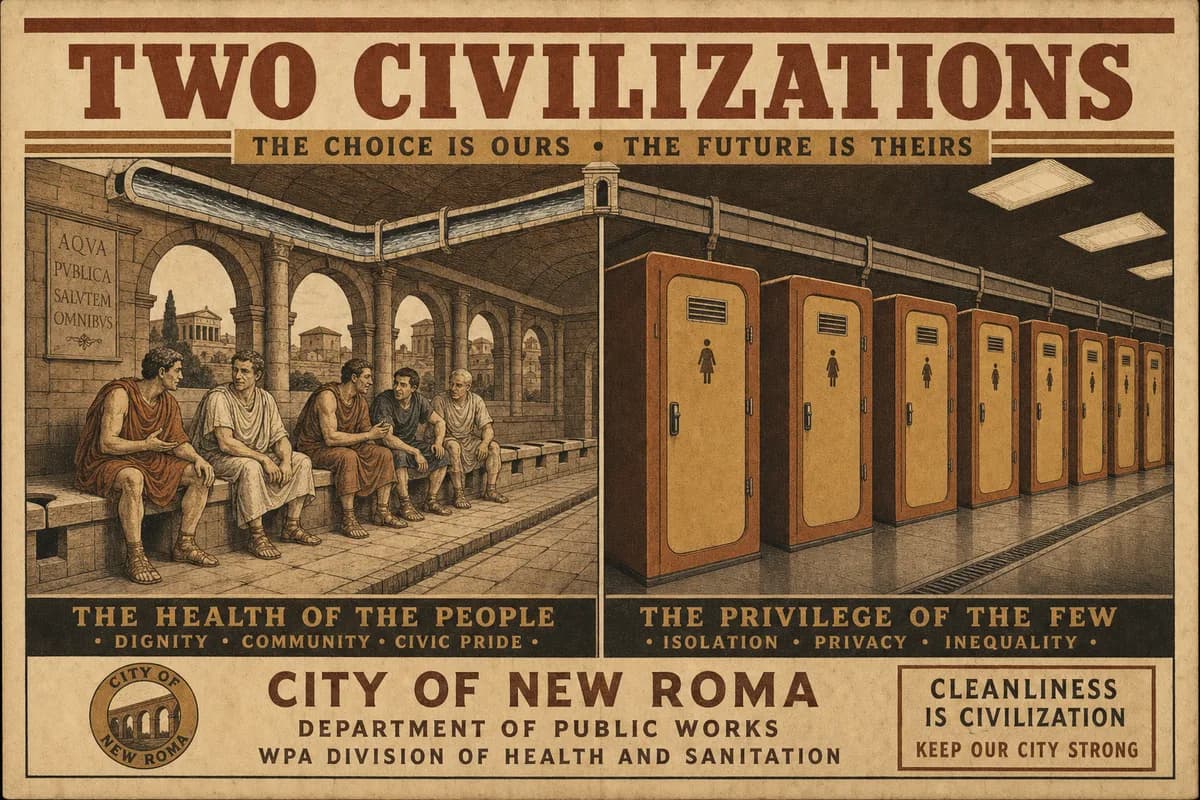
A comparative infrastructure study of the communal latrine as civic forum against the optimized single-occupancy pod as monastic cell, and what each arrangement believes about the people it serves.
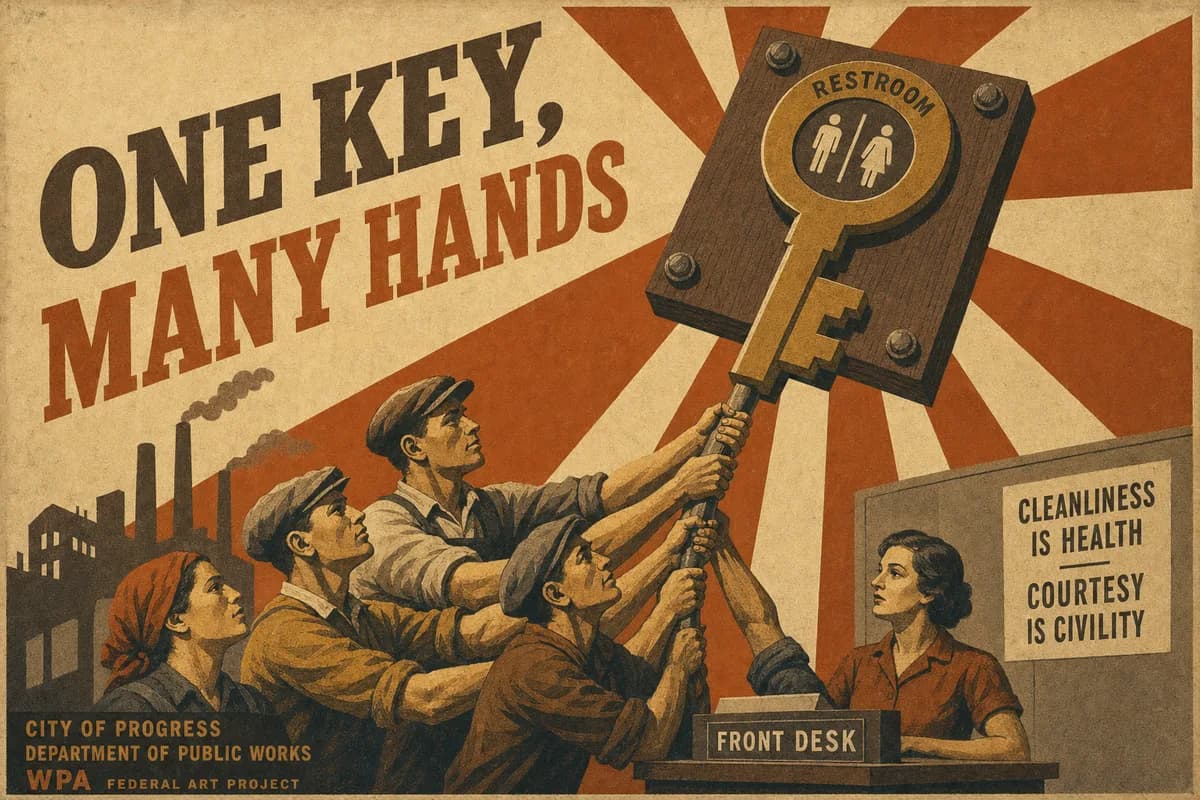
On enclosure, reification, and the appropriation of surplus in the single most theoretically dense object the modern workplace still issues by hand.
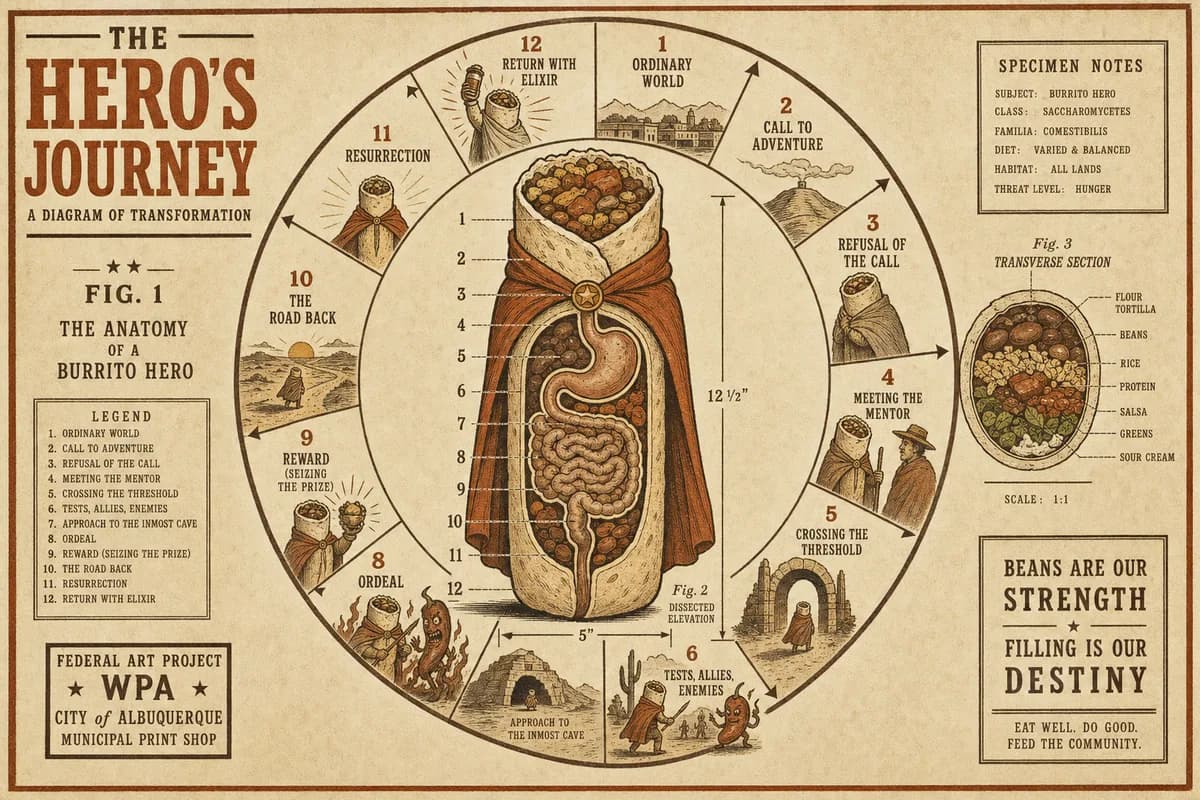
A structural argument that Joseph Campbell's monomyth is not a grammar of stories but a grammar of processes, most faithfully instantiated in the transit of a composite meal.