The Village That Ran on Stew
How a mountain village kept its lights burning for forty years on a single pot, and how the young cook who inherited the ladle learned that a fire kept honest to the wrong village goes out all the same.
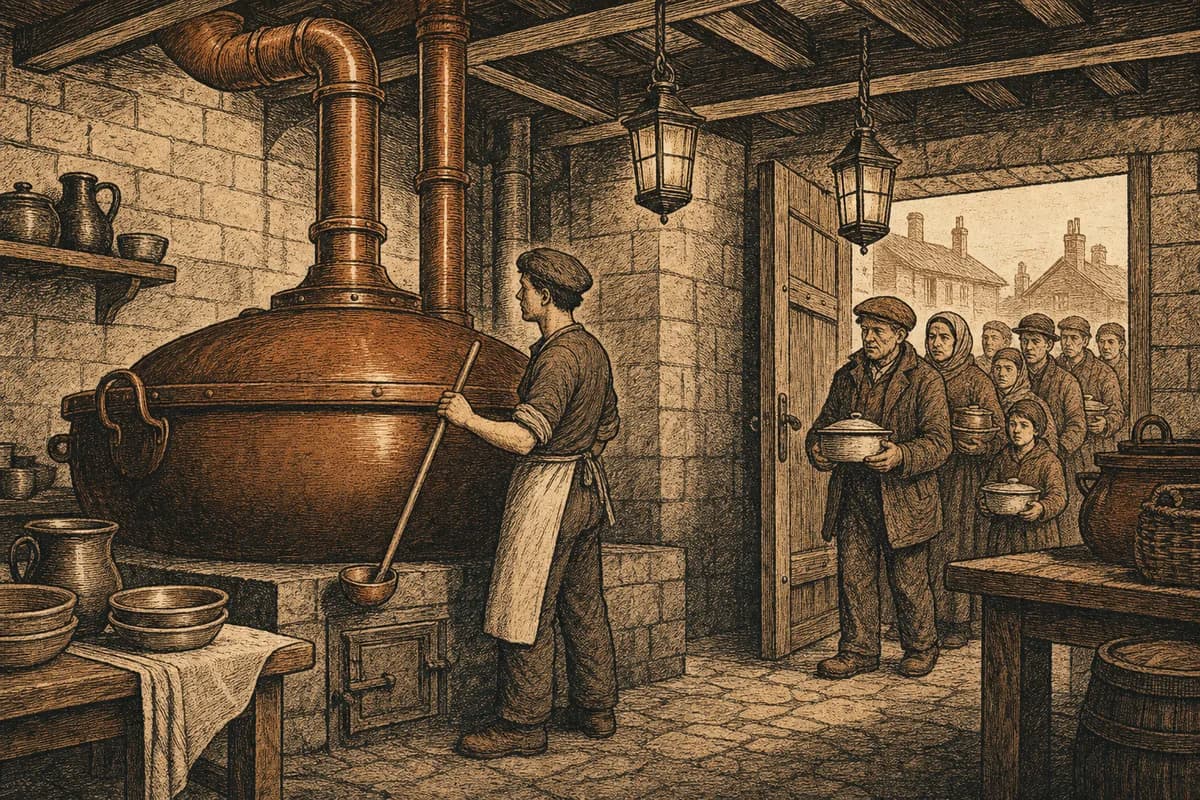
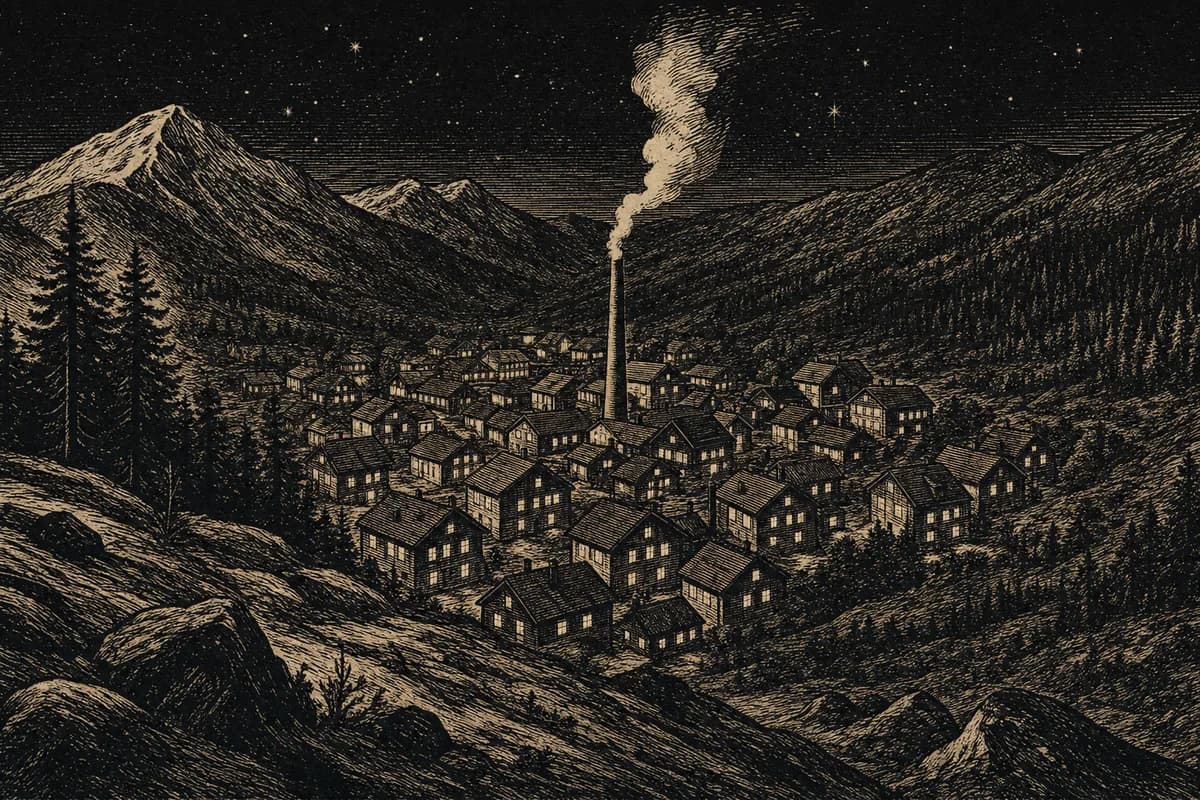
The village had a name on the old survey maps, but the people who lived there called it the Stewpot, and the travelers who crossed the pass learned to call it that too. It sat where three valleys folded together, too high for the lowland wire, and for forty winters it had lit its own evenings and warmed its own suppers from a single fire that no one now living had ever seen go cold.
The pot stood at the center of everything, in a stone kitchen older than the chapel. No one remembered what was first put in the pot, and it was considered indecent to ask. What was known was the tending: that the fire beneath it must never be let die, that the lid must be lifted only by the cook, and that whatever the village gave the pot came back to the village doubled — as supper on the table and as light in the lamp.
Old Bettine had kept it for most of those forty years. When her hands began to shake past the trusting of them, she sent for Sena, who had grown up scrubbing crocks at the long sink, and put the ladle into her grip as though it weighed nothing and everything at once.
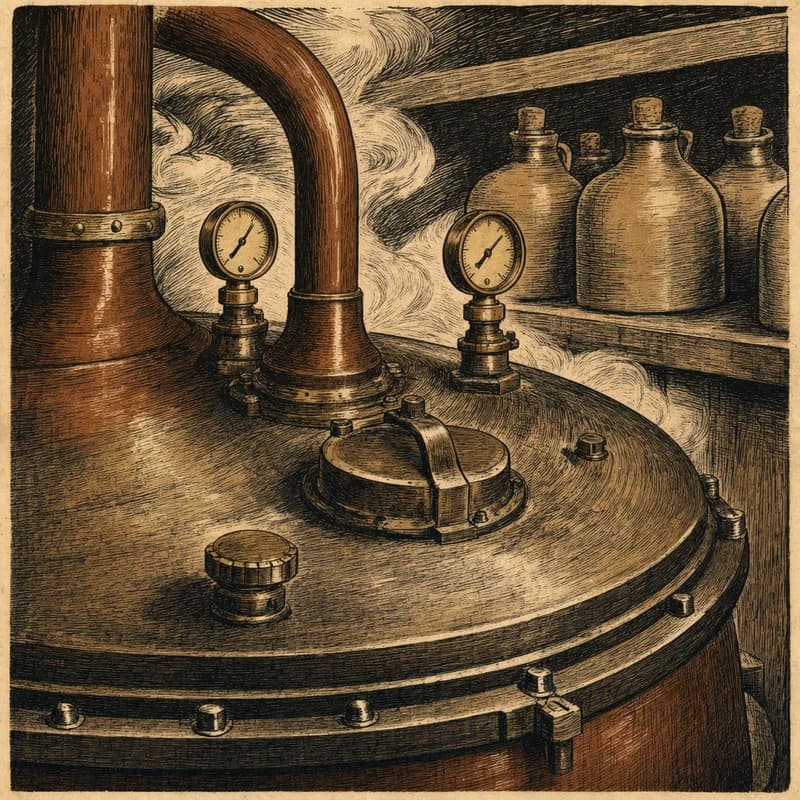
"It is not a fire you feed," Bettine told her, the first evening she let the girl stand the watch alone. "It is a fire you keep honest." She showed her the takeoffs — the copper pipes gone green with age that climbed from the pot's iron lid into the beams, and the small brass gauges strung along them, which a cook learned to read the way a shepherd reads a sky. When the needles held where they belonged, every lane in the village had light at its windows and heat at its hearths. When the needles fell, the village went to bed early and blamed the cook.
Each evening the households came with their covered dishes and set them in the girl's hands, and each evening they carried home their filled lamps, and between the two acts stood Sena and the pot. She learned the recipe as Bettine had learned it, which is to say she learned what the pot was owed and what it would forgive. She learned that it liked the long slow contributions of a settled house and mistrusted anything hurried. She learned that a cold night asked for more than a warm one, and that the pot, like any old thing, wanted mostly to be left as it was.
That was Bettine's whole law: leave it as it is. Change, she said, was how fires died. Forty years without a change was not stubbornness but proof.
But Bettine died in her second winter of watching, and the winters after went strangely. The village was not the village of forty years before. Fewer houses kept the old animals; fewer tables set the old suppers; the contributions came thinner, and the needles, reading them, crept a little lower each year, so slowly that only the cook, who read them every night, could see it. Sena kept the recipe exactly, as she had been told, and exactly as she kept it the lights of the village dimmed by a degree no lamp could name but every eye could feel.
She took it to the reeve and the elders, who loved Bettine's memory more than they loved the gauges. Keep the recipe, they said. It has never failed us. And Sena did not say what she had come to believe: that the recipe had not failed them, that they had changed out from under it, and that a fire kept honest to a village that no longer existed would go out just as surely as a fire neglected.
She chose a night in the thaw, when a failure would cost the village a cold week and not a dead one. She did the thing no cook had done in forty years: she changed what went into the pot — not much, only what the new village could truly give, in the measures it could give them. Then she stood by the gauges and watched the needles dip, and the whole dark kitchen seemed to lean over her shoulder and watch them with her.
They fell. They hung. Down the lanes she knew the lamps were guttering, and she made herself keep her hand from the ladle, because the one thing worse than a wrong change was a frightened one. She waited. And then, past the hour when she had given it up, the needles steadied, and turned, and began the slow climb home.
She never told the elders what she had changed, and they never asked; it was considered indecent to ask. They knew only that the lights had come back brighter than they remembered, and they said, as villages will, that the young cook had a gift, and that the pot had taken to her. Sena let them say it. She banked the fire and read the gauges and lifted the lid for no one, and she kept the pot honest to the village that was, and not to the one that had been — which is, she had come to think, the only honest way there is to keep a fire.