The Night Soil Baron
How a boy with two buckets and a widow's advice came to hold the entire nightly issue of the city, and to light its streets with it.
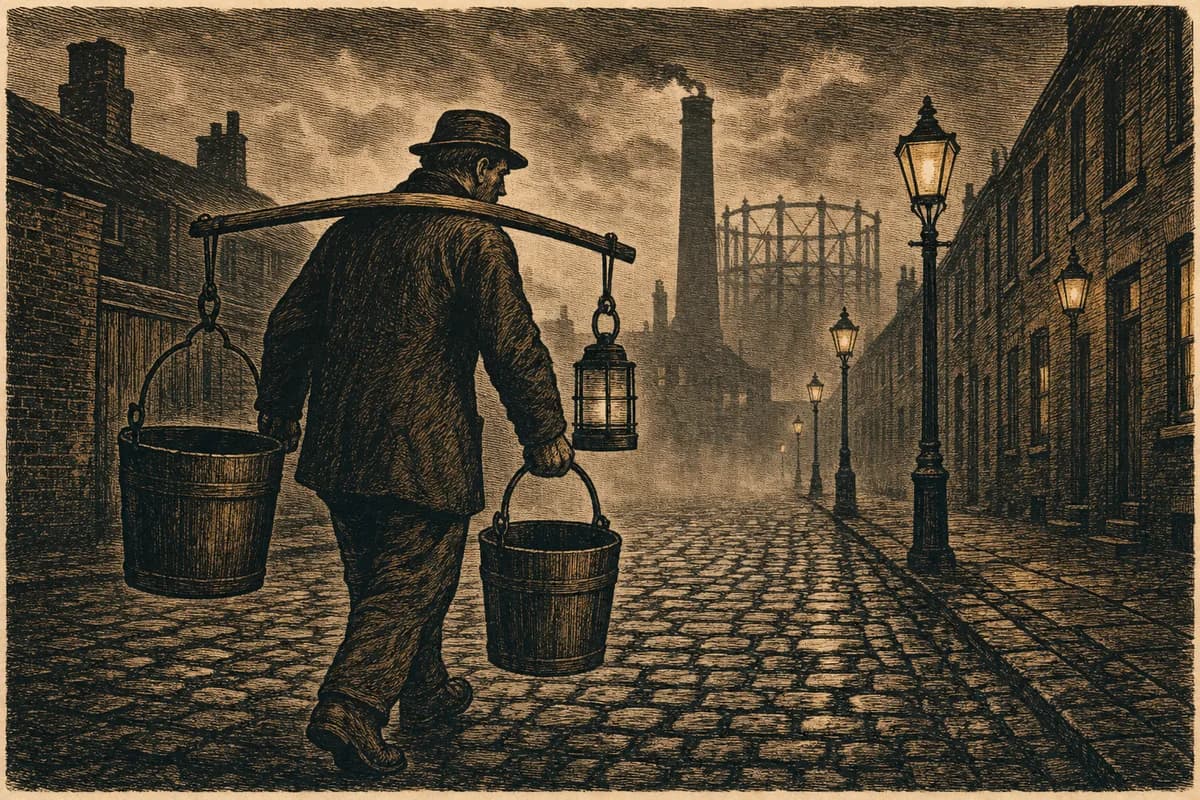
In the year the fog did not lift for forty days, Ezra Coombe took up his first round, and by the time the fog lifted for the last time in his life he had come to hold, by contract and by cunning, the entire nightly issue of the city.
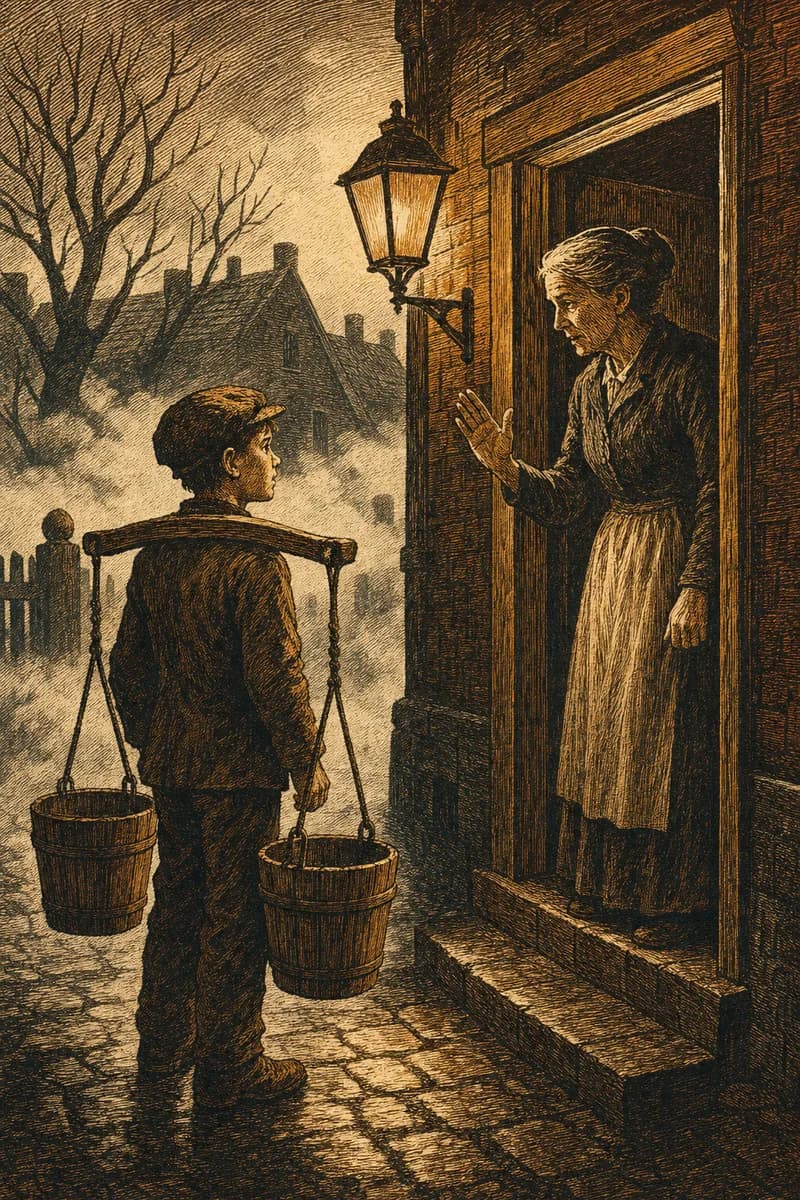
He was twelve when he began, and he began as every night-soil man of that age began: with a yoke, two buckets, a shuttered lantern, and a round of houses too poor to interest the established collectors. His round was Cinder Lane and the blind courts that branched from it, a warren under the shadow of the old gasworks where the rent was low because the air was not fit to raise the rent upon. The first door he knocked at before dawn belonged to a widow named Verrall, and she it was who taught him the trade, though she would have said she only sold him her bucket for a farthing and told him to mind the step.
Mother Verrall had buried a husband and four sons, and she regarded the boy at her door with neither warmth nor suspicion but with the level attention she gave to weather and rent and the other great forces that came whether or not one welcomed them. She showed him how to lift without spilling, and how to sweeten a bucket with a handful of ash against the summer, and she told him the one thing that would make his fortune, though he did not know it for a fortune then. Muck is not waste, she said. Waste is only muck no one has troubled to sell. Then she paid him his farthing to take away what any fool would have paid to be rid of, and Ezra Coombe went down Cinder Lane in the fog turning that sentence over like a coin.
By fifteen he had a cart. By twenty he had three, and a contract with the market gardens beyond the wall, who paid honest money for what he carried out to them by the ton, and spread it on their beds, and sent it back into the city as cabbages and early peas. He liked to stand at the garden gate at dawn and follow the circle in his mind — the courts, the cart, the beds, the market, the courts again — and to know himself the turning point of it, the man through whose hands the city's leavings passed on their way to becoming the city's supper. He was not a sentimental man. But he found in that circle a thing that answered something in him, an order the fine streets, for all their gaslight, did not possess.
The gaslight was the next thing he understood, and he understood it before the men who sold it did. He had spent his life in the smell of what the city discarded, and he alone seemed to know that the smell was itself a kind of wealth going up unburned into the dark. He borrowed to the neck of his shirt and built a works below Cinder Lane — a low brick house of sealed vats and iron pipe where the night's collection was made to give up its gas, and the residue drawn off for the gardens as before, so that nothing was lost and everything was twice sold. The aldermen who had held handkerchiefs to their faces at his cart now took his gas into their lamps, and did not ask, on the whole, where the flame that lit their dinners had begun its life.
He laid mains. That was the thing the later histories remembered him for, when they remembered him at all — the first true mains of their kind under any city in the kingdom, a hidden circulation of pipe knitting the courts to the works to the fine streets, so that the meanest lane and the mayor's own parlour were joined at last in one economy of gas and consequence. The papers called him the Night Soil Baron, meaning it for a sneer, and he took the name as a man takes any tool, by the handle, and had it engraved upon his gate. The city had made him a baron for the one thing it least wished to discuss.
He grew rich, and then very rich, and then old. He married late and buried his wife early and had no children to leave the pipes to. His table lengthened and his rounds of acquaintance widened, and he found, as risen men find, that a great house is chiefly a machine for measuring how few of its rooms one actually needs. He had begun with one bucket and a promise, and he had kept both longer than he kept anything else.
Mother Verrall died in the spring of his fifty-first year, in the same court he had first knocked at, having outlived by four decades the boy she paid a farthing. He was told of it by a clerk, among other business, and he said nothing, and finished the day's accounts, and went home. But before dawn the next morning the household was astonished to find the Baron gone from his bed. His man traced him at last to Cinder Lane, where the fog stood as it had stood on his first morning, and found him not in mourning clothes but in an old coat, with a yoke across his shoulders and a shuttered lantern in his hand, going door to door down the widow's court and collecting it himself, bucket by bucket, as he had not done in thirty years.
He would give no account of it, then or ever. Perhaps he was paying a debt in the only currency he trusted. Perhaps he only wished, once more before he grew too old, to stand at the turning point of the circle and feel the whole vast enterprise narrow back down to its beginning: a boy, a widow, a farthing, and a bucket carried carefully so as not to spill. When the round was done he set the buckets by the works to be rendered with the rest, and he stood a while in the lifting fog and watched the last of the street-lamps pale against the morning, each one burning, though the fine streets did not care to think so, on the patient gift of the courts below.
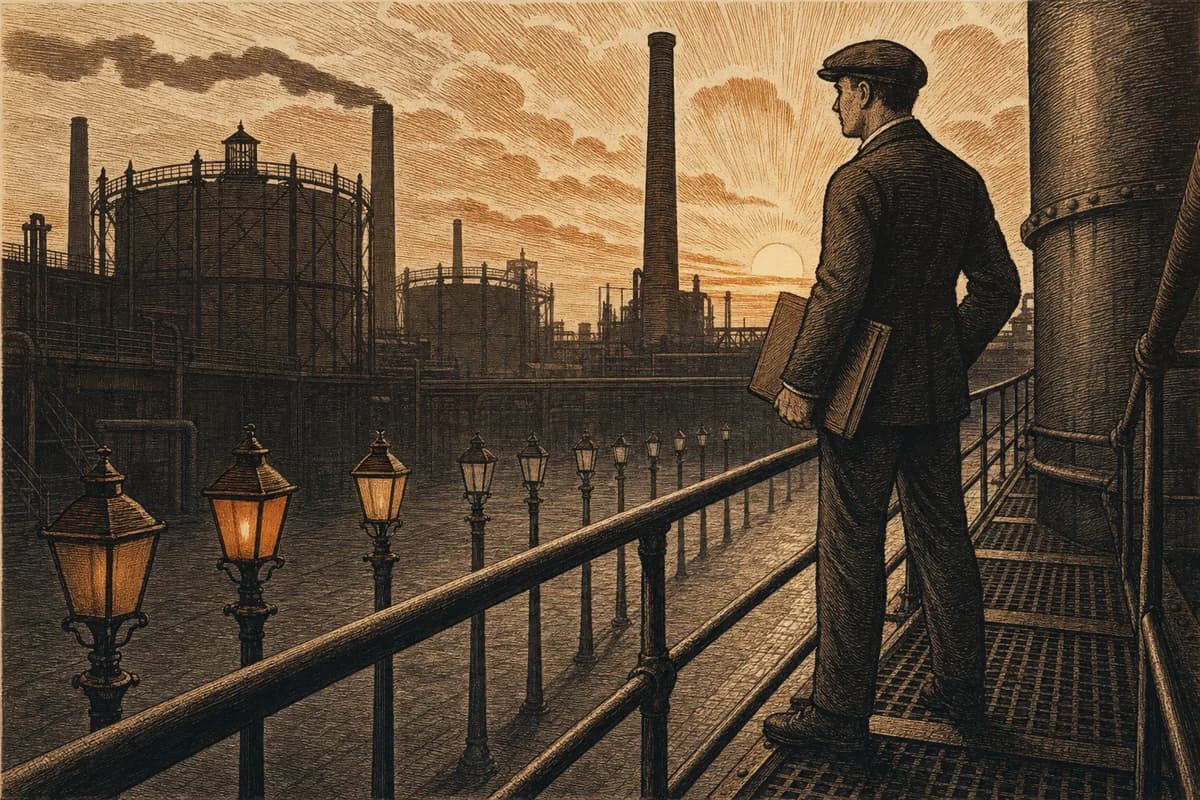
Then he went back to his empty house and his full ledgers, the richest man in the city, and the loneliest, and the only one who had never once been ashamed of where the light came from.