The Methane Rush
When the interconnect began buying gas from anyone who could pipe it clean, a generation rushed the source towns to stake barracks and boarding houses for gas.
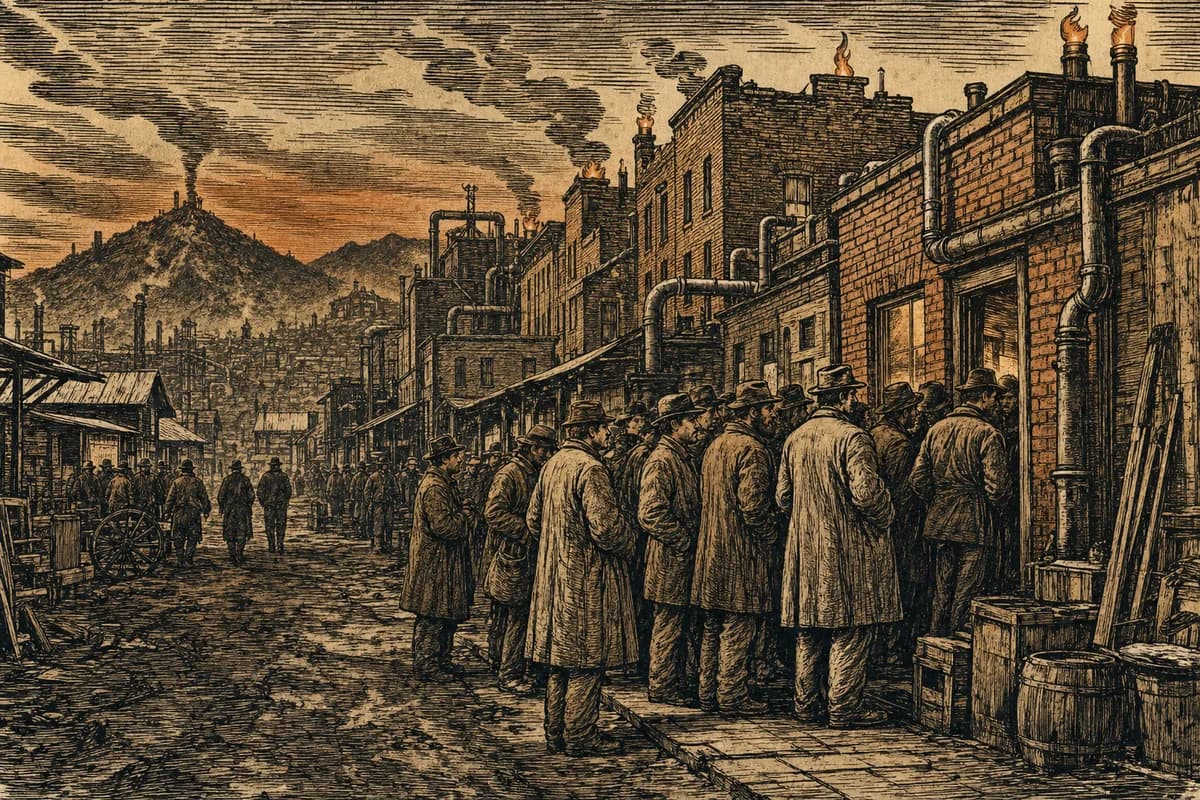
I came to the source country in the spring of '32, in the second year of the rush, which the men who had come in the first year already spoke of as too late.
You have to remember what the interconnect had just done. For one strange season after the great joining, before the standards were written that would shut most of us out again, the grid would buy gas from anyone who could pipe it clean to the manifold — anyone at all — and pay for it in real money on delivery, the way you would be paid for coal or wheat. Overnight a thing that the whole history of the world had labored to be rid of became a thing the grid would pay you to bring it. And so we went, the way men have always gone toward a place where the ground is briefly giving away money: I and ten thousand like me, out to the source towns, to stake what could be staked before the first-year men and the companies had staked it all.
Understand that we did not stake land. That was the thing the newspapers never quite got right, back in the cities, when they drew us as diggers. There was nothing in the ground worth digging for. A man did not strike it rich in that country by digging. He struck it rich by owning, on paper, what a great many other people would rather not think about. What you wanted was the daily output of some institution large enough to feed a digester and steady enough to feed it forever. A garrison. A boarding house of two hundred beds. A remount depot, a seminary, a poorhouse, a cannery town's whole worth of dormitories. Those were the claims. You went to the source office in whatever town you had fixed on, and you got in the line — the line ran to the corner most mornings that first spring — and if the output of the East Barracks or the Widows' Home or the Drovers' Hotel had not already been contracted out from under you by some faster or richer man, you signed for the rights to it, and you piped it to a digester you built with borrowed money, and you sold the gas to the grid, and you prayed the price held.
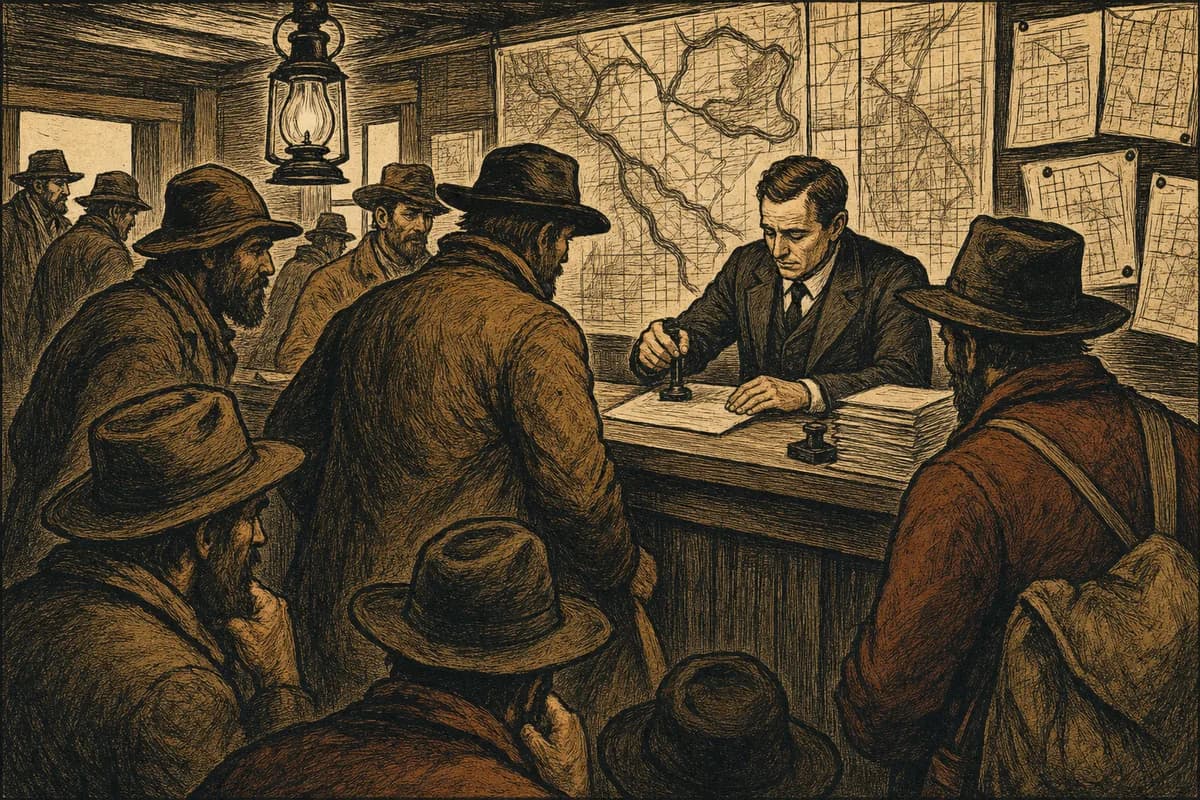
I got a middling claim. I want to be honest about that, at my age, having lied about it for years to men in bars. I did not get the garrison; a syndicate out of the capital had the garrison before I was off the train. I got the contracted output of a temperance hotel and two adjoining flophouses near the freight yards — three hundred beds of transient men, which sounds like little and was, in fact, a decent middling source, steady as such things go, if you did not mind that your fortune rose and fell with how many men were sleeping rough in the district that week, which is a thing I minded more the longer I did it, though I never let it stop me.
I built my digester. I learned the trade the hard way, as we all did, there being no other way yet to learn it — learned that a source could sour on you, that a hotel could go under and take your claim with it, that the gas came up dirty and had to be scrubbed to the grid's standard or the assayer at the manifold would turn your whole day's work away at the gate with a shake of his head and no appeal. The assayers were kings in that country. We hated them and we needed them and we bought them drinks. A good assayer could tell you to a nicety why your gas was being refused, and a bad one could ruin you on a bad morning, and there was no telling the two apart until it was your gas on his gauge.
For a year and a half it was the finest and most terrible time of my life. The town I was in had had four hundred people before the rush and had eleven thousand at its height, and every one of them was there for the same reason, and the whole valley by night was a low field of vent-flames, thousands of them, flickering blue along the jury-built rooflines, and a haze over everything, and a smell — I will not pretend there was no smell — that the newcomers gagged at and that the rest of us stopped noticing within a week, the way you stop hearing a river you live beside. We were getting rich, some of us. We were mostly not. But we were all of us, rich and poor, standing in the one place on the earth where the thing everyone spends their life turning away from was, for one brief season, turned into money and light before our eyes, and there is a particular fever in that, and I had it as bad as any man there.
It ended the way these things end, which is to say it ended twice. First it ended slowly, as the good sources got claimed and the marginal men were squeezed and the price the grid paid drifted down month by month, because the grid, once it had all the gas it could take, had no more reason to pay dearly for more. And then it ended all at once, in the winter of '35, when the new interconnect standards came into force — the gas-quality thresholds that a scrubber like mine could not clear without money I did not have and could no longer borrow, the standards that were written, though they never said so, precisely to hand the whole trade to the syndicates with their capital and their proper works and take it back from the ten thousand of us who had rushed in and made the country for a season.
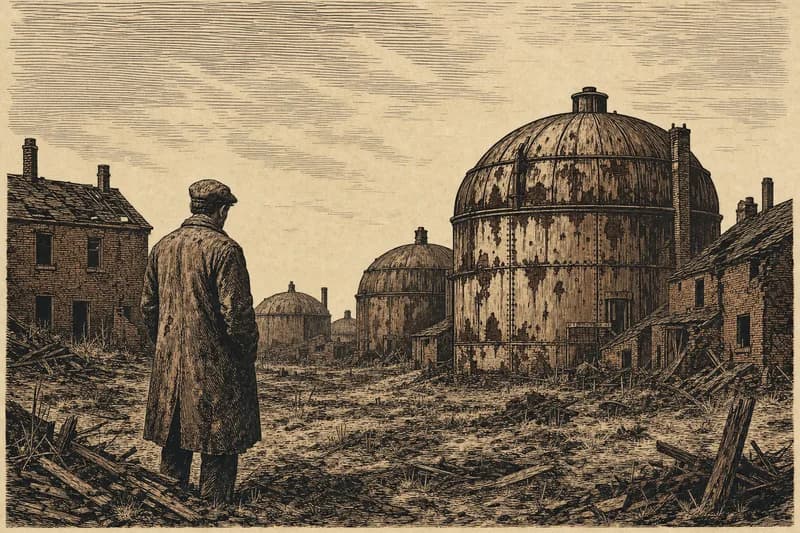
I stayed too long, as the ruined always do. I sold my claim for a tenth of what I had turned down for it at the top, and I watched the town empty faster than it had filled, and by the fourth year the vents stood cold up and down the valley and the country was quiet in a way it had not been quiet before the rush, quieter, because there is a special silence to a place that has been loud and is not anymore. The syndicates are still out there, I am told, running the good sources on their proper works, piping clean gas to the manifold at a fraction of what it cost us and paying the barracks and the boarding houses a settled monthly rate to think about their output no more than they ever did. The trade is orderly now. It is better run than we ran it. I do not dispute that.
But I was there in the two seasons when it was not orderly, when the ground was briefly giving away money and a middling man with a temperance hotel and a borrowed digester could stand out under a whole valley of blue vent-flames and believe, for a season, against everything his mother had taught him about where such things belong, that he had come at last to the exact center of the world. I went home poorer than I came. Most of us did. I would go again tomorrow.