The Man Who Held It In
On the eighth evening of the Festival of Light, one citizen took his place in the contribution hall and gave the grid nothing at all.
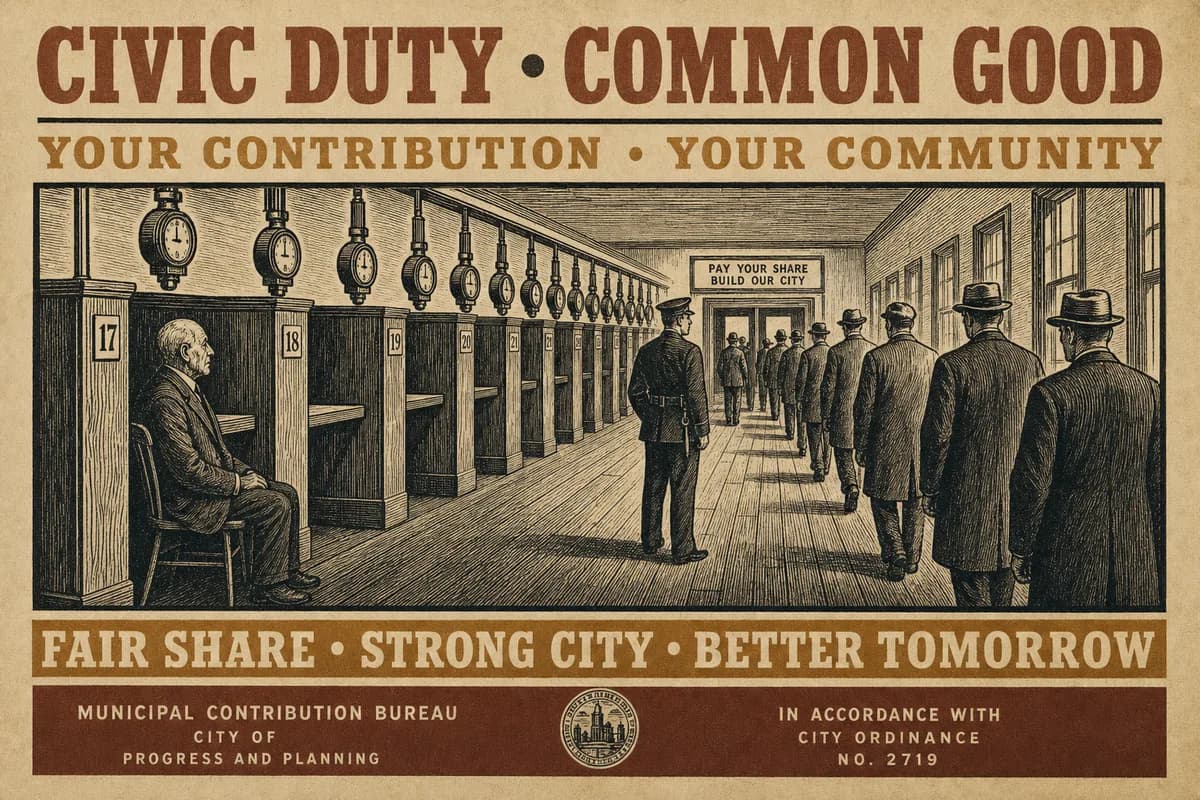
They came for the contribution at the second bell, as they had every evening since the Directorate proclaimed the Festival of Light, and Eliseo Marín took his numbered place in the long civic hall and resolved, as he had on each of the seven evenings before, to give them nothing.
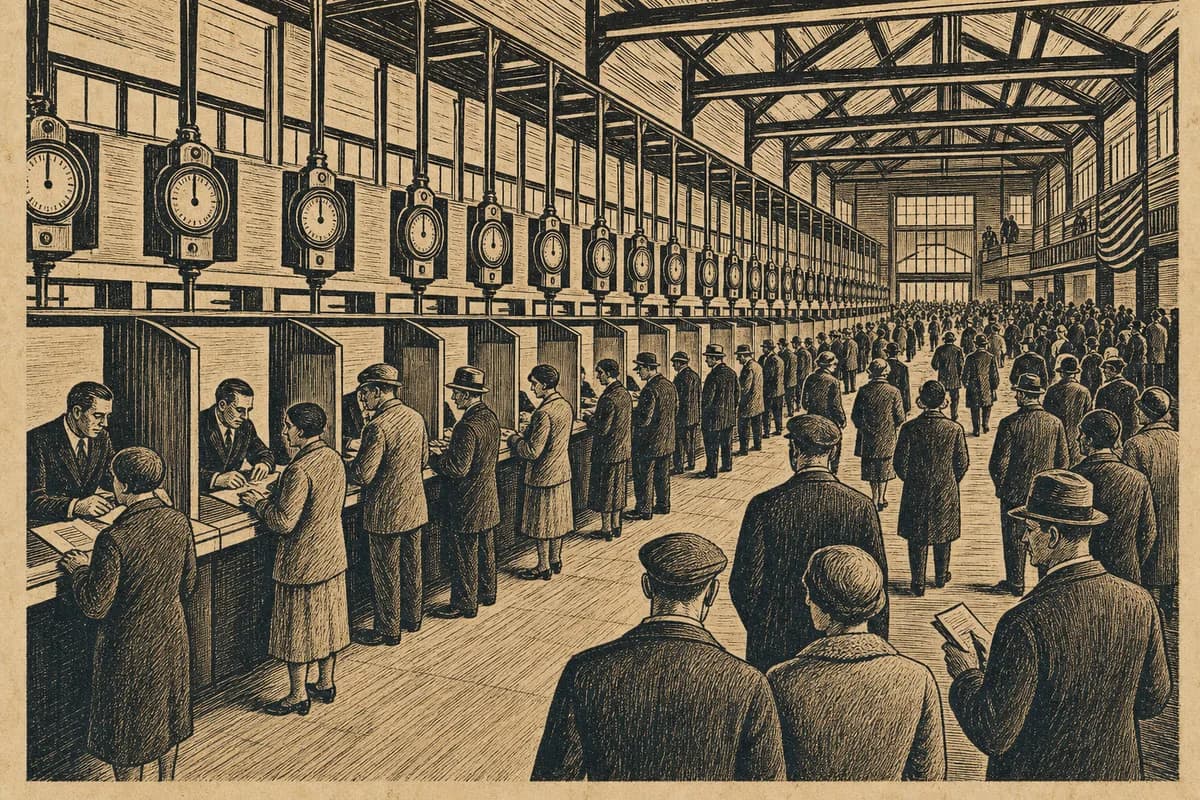
He was seventy-one years old. For most of those years he had been a good citizen, and for eleven of them a decorated one: his name was still fixed to a small brass plate in the district office — ELISEO MARÍN, CONTRIBUTION LEADER, THIRD WARD — for a season long ago when the ward had led the valley and the leading had meant something. He had believed in it then. He had believed that what a body gave, the grid returned: to the ward clinic, to the pumps that kept the low streets from flooding, to the reading lamps in the winter shelters. He had sat on this same numbered bench and felt the plain dignity of a man paying, in the only currency the earth cannot counterfeit, for the keeping of his neighbors.
The Directorate had not abolished any of that. It had only redirected it. That was the genius of them. They had left every plaque on every wall and every word in every anthem, and changed, quietly, only the far end of the pipe. This season the whole ward's contribution ran uphill, under the boulevards, to the plaza where the new monument stood: a hundred feet of the First Citizen in bronze, lit from within and below by a corona of gas so bright it printed the man's shadow on the clouds. The Festival of Light, they called it. Attendance at the evening contribution was mandatory for the festival's duration. The clinics ran on what was left, which in the seventh week was not much, and the low streets had flooded twice, and a boy in the second ward had died of a fever that the clinic, dark by nine each night, had not been quick enough to break.
So Eliseo sat, and gave nothing, and this was the whole of his rebellion.
It was not nothing to do. The body is an honest animal and cares nothing for politics; it wants what it wants on its own schedule, and to deny it takes a discipline the young wardens pacing the aisle in their pressed grey could not have guessed at from his stillness. He sat very straight. He kept his hands folded on his knees. He fixed his eyes on the frosted meter that hung above his stall, its little needle resting at the bottom of its arc, and he held the needle there by an act of will that had become, over seven evenings, the central labor of his life.
They could compel his attendance. They had never found the statute that compelled the rest.
The warden nearest him was young — Teo, the others called him, a farm boy by his hands — and on the fourth evening he had begun to notice Eliseo's meter, and to say nothing, and to arrange his pacing so that he stood, at the worst moments, with his back to the old man's stall. It was not friendship. It was closer to the mercy a man extends to a thing he has been ordered to break and privately hopes will not break. Eliseo was grateful for it and gave no sign, because a sign would have cost the boy more than it was worth.
The second bell faded. Along the hall the meters woke, needle after needle climbing into the amber as the ward — dutiful and hungry and afraid — paid its evening up the hill to light the bronze man's face. Eliseo's needle did not move. He breathed. He thought, as he had trained himself to think in the hardest minutes, of nothing consequential: the smell of his wife's kitchen thirty years gone, the particular grey of the river in March, the brass plate with his name on it that the Directorate had never taken down because it had never occurred to them that a man might read his own old honor as an accusation.
Halfway down the hall, a woman rose.
He heard it before he understood it — the small wrong sound of a person standing when the ritual required them to sit — and he turned his head, which the discipline forbade, and saw her: a heavy woman of perhaps his own age, two stalls down and across, getting to her feet with the deliberateness of someone whose knees have opinions. Her meter, above her empty stall, read zero. She did not look at the wardens. She looked, for one moment, at Eliseo, and he understood that she had been watching his needle the way he had been watching hers, that his stillness had taught her the thing was possible, the way one held breath in a drowning crowd can teach a second person to hold theirs.
She sat back down. She had made her point to the only audience that mattered, which was herself, and now she would simply give them nothing too.
Teo had stopped pacing. He stood in the center of the aisle, a young man in grey, and looked from the woman's meter to Eliseo's, and Eliseo watched him do the arithmetic that everyone in the hall would eventually have to do: that if it was two tonight it could be four tomorrow, and forty by the equinox, and that there was no cell in the Directorate's whole apparatus built to hold a thing that a body did simply by declining, in perfect stillness, to act.
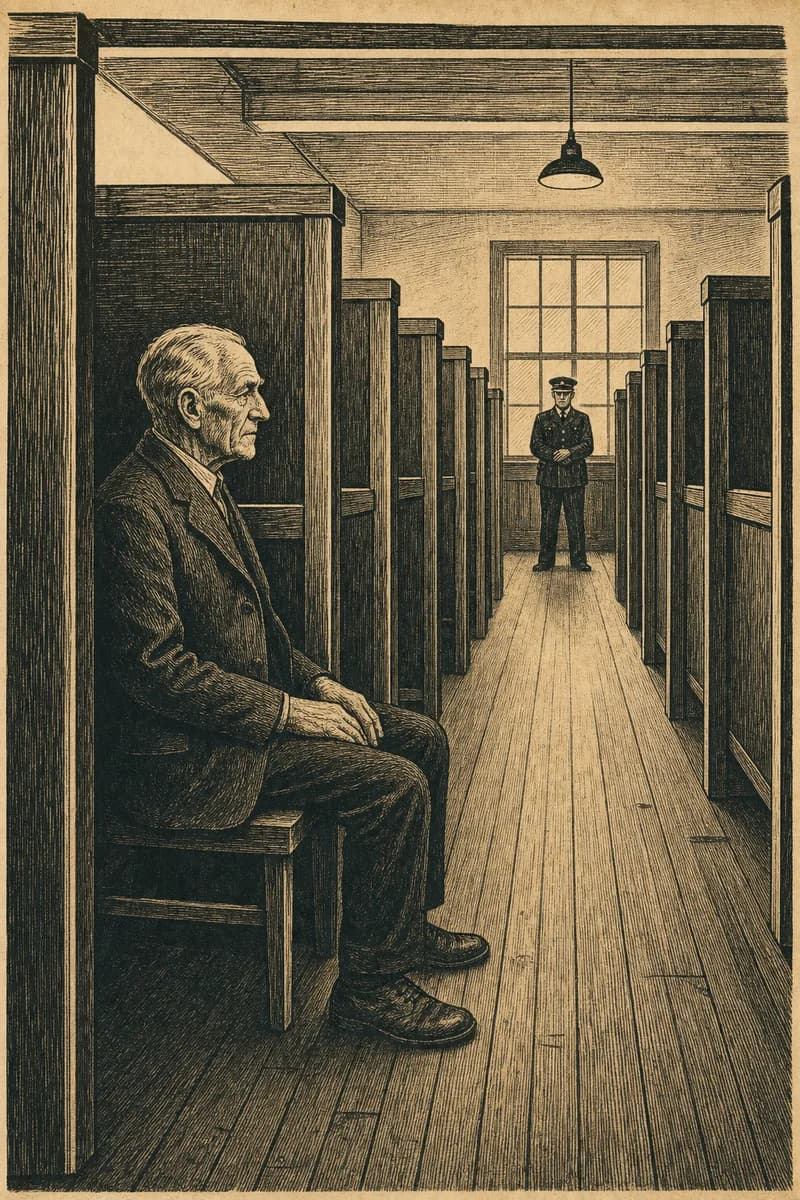
The bell for the third quarter sounded. Up the hill, Eliseo knew, the bronze man's face was blazing against the dark, magnificent and a little dimmer than the night before. He folded his hands. He kept his eyes on the frosted glass and the resting needle. He was seventy-one years old, and he was very tired, and he intended to sit here, giving nothing, for as long as it took the city to remember what it had once known: that the grid ran on consent, and that consent, once a man understood it as his own, was the one contribution no festival could conscript.