The Last Flush
On the morning her house joined the contribution grid, Alma Reyes asked the conversion crew for one small thing: to work the lever herself, one last time.
The crew was due at nine, and Alma Reyes had been ready since seven, dressed as though for church, sitting at her kitchen table in the last house on Calderón Street still joined to the old lines.
She was not a holdout in the way the district office meant it. She had signed the conversion order when it came, the second one, the one with the fines printed at the bottom, and she had not made speeches at the ward meetings the way the Petrossian brothers two blocks over had made speeches, about ownership and the rights of a man over his own water. She understood the arithmetic as well as anyone. She was eighty-one years old and she lived alone above a street where every other house had long since been joined to the contribution grid, where the mains ran full and the digesters below the corner turned the district's daily gift into the light in her neighbors' windows, and it was absurd, everyone agreed, absurd and a little selfish, that one old woman's house should go on using clean water to carry a thing away to be lost, as though the whole city had not spent thirty years learning that nothing was lost, that there was no away, that a house was not a place you got rid of things but a place that kept them and made them count.
She agreed with all of it. She only wanted to do it once more before she stopped.
The foreman was a courteous man named Duarte, younger than her grandchildren, and when she met him at the door and made her small request he did not laugh, which she had been afraid he would. He said the water closet had to come out either way and the intake plate had to go down over the drain before noon, but that the tank was still charged and the line still live, and that if she wished to work the lever a final time before they broke the connection, he saw no regulation against it. He said it the way you grant a thing to the old, gravely, without pretending to understand it, which was the only way she could have borne to be granted it.
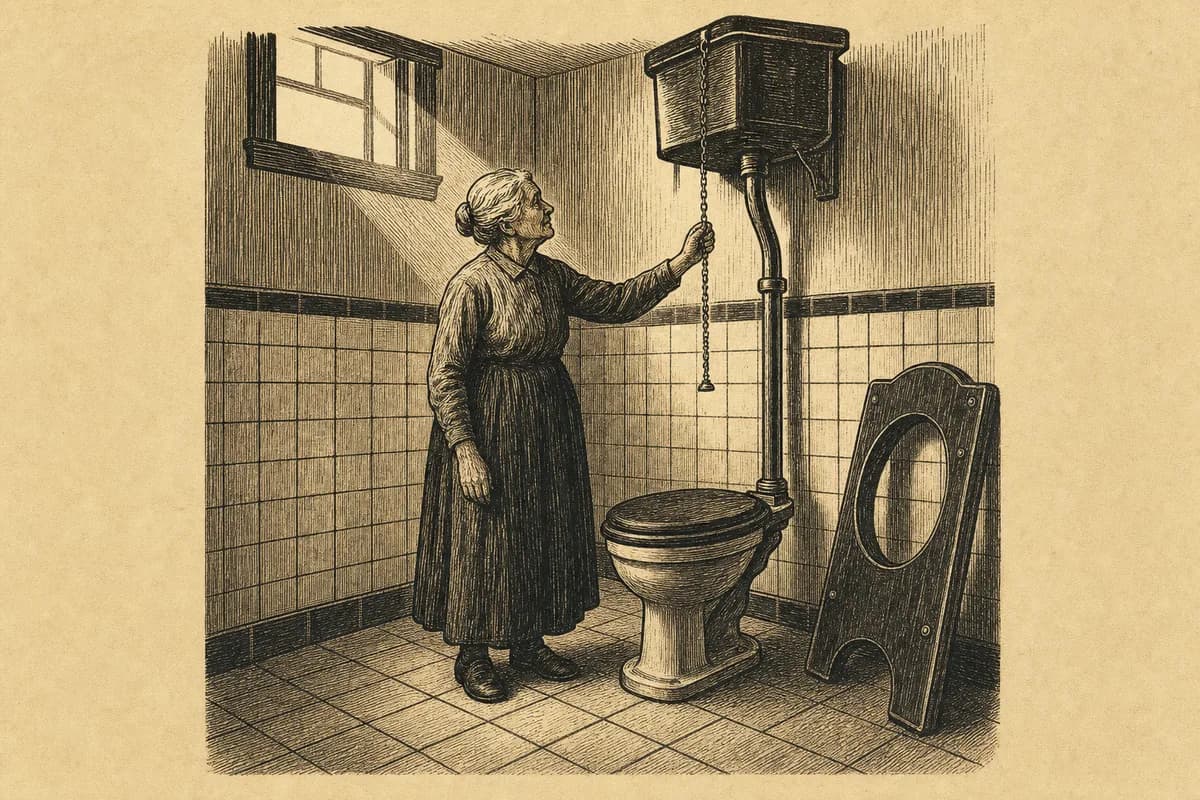
They let her go in alone. The water closet was a plain tiled room at the back of the house, cold in the mornings, with a small high window that let in a square of light that had woken her, moving across the floor, for fifty years. The toilet was the tall old kind, the high tank up near the ceiling and the long pull-chain hanging down, the kind her husband had cursed and never replaced because replacing it was money and the old one worked. She stood in front of it a while. She was not a sentimental woman and she distrusted the feeling rising in her, and she made herself name it plainly, the way she named everything, so that it could not get the better of her.
What she was about to do, she thought, no child born on this street would ever do, or want to, or be permitted to. She was going to take clean water — good water, the water that did not refill in a single wet winter, the water her neighbors carried in pitchers up their stairs in dry Augusts and guarded like a virtue — and she was going to spend it, all at once, to carry a thing out of her house and into the ground and away, gone, unaccounted, contributing nothing to anyone. It was the most ordinary act of the whole world she had been born into and it was very nearly the last of that world left standing, here, in this cold tiled room, in her hand.
She had done it perhaps a hundred thousand times without once thinking about it. That was the thing she wanted to feel before it ended: not the loss but the thoughtlessness, the enormous careless ease of it, a whole civilization's worth of not having to think about where anything went. The whole of the old world was in it: the idea that a thing, once done with, could simply be sent away.
She reached up and took the chain, and felt the small familiar weight of it, and pulled.
The tank let go above her with the sound she had known longer than she had known most people, the rush and the settling and the slow ashamed refill, and the square of light lay on the floor as it always had, and it was, she found, neither a great thing nor a small one. It was only over. She stood until the tank had filled and gone quiet, so that the last sound of the old lines under her house would be the sound of them made ready, pointlessly, for a use that would never come, and then she opened the door and told Duarte he could bring in his men.
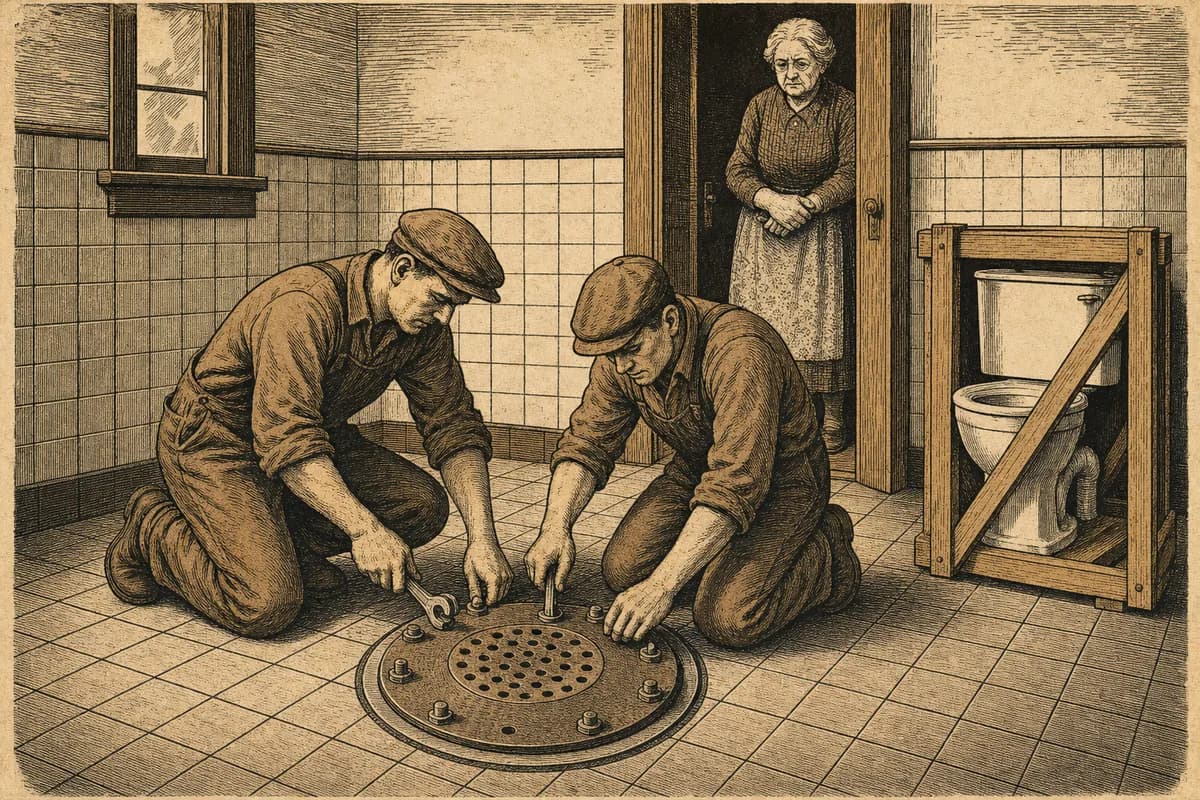
They worked quickly and without ceremony, which she was grateful for. They took out the tank and the bowl and crated them for the salvage yard, and they set the heavy round intake plate down over the drain where the water had gone, and bolted it, and joined the house at last to the mains that ran full beneath the whole rest of the street. By noon her house kept everything, the way every house on Calderón kept everything, the way the future was going to keep everything, forever, and count it, and be right to.
She made the crew coffee and thanked them and did not cry in front of them. But that evening, when her own small contribution went down into the grid for the first time and off toward the corner to be turned into somebody's light, she stood a moment at the back window over the sealed tiled room, and she found she could not decide whether the world had grown wiser or only more careful, and she went to bed without deciding, because she was eighty-one, and it was, in the end, no longer hers to decide.