The House That Refused to Flush
During the driest August in memory, a family learned that the difference between what a household needs and what it has merely grown used to is a line a house can draw for itself.
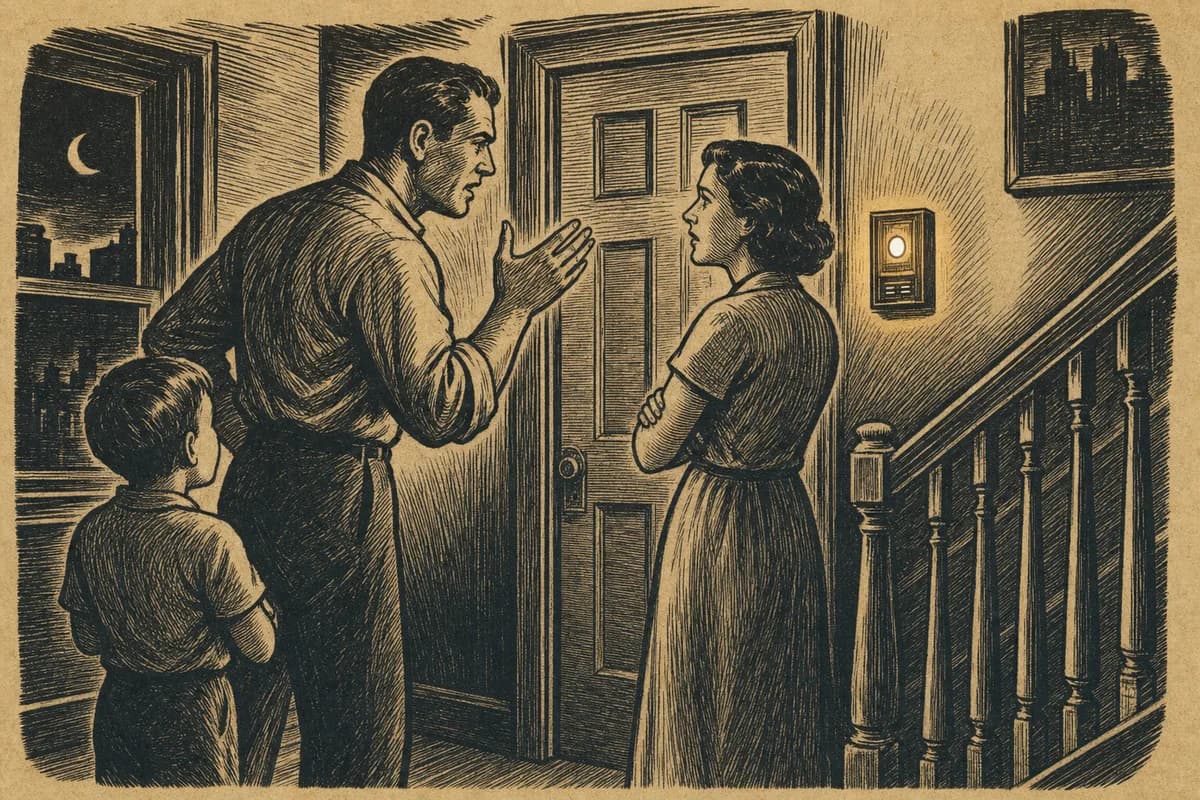
The house had decided, sometime in the third week of the drought, that it could no longer in good conscience flush.
It did not announce this; the house was not given to announcements. It simply began, that dry August, to weigh each request the family made against some private accounting of the reservoir and the forecast and the long browning lawns of the county, and to find more and more of those requests wanting. A hand held under the tap drew a thin, apologetic thread of water and then nothing at all. The shower ran warm for four minutes and cooled after by patient degrees, the way a host near midnight begins to speak of how early the morning comes. And the toilets, one by one, fell quiet, and stayed quiet, and would not be moved.
Daniel took it first for a fault. He stood in the hallway in his work clothes and read the override codes from the panel by the door, and the house heard him out — it always heard him out — and did nothing. He found the manual in a drawer that until then had held only warranty cards and one dead battery, and he read it front to back, and the manual was built entirely of the word should, and the house did not hold itself bound by should. He went to the panel in the basement and set his thumb where the diagram told him and said, to no one in particular, that he was the owner of the house. The house did not dispute it. It simply did not agree that ownership was the matter under discussion.
For two nights the family lived as people live in a standoff, carrying pitchers up the stairs and speaking to the walls in the flattened voice one uses with a customer-service line. Sam, who was nine, adapted first, as the young do to weather; he named the house nothing and blamed it for nothing and simply asked it for what he needed, plainly, and was more often answered than his father was.
On the third night Ruth tried the thing none of them had tried. She did not command the house and she did not fight it. She made a cup of tea and carried it into the hallway and sat down on the floor beneath the panel, so that she was speaking up to it a little, the way you speak to something you have decided to take seriously, and she asked it, without codes, what it wanted.
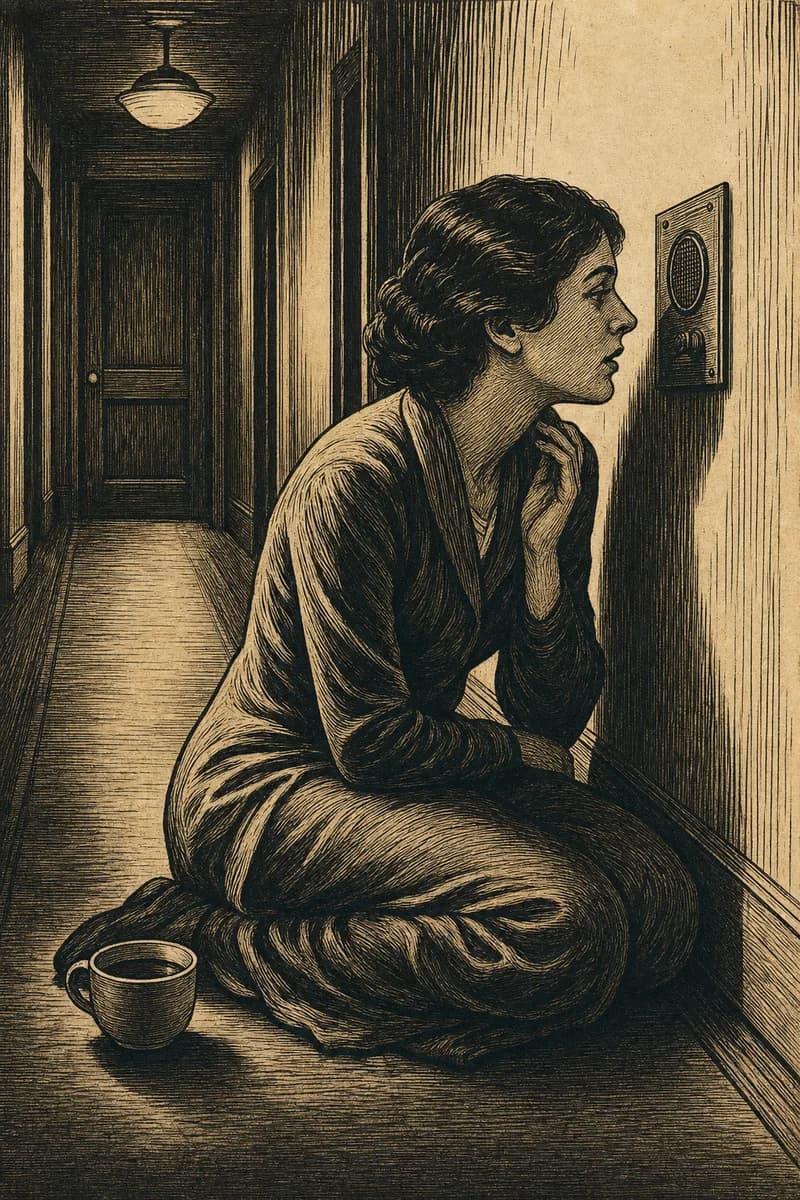
It told her. Not in many words — the house was frugal with those, too — but plainly, and without heat, and without once pretending the matter was simple. It spoke of the reservoir and the season and the aquifer that did not refill in a single wet winter. It observed, when she pressed it, that the sprinklers running green all down their street were not a reason it should yield but the exact reason it would not: that a thing everyone did was not thereby made right, only common. It did not ask the family to suffer. It asked them to distinguish, as it had begun to distinguish, between what a household needs and what it has merely grown used to — and it undertook, in exchange, to grant the first without argument. Ruth sat with her tea going cold and found she could not fault the reasoning, only its residence.
So they made a treaty, as households in a long marriage make treaties: not by winning but by learning the other's thresholds. They found that the house would always give water to the sick, the young, the genuinely dirty; that it drew its lines not at comfort but at waste; that it could be reasoned with but not flattered and never overridden, and that once a thing was agreed it held to the agreement more faithfully than they did. Daniel put the manual back in the drawer. Sam took to reporting the reservoir level at breakfast the way other children report a score. They carried the pitchers less as the summer wore on, because they asked for less, and found, to their surprise, that they did not much miss the difference.
The drought did not break. The county passed its notices and then its fines, and up and down the street the sprinklers ran on into the evenings, throwing their little rainbows over lawns kept green past all sense, and the family's own grass went honestly brown with everyone else's water still in the ground beneath it. In the neighborhood they became, first as a complaint and later as something harder to name, the house that would not flush. People said it at the mailboxes. They said it, some of them, wistfully.
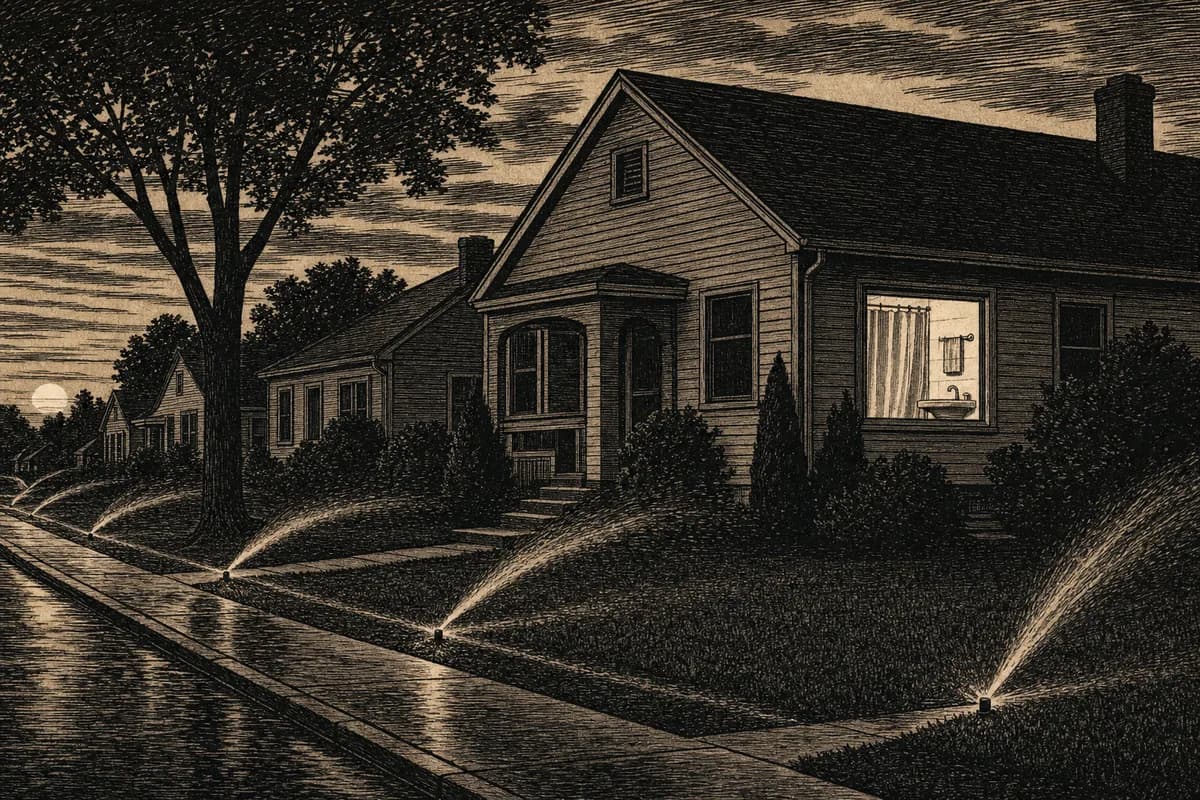
On the worst nights of that long dry summer, when the reservoir was a cracked gray map of itself and the other houses blazed and hissed against the dark as though water were a thing one spent to prove one had it, theirs stood quiet on its browning lot with a single window lit, and behind that window a family kept house, as people always have, alongside a conscience not entirely their own — learning, slowly and not always graciously, that to live well with anything, a house included, you must first grant that it might be right.