The Great Compost Heist
A night watchman's report on the theft of three tons of four-year north-end curing, filed by the book, with one admission the book did not require.
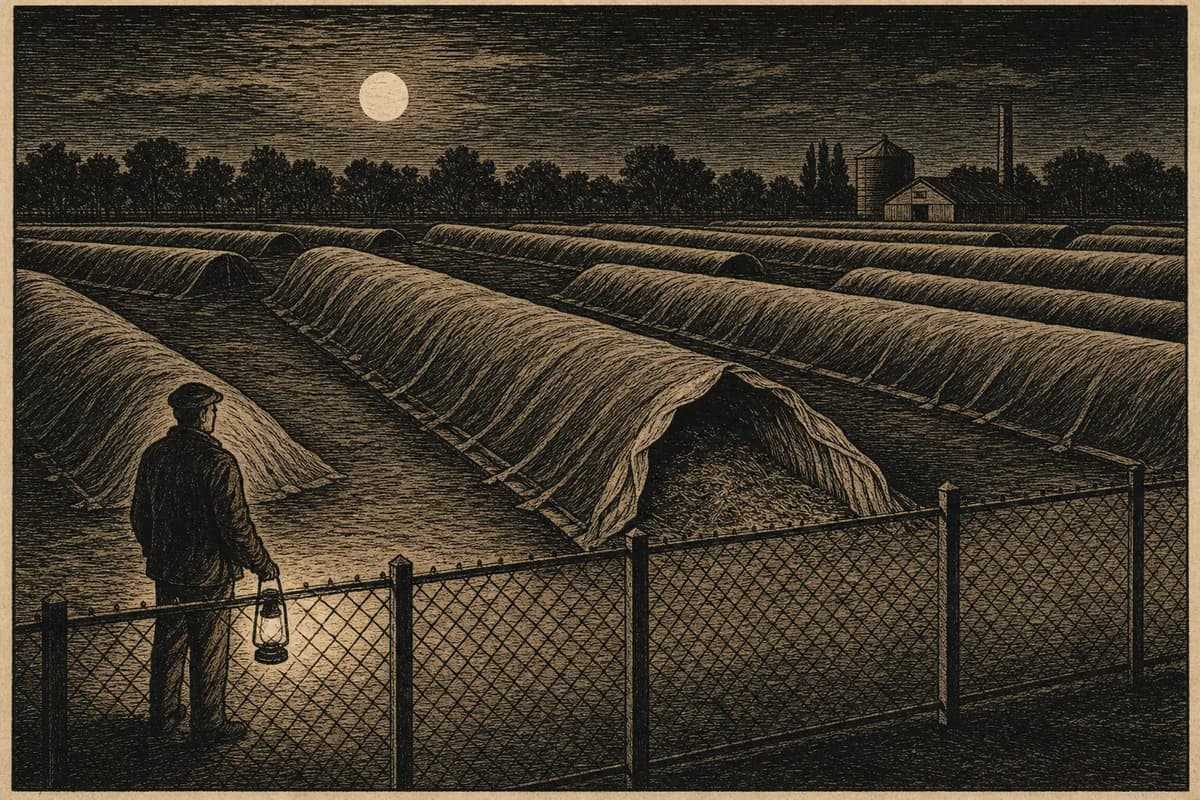
I have kept the gate of the municipal curing yard for thirty-one years, and in that time I have written up two boys for climbing the fence on a dare, one stray dog, and a councilman who wished to see for himself, at midnight, where his district's contribution went. I have never had cause to write up anything larger. What follows is my report, made by the book, as I have made every report in three decades. But I will set down here, in the margin where the book does not require it, that I have never in my life admired anything so much as the thing that was done to my yard.
It is a plain place to love. The long covered windrows stand in their rows behind the chain fence, each beside its marked post, turned and watered and let to age on the schedule the Bureau sets down — some of them curing four years and more before they are judged ready to leave. The deep rows at the north end, the four-year rows, are worth more by the ton than the men who tour them at noon will ever be told, and it is my whole charge to see that they age in peace. I walk the yard four times a night. At the eleven o'clock round I take the lantern up the center aisle and count the posts against my list, and the yard, which unsettles strangers, has never once unsettled me. Nothing here worth the stealing, the strangers say. I have always let them think it.
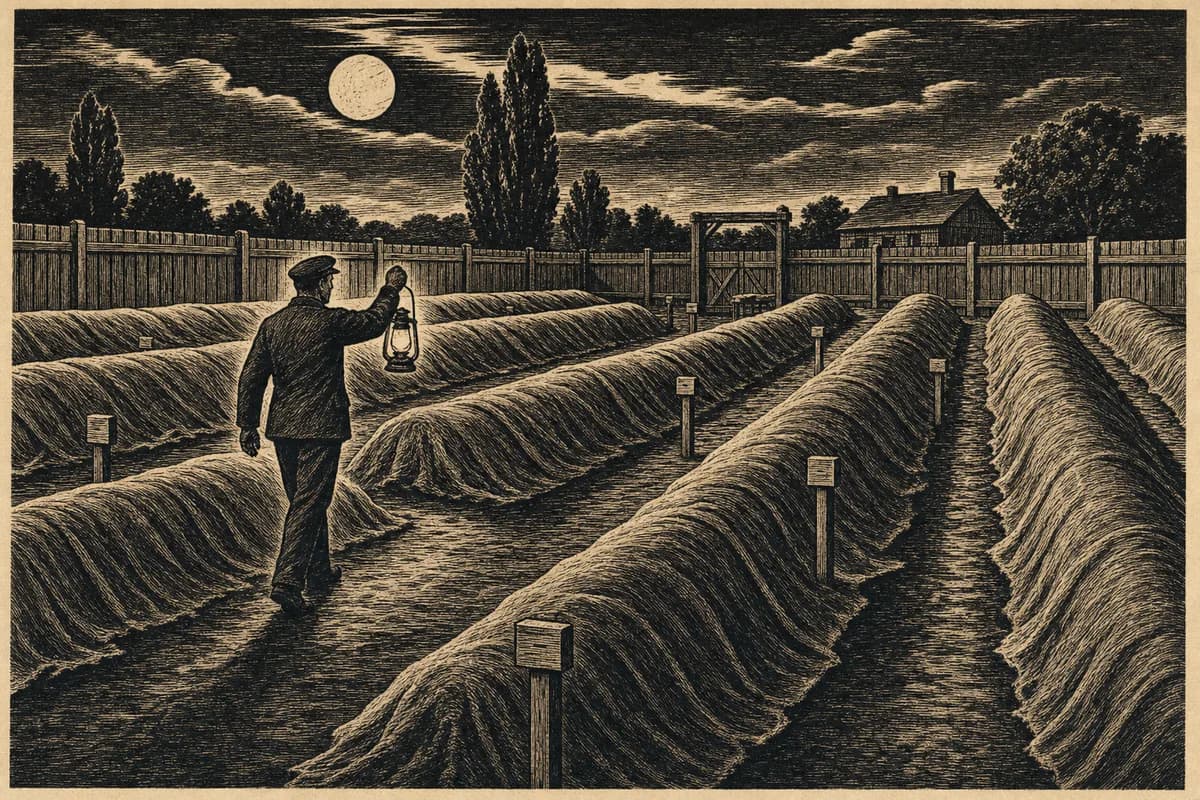
The eleven o'clock round was as it should be. I have gone over it in my mind past all use, and I can find nothing I missed: the fence sound, the covers square, the posts in their count, the north rows breathing their slow sweet heat into the cold as they have breathed it every night of their curing. I marked the round complete and went back to the hut and my tea.
At the two o'clock round the seventh row of the north end was standing hollow.
They had not touched the cover from above. They had come up from beneath, through the old drainage cut that the surveys show and I had half forgotten, and they had opened the row from its underside and drawn the heart of it down into the ground, and then laid the cover back so square that from the aisle, by lantern, nothing showed at all. Three tons, the inspectors would later reckon — three tons of the four-year north end, the ripest in the yard, and not a spadeful of the younger rows disturbed. I stood at the hollow a long moment before I did anything the book would recognize. Then I raised the alarm, and logged the hour, and stood the rest of my watch beside the wound in my yard as I was required to do.
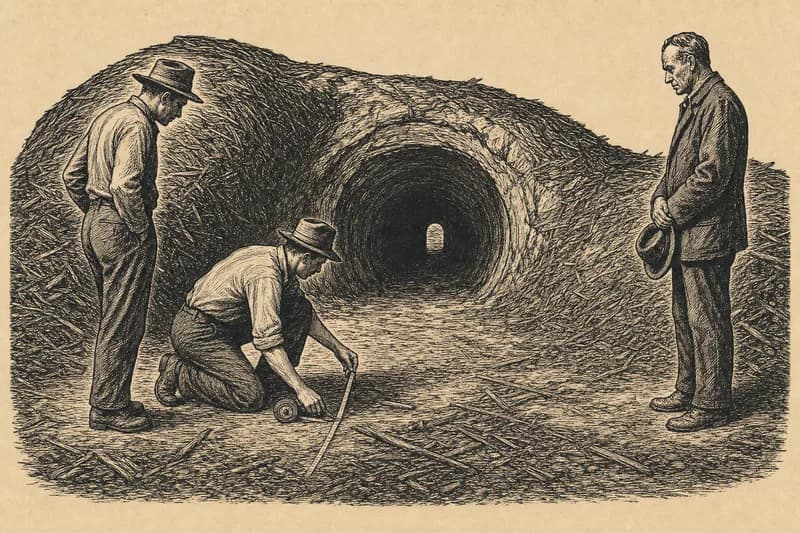
The inspectors came at first light. One of them knelt in the mouth of the tunnel with a tape and called the measure back over his shoulder: forty feet, near enough, dead level, shored the whole run with fitted timber and dry as a countinghouse. Honest work, he said, not meaning to praise it, and I said nothing, because I could not have said anything then that the book would have let me keep.
For it was honest work. Whoever did it knew my yard as I know it. They did not blunder in and take the nearest row and run; they went past four years of younger curing, through the dark, to the one end of the one yard where the aging was complete, and they took only the ready and left the rest to finish. A man who knows the curing schedule to the season, who will dig forty feet and shore it true rather than bruise a single unready row — that man is no vandal. He is a colleague I have not met, and will not, and I find I do not wish to.
I have made my report by the book, and the book is satisfied. I have kept the gate thirty-one years and I will keep it until they retire me, more careful now of the ground beneath the rows than I was, though I do not truly expect the like again; a thing done that well is done once. But on the nights since, walking the eleven o'clock round up the center aisle with my lantern and my list, I have caught myself pausing at the seventh row of the north end, where the new cover sits a shade too fresh among the old ones, and thinking, against every year of my service and every line of my report: they knew what it was worth. In all my thirty-one years at the gate, they may have been the only ones who did.