The Brownout
In the third week of the wellness, the valley began to go dark after supper, district by district.
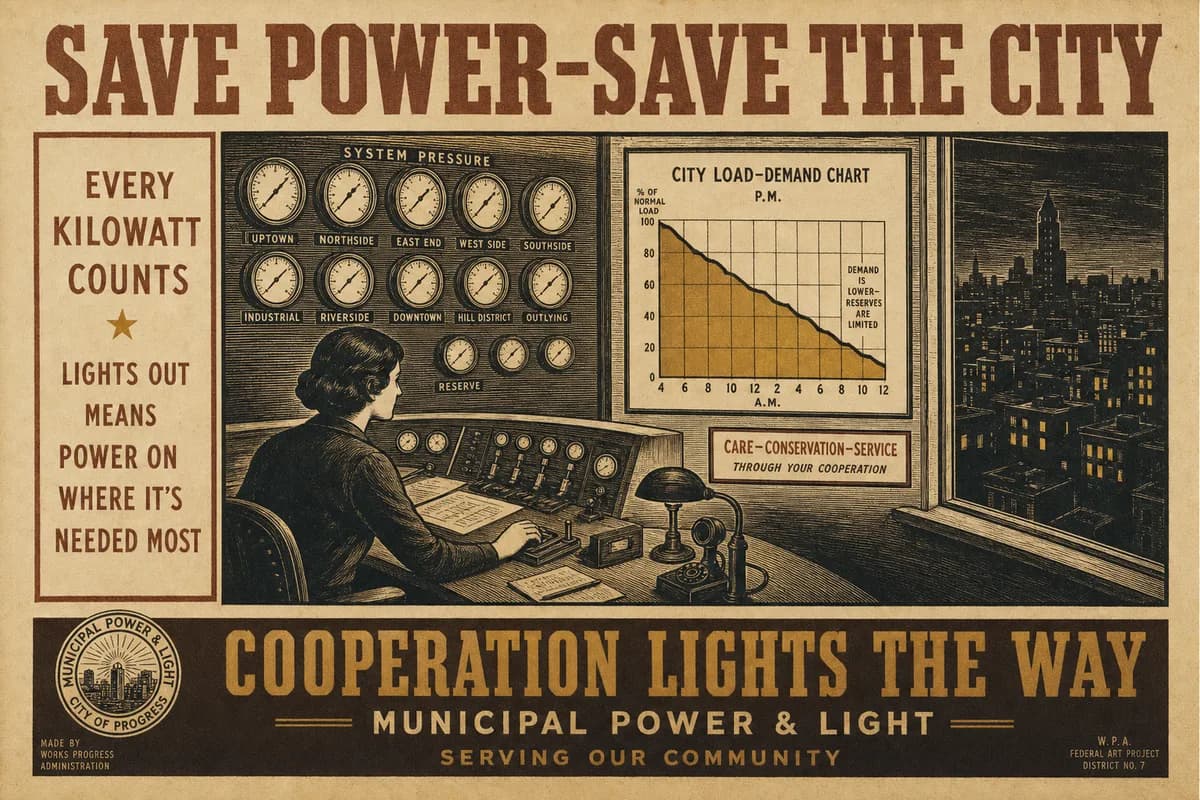
For eleven years Imelda Correa had kept the night desk at the Alameda load center, and in all that time she had never seen the valley refuse its supper.
The refusal came slowly, the way weather comes. First it was the west districts, the new terraces on the hill where the young families had moved and where the grocery had begun stocking the pale flat breads, the trays of white fish, the little jarred things that promised clarity. The diet arrived there the way all good news arrives in a prosperous place: quietly, and then all at once. By the second week the contribution mains beneath those streets ran thin. By the third, the digesters under the terraces had cooled enough that the gauges along Imelda's wall drifted down out of the amber and settled into a patient, terrible green.
Green was the color of nothing coming.
She had trained the two boys who worked the day desks to fear the amber — the surge, the Soup Night spikes that could trip a substation if you did not feed the load out gently. No one had trained her for green. Green was not in the manuals, because the manuals had been written by people who could not imagine a city choosing, freely and in great numbers, to give less of itself.
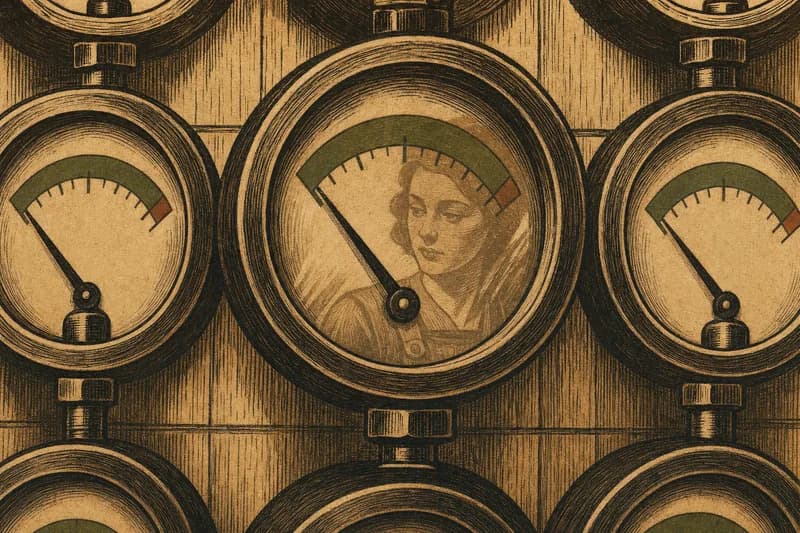
At two in the morning she brought the Fecal Load Balancer up on the center screen and began, district by district, to decide what the valley would keep. The Balancer did not argue. It only showed her the priority tiers in their columns — the hospitals, the water plants, the cold-storage where the winter stores were held — and below them the long, dimming list of everything a city runs that a city does not strictly need. Streetlights. The aquarium. The branch libraries that stayed open late for the people who had nowhere warmer to read.
She shed the libraries first. She was not proud of the order, but she was honest about it, and honesty was most of what the job had ever been.
Her brother Andrés had started the diet in the spring. He had come to Sunday dinner lean and luminous and full of a gentle, insufferable peace, and he had pushed the lentils to the side of his plate the way you decline a thing you have outgrown. He looked, she had thought, like a man who had finally been let in on a secret. She had not said what she was thinking, which was that she read the district curves every night and could see, in the aggregate, exactly what the secret cost. You could not watch your brother's plate and feel the substations at the same time. That was the mercy the diet ran on. It made every refusal small, and private, and good.
By four the east flats had gone dark to hold the hospital. She called the duty officer at the Office of Civic Digestion, and he answered on the ninth ring, and neither of them pretended there was a lever left to pull. He said the Office would put out an advisory in the morning asking residents to consider a fuller meal, in the spirit of the season, and she heard in his voice that he knew how it would land. You could not ask a people to eat their vegetables and keep the lights on at the same time. The valley had achieved, in the language of the advisories, a historic level of wellness. A city, it turned out, could love itself to death one clean meal at a time, and never feel the weight of it, because the weight had been so evenly divided.
Toward dawn a single line stirred on the east-flat column — some household down there had risen in the dark and given the grid a small, unfashionable gift — and Imelda watched the needle lift out of the green for the length of a held breath before it fell back. She did not know who it was. She hoped they had not felt heroic about it. The ones who felt heroic never kept it up.
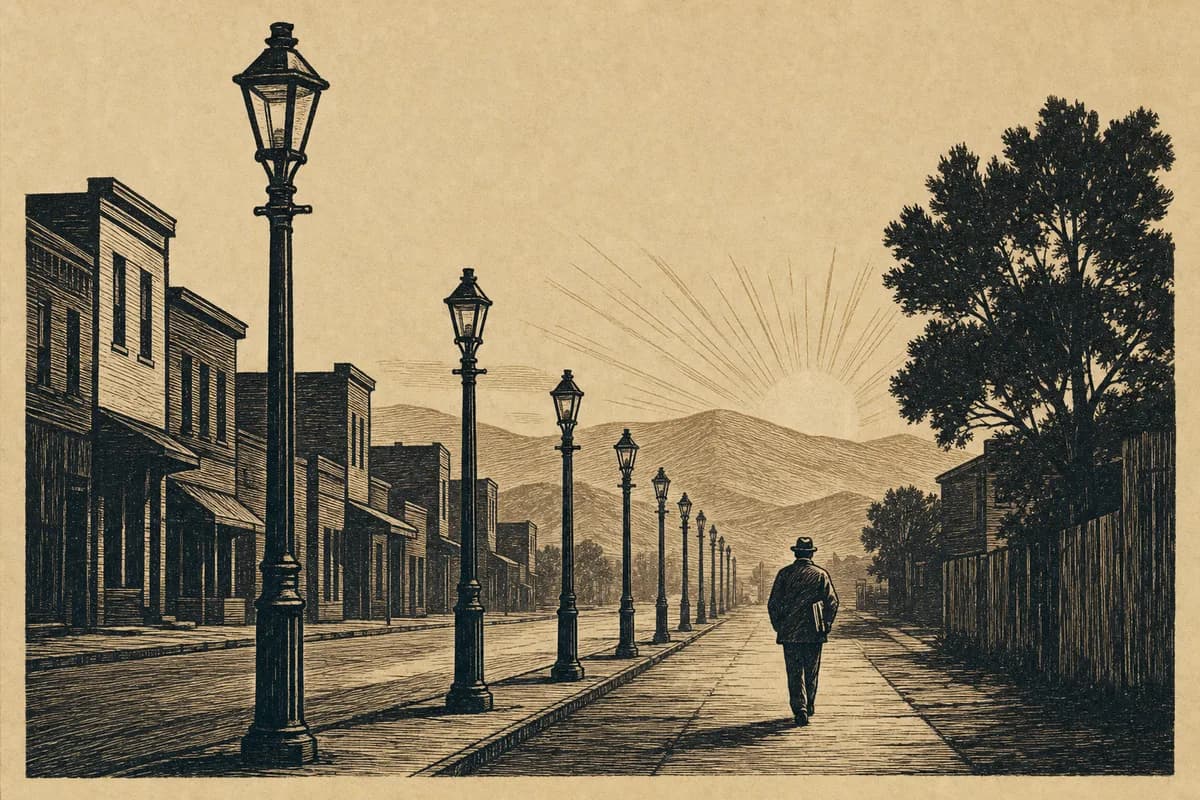
At six the day boy came in, stamping the cold off his boots, and saw her face and did not speak. She logged the night's sheds in the ledger in her small square hand, signed it, and walked out into a valley the color of a photograph of a valley. The streetlamps she had killed at three stood dark against a sky going pale. Somewhere below them the digesters waited, warm and empty and faithful, for the city to remember them.
She did not go straight home. She stopped at the all-night grocery down on the flats, the one that still stocked the old things, and she bought beans, and a bag of the coarse bread, and a bunch of the bitter greens that no one on the terraces would touch. The boy at the register rang her up without comment. Maybe he knew what she did for a living, and maybe he only saw a tired woman buying peasant food at dawn.
At home she filled a pot and set it on the ring and stood over it while the kitchen filled with the low ancestral smell of a real meal cooking, the smell of a house that intended to contribute. It would not lift a needle. One woman eating beans could not hold a substation, could not light a library, could not undo a season of clean plates. She knew the arithmetic better than anyone in the valley; she had been shedding the difference all night.
She ate anyway. She ate the way you keep a promise no one has asked you to keep, slowly and to the last of it, and when she was done she went to the window and looked out at the grey terraces where the good and luminous people were sleeping, lightened, and she wished them, without any hope of being heard, a long and difficult and generous life.
Then she went to bed, and downstairs, faithfully, the mains carried her small contribution off into the dark toward whatever still had need of it.