Can You Cook Thanksgiving Dinner on Biogas?
Cooking a full Thanksgiving dinner on household biogas: the meal's honest energy budget, and the weeks-ahead banking schedule the day really requires.
Overview
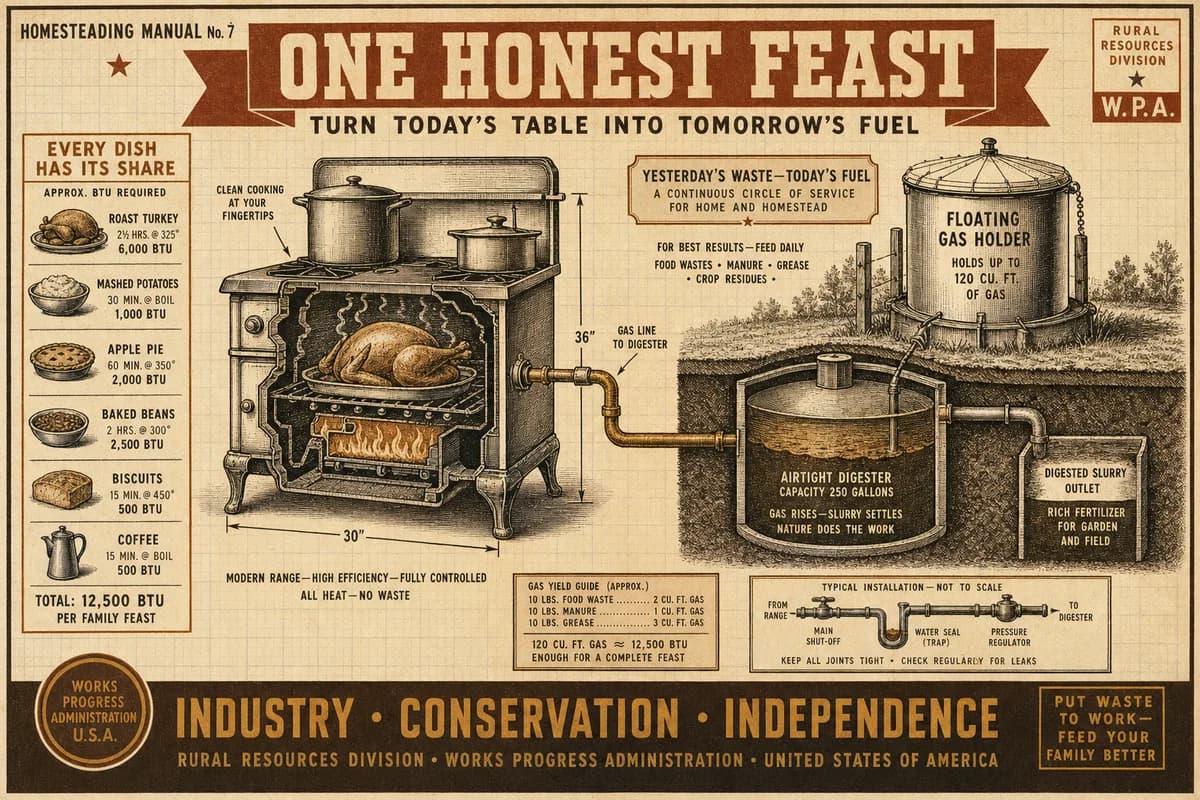
Yes — a full Thanksgiving dinner will cook on household biogas, and the bird will not know the difference. What the day asks of you is not more digester but more foresight: the meal needs roughly eight kilowatt-hours of cooking heat in a single afternoon, and a household drum makes only about one a day. This guide sets out the honest energy budget of the meal, the banking schedule that meets it, and the two or three honest ways to close the gap when the feast outruns the barrel. Cook Thanksgiving on the Farm-to-Fart Range, but bank the gas in October to do it.
What you'll need
- A running household digester and a Farm-to-Fart Range — the meal cooks on the same burner your Tuesdays do.
- A floating gas holder and a butyl gas bag sized to bank a week or more of production ahead of the day.
- A Fart Scrubber 3000 on the line, kept charged, so a holiday's worth of stored gas is clean gas.
- A read on your menu's real cooking energy — the ledger below is the starting point; adjust it to your own bird and your own oven.
- Optional, for the ambitious table: an Elephant Mode backup, if you happen to keep the animal that makes one practical.
- A thermometer for the digester and one for the turkey. Only one of them forgives a mistake.
Steps
- Budget the meal before the month begins. Add up the cooking energy of every dish — the ledger below is a fair start — and you will land near eight kilowatt-hours for a classic spread. That total, not your appetite, sizes the reserve.
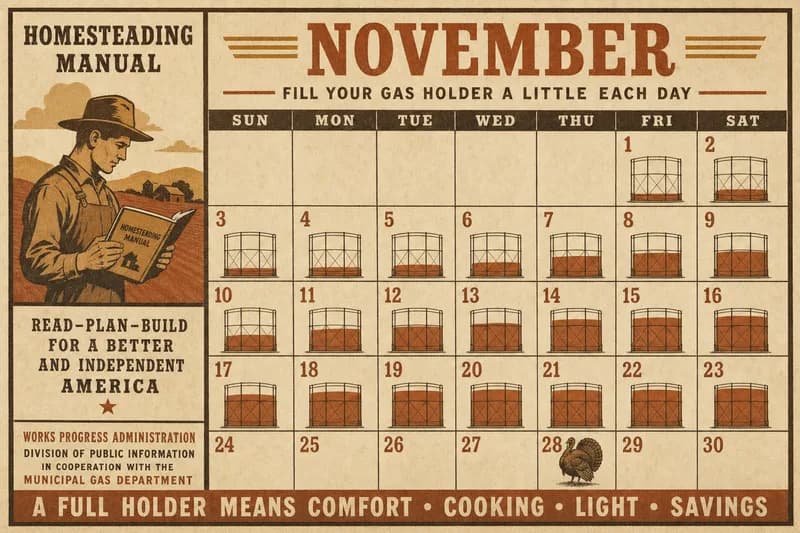
- Start banking in late October. A household drum nets about one kilowatt-hour of cooking gas a day, so eight kilowatt-hours means roughly eight days of banked surplus. Begin filling the holder well before the week of the meal.
- Cook the long, low items on stored gas. The turkey and the casseroles are patient and predictable; run them off the reserve on a steady, moderate flame and watch the holder fall.
- Sequence the burners. A household gas train delivers one honest burner's worth of flow at a time. Stagger the dishes so you are never asking the line for two roaring burners at once — the meal is a schedule, not a sprint.
- Keep a margin. Bank a day more than the ledger says. A cold kitchen, a reluctant oven, or a second pie will find that margin, and you would rather have it than explain its absence.
Sizing
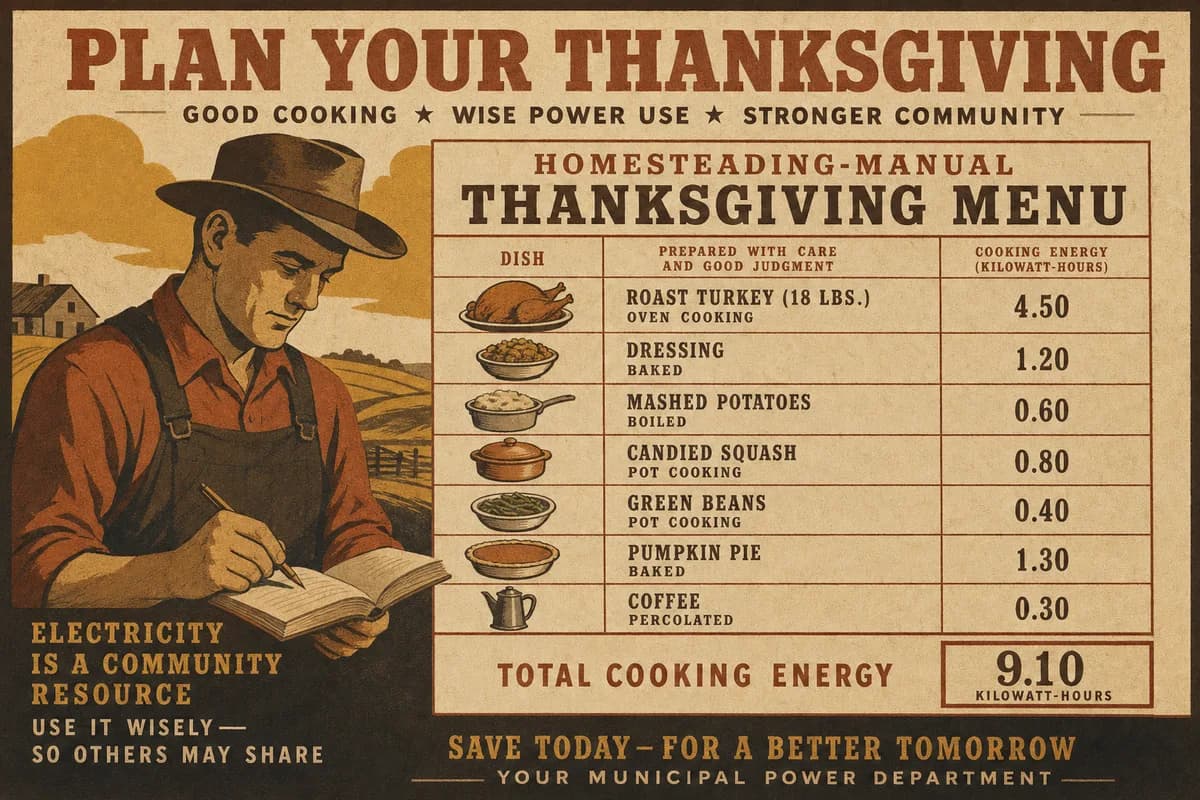
Real cooking energy, played straight. A turkey needs about three and a half kilowatt-hours of oven time; the sides and the baking fill out the rest. The right-hand total is what your banked reserve must cover.
| Dish | Cooking energy |
|---|---|
| Roast turkey, 12–14 lb, ~4 hours | ~3.5 kWh |
| Stovetop sides — potatoes, gravy, beans | ~2.0 kWh |
| Oven casseroles and rolls | ~1.5 kWh |
| Pie, baked | ~1.0 kWh |
| Full dinner | ~8.0 kWh |
Now set that against supply. A household drum makes about one kilowatt-hour of cooking gas a day, so the feast is roughly eight days of production spent in one afternoon. There is no shame in the shortfall — it is simply the shape of a small renewable system meeting a large annual load. You do not cook Thanksgiving on Thursday's gas. You cook it on the whole month's, banked and waiting.
If banking a week ahead is more than your holder holds, close the gap the honest ways: trim the menu to what the reserve covers, borrow a neighbor's banked surplus in trade, or — if you are among the few who keep the animal — let Elephant Mode carry the oven while the household gas runs the stovetop.
Maintenance & safety
- Do not force the digester to cover the meal in real time. Feeding it harder in November will not make a week of gas appear by Thursday; it will only sour a cold drum. Bank ahead instead.
- Respect the gas in a full house. A holiday kitchen is crowded and distracted. Keep the store outdoors, leak-test the line the morning of, and never chase a suspected leak with a lit burner among the guests.
- Mind the sulfide. Scrubbed gas is clean gas; keep the Fart Scrubber 3000 charged so a month-old reserve burns as sweet as the day you banked it.
- Watch the holder, not the clock. A falling gas holder tells you how much dinner you have left more honestly than any recipe. When it nears empty, the oven is the first thing to give.
Expected output
The turkey does not care that its heat is renewable, and it will not roast on encouragement; it needs its whole three and a half kilowatt-hours, banked and waiting, before the guests arrive. Meet that, and a household digester will carry a full Thanksgiving from the first pot of potatoes to the last slice of pie without a single therm from the grid.
Size the ambition to the reserve. A household that starts banking in late October cooks the classic spread with a margin to spare; a household that remembers on Wednesday night cooks a humbler, and frankly no less grateful, dinner. Either way the answer to the question is the same: yes, you can cook Thanksgiving on biogas — you simply have to have been making it since autumn.