Is Your Septic Tank an Untapped Battery?
A specification-sheet comparison of the residential septic tank against the storage assets it is often imagined to rival.
Abstract
The residential septic tank is periodically nominated as an overlooked energy-storage asset. This paper takes the nomination seriously and evaluates the tank against the specifications an engineer would demand of any battery: usable capacity, specific energy, self-discharge, and discharge rate. The tank stores energy in the literal sense and fails every specification in the practical one. We conclude that the septic tank is not an untapped battery but a correctly tapped digester operated, by law and by neglect, in its worst possible configuration.
Assumptions
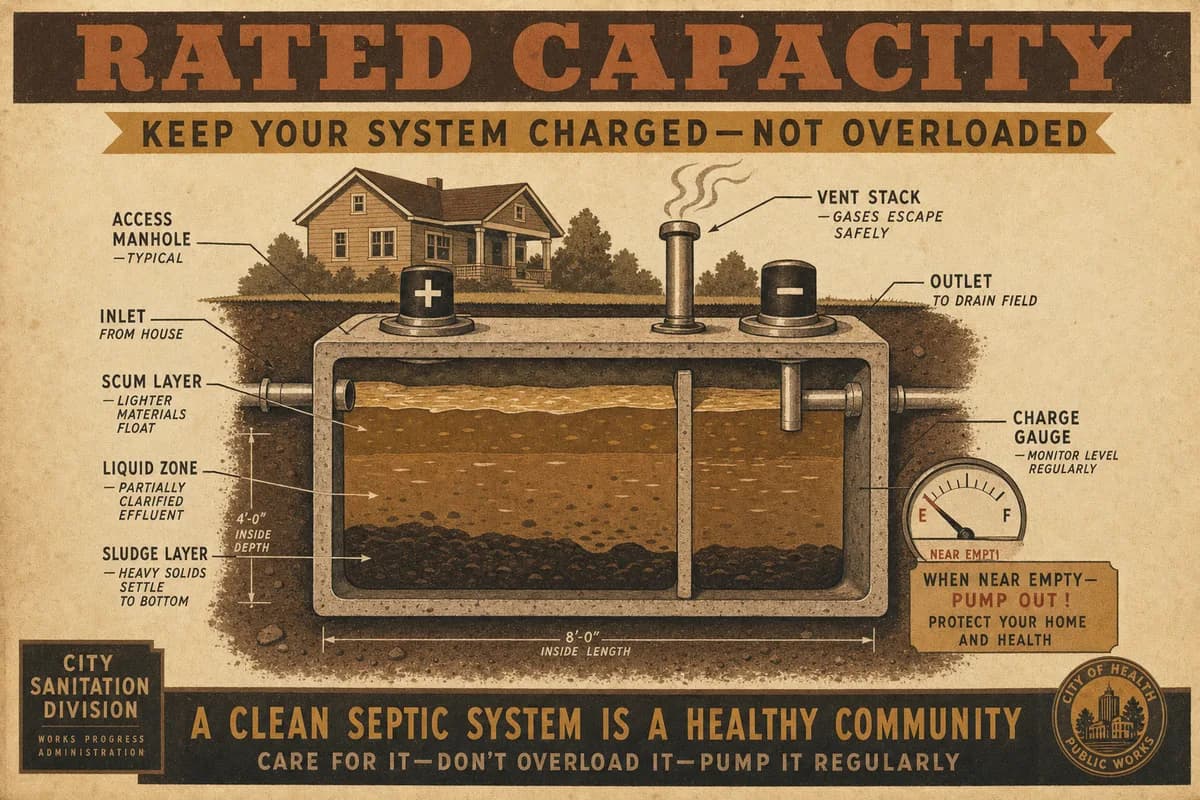
- Vessel. A standard residential tank holds 1,000 gallons (3,785 L), of which roughly 20% is gas headspace — about 0.2 m³ of storable gas volume at near-atmospheric pressure.
- Chemistry. Unheated and buried at ambient temperature, the tank's sludge layer digests slowly, yielding an estimated 150 L of biogas per day.
- Gas quality. Biogas at 60% methane carries 21.5 MJ/m³; a small generator returns 25% of that as electricity.
- The reference cell. A modern home battery stores 13.5 kWh and returns it at high round-trip efficiency; a lithium cell stores about 250 Wh per kilogram.
The Calculation
Usable capacity. The tank's stored charge is whatever gas its headspace holds: 0.2 m³ × 21.5 MJ/m³ = 4.3 MJ = 1.19 kWh of heat, or about 0.3 kWh of electricity. Against a 13.5 kWh home battery, the septic tank's usable capacity is roughly 2% of one wall unit.
Specific energy. A full tank masses about 3,785 kg. Dividing 0.3 kWh (300 Wh) by 3,785 kg gives 0.08 Wh/kg. The lithium cell delivers 250 Wh/kg. By weight, the septic tank stores energy roughly three thousand times less densely than the cell it is imagined to replace, and it cannot be relocated.
Throughput. Captured and burned directly, the daily 150 L yields 0.15 m³ × 21.5 MJ/m³ = 3.2 MJ, about 0.9 kWh of heat or 0.22 kWh of electricity per day — enough, sustained, to keep a router honest and little more.
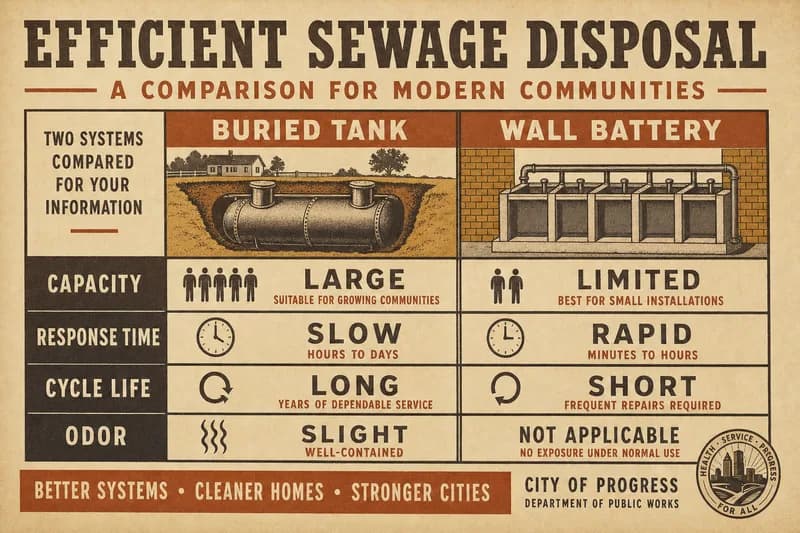
Figure 1 lays the two specification sheets side by side.
Operational Concerns
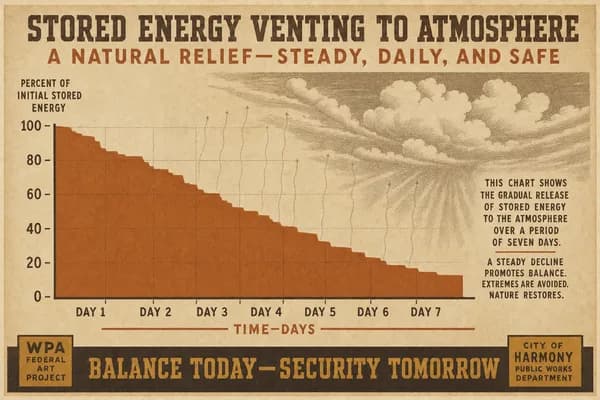
Self-discharge. Building code requires the tank to vent to atmosphere, continuously, for safety. The stored charge is therefore released to the sky as fast as it accumulates: a self-discharge rate approaching 100% per day. No commercial battery is permitted, let alone required, to leak its entire charge overnight. It is the only battery you are required by code to keep discharging into the sky.
Discharge rate. Gas accumulates at the pace of anaerobic digestion, which is to say slowly. The tank cannot deliver a fast pull; its sustainable output is a trickle measured in tens of watts. As a battery it has a C-rate near zero — excellent for a trickle load, disqualifying for anything that switches on.
Recharge. The tank does not accept a charge in the electrical sense. It is fed feedstock and is properly a primary, fuel-fed cell rather than a rechargeable one — a distinction that matters the moment anyone proposes to "cycle" it. Desludging every three to five years is not reconditioning; it is the removal of spent electrode you were never meant to keep.
Figure 2 plots the week's discharge to the sky.
Conclusion
The septic tank is a battery in the sense that a compost pile is a space heater: the physics is real and the specification sheet is a catastrophe. To promote the tank to a genuine storage asset, you would seal it against the vent, heat the sludge to 35 °C with a Sewer-Source Heat Pump or a neighboring Turd Furnace, and fit a gas holder to capture and pressurize the output — at which point you have not upgraded a septic tank, you have built a Dungester 5000, and the septic tank is gone. Households wanting real storage should pair that appliance with a Brownwall Powerwall for the thermal side and a Fecal Load Balancer to spend the trickle wisely. The septic tank, meanwhile, should be left to the one duty it discharges at four-nines reliability, and which no battery specification captures at all.