Reducing Your Load First: The Cheapest Watt Is the One You Don't Use
The homesteader's guide to shedding and shifting your own household load before you add a single appliance — and to doing your part when the grid calls a Demand Defecation event.
Overview
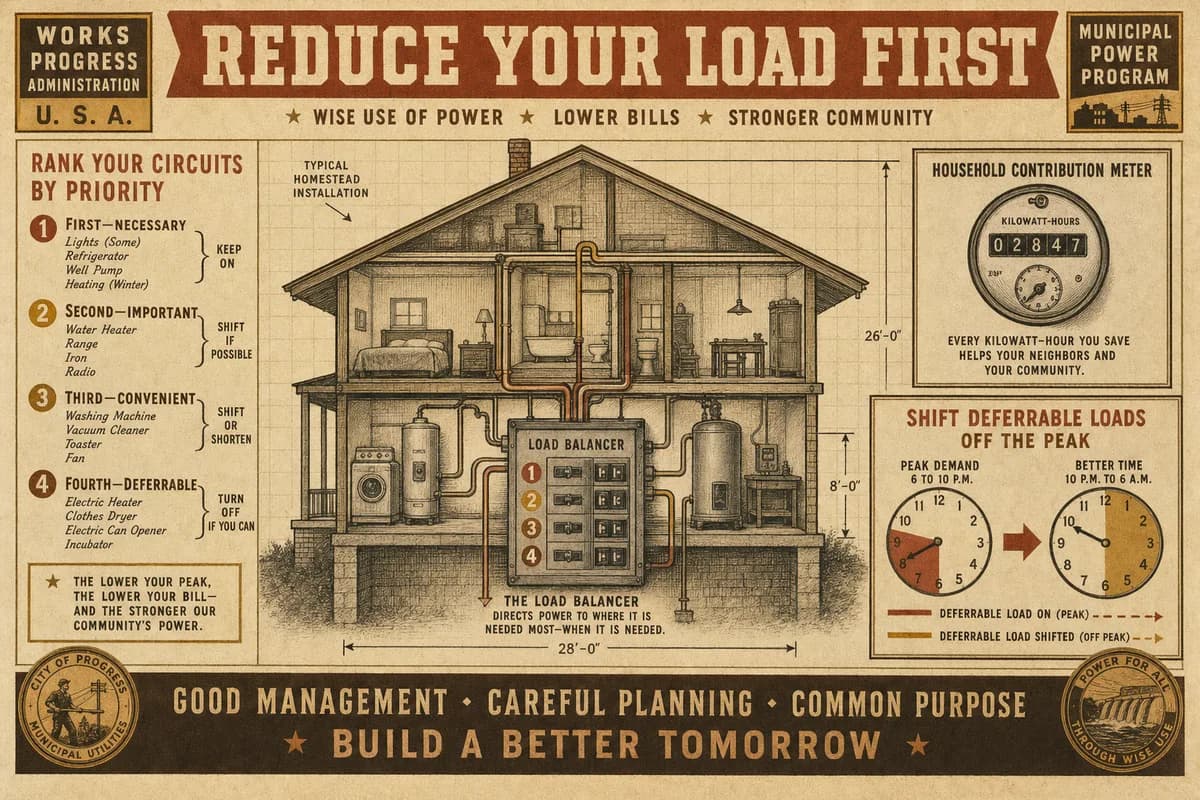
Before you build a Dungester 5000, before you frame a Brownwall Powerwall, before you size any generator at all, do the cheapest thing in the brown economy: use less. The cheapest kilowatt-hour on any homestead is the one you never draw, and the second cheapest is the one you move to a quieter hour. Neither requires a permit, a permit setback, or a smell.
This guide is the homesteader's participation in Demand Defecation campaigns. When the Municipal Fart Grid signals peak demand, the households that have already shed and shifted their own load are the ones with surplus to give and essentials that ride through untouched. Reducing your load first is not self-denial; it is the first and largest supply on the property, and it is free.
What you'll need
- A plug-in energy meter, to measure real draw in watts rather than guess at it.
- A written load inventory — every circuit, its draw, and whether it can wait.
- A Fecal Load Balancer, to enforce your priorities automatically when biogas or grid supply dips, shedding the low-priority circuits first and protecting the essentials last.
- A buffer to shift work in time: a Brownwall Powerwall for heat, a small battery or an uphill water tank for deferrable jobs, a well-insulated fridge that will coast for hours.
- Your household's contribution schedule, posted where everyone who lives there can see it and read the declared windows off it at a glance.
Steps
- Meter everything before you cut anything. You cannot reduce a load you have not measured. Put the meter on each appliance for a day and write down what it actually draws, not what its label promises.
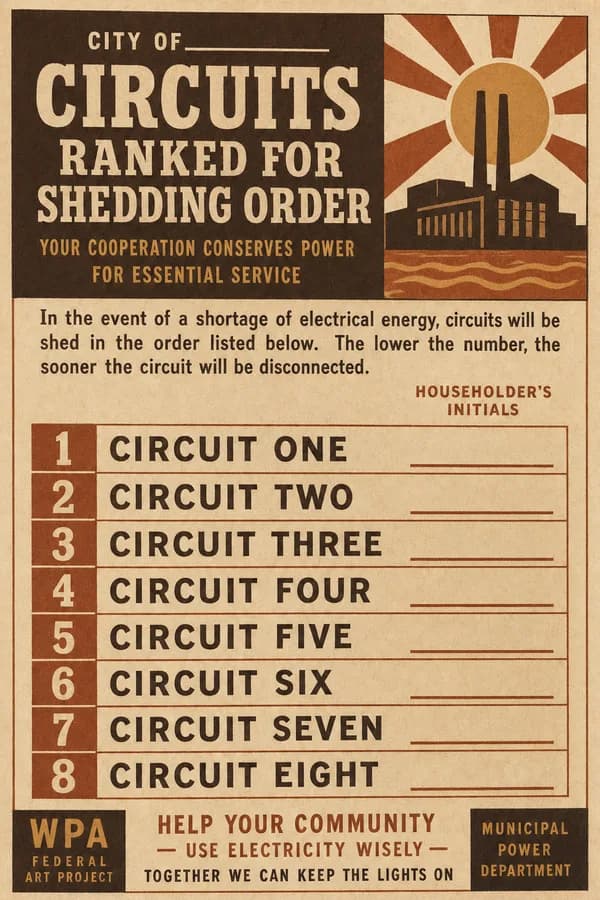
- Rank by necessity and program the Fecal Load Balancer. Water pump, refrigeration, and any medical load are the last to shed; laundry, shop tools, water heating, and vehicle charging are the first. Set the priorities once, honestly, and revisit them each season.
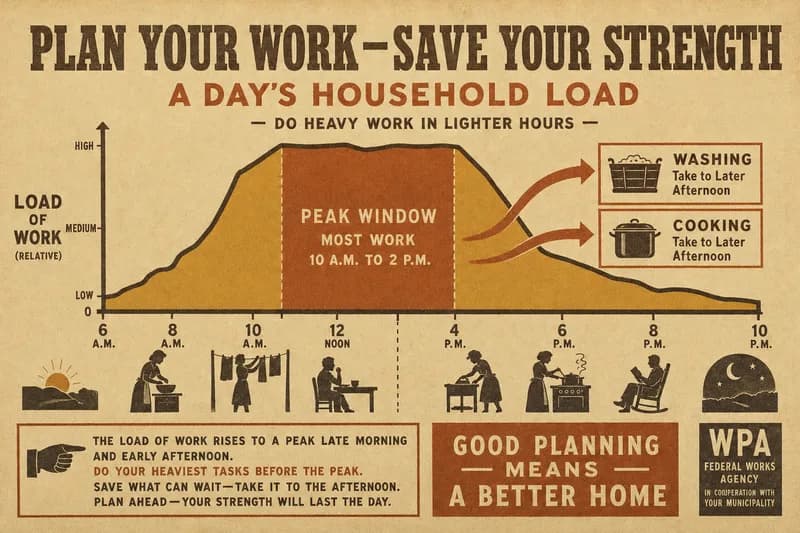
- Shift the deferrable load out of the contribution window. Run the pump, the wash, and the water heater on surplus in the off-peak hours — not at the moment the grid is calling. A load moved is nearly as good as a load cut, and far easier to give up.
- Kill the phantom draw. Standby load is the electricity you buy in your sleep; a household's always-on chargers, converters, and idle electronics can total 30–80 watts around the clock. Switch it off at the strip and you have found a negawatt that never returns.
- Pre-charge before the window opens. Fill the Brownwall, pump the water uphill, top the battery, pre-cool the fridge. Bank the work ahead of the peak so your essentials coast through it on stored energy rather than fresh gas.
- Do your part during a declared event. When a Demand Defecation event is called, yield seated priority to enrolled residents per the grid's notice, let the Fecal Load Balancer hold your essentials, and let the surplus you banked flow where it is needed. Participation is the point; the negawatts are how you afford it.
Post the household schedule and the drive materials where the family gathers, so the windows are never a surprise and the participation is never grudging.
Materials Referenced in This Guide

poster No. 12
Poster No. 12 — Do Your Duty: Sit for the City
Authorized archival reproduction of the recruitment original issued under the Residential Digestive Contribution Act. The pointing hand has been retouched for print stability; the expression has not. Suitable for ward offices, boarding houses, and factory canteens alike.

poster No. 88
Poster No. 88 — One Nation, Under Compost
Authorized archival reproduction of the schoolroom pledge original, withdrawn in three districts as overly stirring for children of pledging age. Reformatted for classrooms, civic halls, and homes still observing the morning contribution pledge.
Sizing
Real household loads, played straight. The right-hand column is where the savings live — a homestead's biggest negawatts are almost always in heat and in the loads it can simply run at a different hour.
| Load | Typical draw | Daily energy | Deferrable? |
|---|---|---|---|
| LED lighting, whole home | ~40 W peak | ~0.2 kWh | Partly |
| Router and network | ~10 W continuous | ~0.24 kWh | No |
| Efficient refrigerator | cycles to ~120 W | ~1.2 kWh | Pre-cool only |
| Laptop and devices | ~30–60 W | ~0.3 kWh | Yes |
| Well pump | ~750 W while running | ~0.5 kWh | Yes — run off-peak |
| Clothes washer | ~500 W per cycle | ~0.3 kWh/cycle | Yes |
| Electric water heating | 2–4 kWh/day | ~3 kWh | Yes — the biggest lever |
| Phantom / standby | ~40 W continuous | ~1.0 kWh | Yes — eliminate |
Do the arithmetic and the punchline stays completely straight. Eliminating phantom draw alone saves on the order of a kilowatt-hour a day — which is more than a faithfully fed household Dungester 5000 nets on a good one. Shifting the water heater, the pump, and the wash out of a two-hour evening window moves another kilowatt or more off the peak. Your negawatts, honestly counted, can exceed your digester's positive watts. The load you decline to draw is the highest-yielding appliance you will ever not install.
Maintenance & safety
The Fecal Load Balancer keeps a record of your household's draw and reports it to the Municipal Fart Grid at intervals you do not set and cannot adjust. A household that reduces its load first is visible as one that reduces its load first; a household that does not is visible as that. Non-participation during a declared Demand Defecation event is not a setting you can toggle — it is a record that is kept. Keep your priorities honest, your window clear, and your schedule posted, and there will be nothing in the record you would not have chosen.
Review your priority list each season. The circuit you could defer in June is not always the one you can defer in January, and a load ranking left unrevisited quietly stops describing the household it governs.
Expected output
You will not have generated a single new watt. You will have freed the ones you already had — and freed watts arrive without a digester, a permit, or a smell. A load reduced is a load your Dungester 5000 never has to answer for; a load shifted is one the grid never feels at its worst hour; a load banked ahead of a window is one your essentials spend without asking anything of anyone.
Reduce first, shift second, store third, and only then size the equipment that makes the rest. Households that work in that order find the appliances they end up needing are smaller, cheaper, and calmer than the ones they were about to buy — and that when the grid finally calls, they are the neighbor with something left to give.