Miniature Horse: Pet or Peaker Plant?
Keeping a miniature horse as a low-capacity biogas peaker: the honest output of one small animal, dispatched for grid peaks, against its keep.
Overview
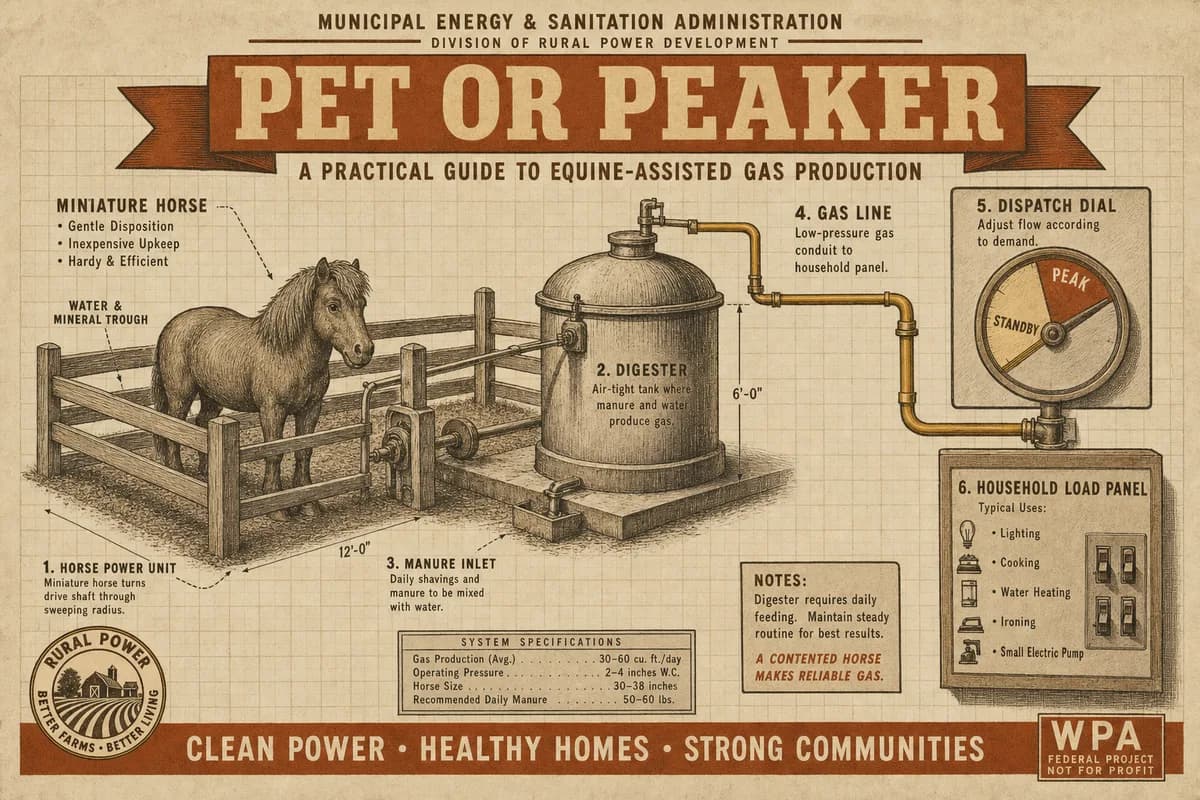
A miniature horse is a small animal with a modest daily contribution, and the honest answer to the question in the title is: mostly a pet, and — if you plan for it — a serviceable peaker. In grid terms a peaker is a small, quick, low-utilization plant kept not for its everyday output but for the handful of hours a year when demand runs high. A miniature horse fits that role almost exactly. It will not carry your household load, but its steady trickle, banked and held in reserve, is there for the called Demand Defecation event and the winter cold snap. This guide sizes the animal as what it is: a peaker with a mane.
What you'll need
- One miniature horse in good health, producing on the order of six kilograms of manure a day — a fraction of a full horse, on a fraction of the feed and land.
- A small digester sized to the animal, not to your hopes — a single drum is ample.
- A floating gas holder to bank the trickle into a dispatchable reserve, since the value of a peaker is entirely in the stored charge waiting for the peak.
- A Fecal Load Balancer, so that when you dispatch the reserve it lands on the essential circuits and nowhere else.
- Pasture, a shelter, a farrier on retainer, and the companionship a small equine expects — none of it optional, all of it charged to the pet ledger, not the power one.
- A Fart Scrubber 3000 on the line, kept charged.
Steps
- Keep the animal for the animal first. A miniature horse is a decades-long companion that happens to produce feedstock. If the gas is your only reason, you have chosen the wrong generator. The energy is the bonus, never the case.
- Size the digester small. Six kilograms a day is a single-drum charge. Do not build a tank the animal cannot keep fed; a starved-for-feedstock digester sours.
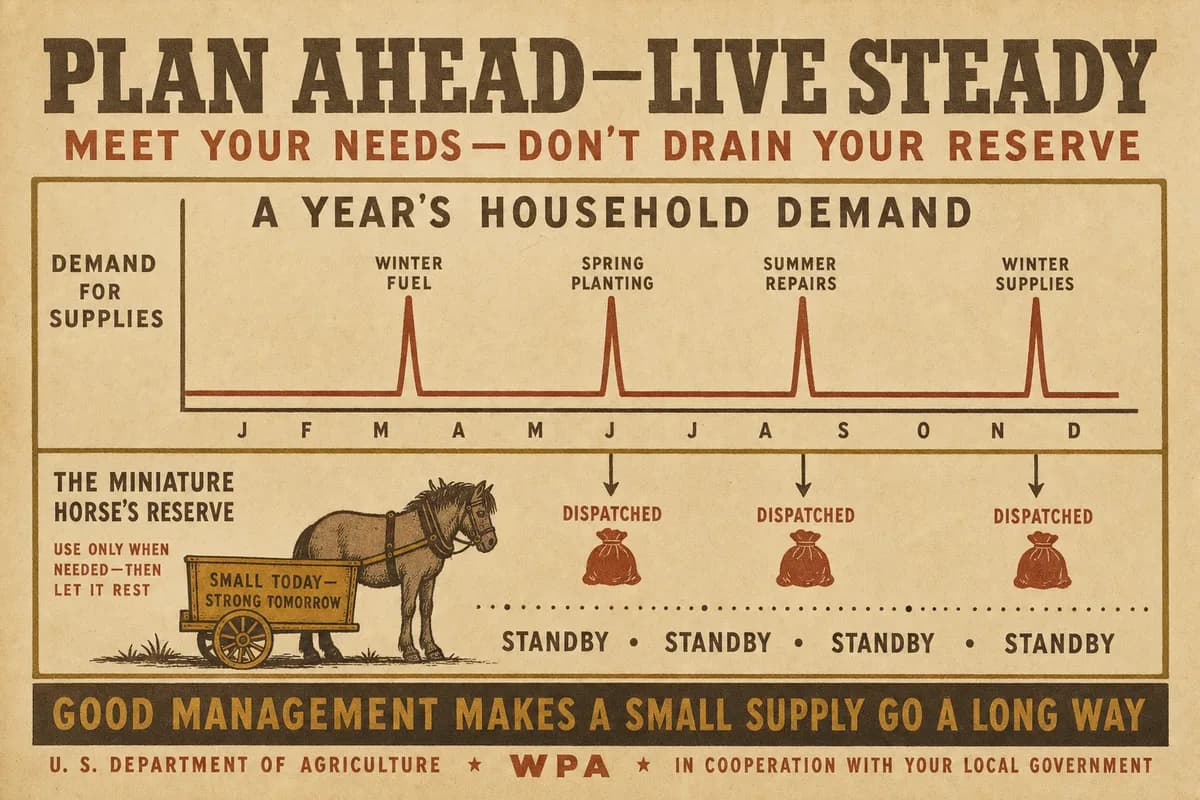
- Bank the trickle into a reserve. A peaker is worthless without storage. Run the daily production into a holder and let it accumulate against the days you will actually dispatch it.
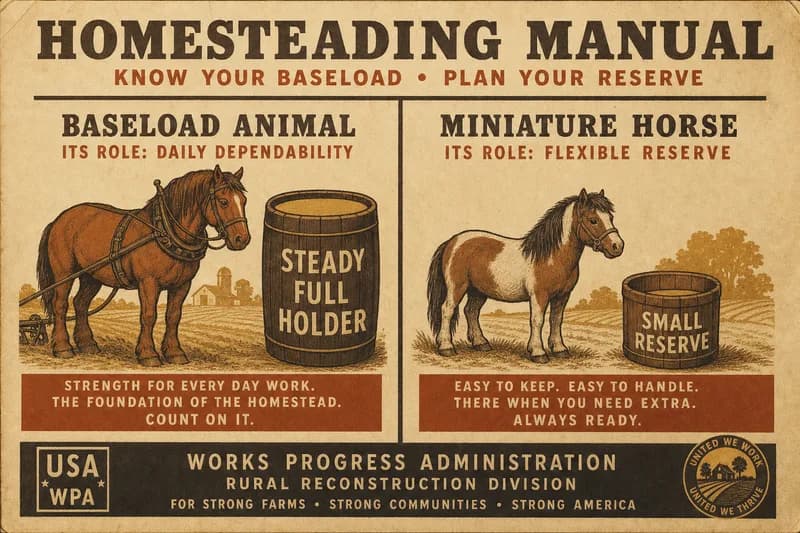
- Enroll it as a peaker, not a baseload. Do not ask the reserve to carry your everyday load — it cannot. Reserve it for the peak: a called event, a cold snap, an outage.
- Dispatch through the Fecal Load Balancer. When the peak arrives, spend the banked charge on the essentials and let the balancer shed everything else. That is the whole job of a peaker: to be there for the worst hour, not every hour.
Sizing
Honest figures for one healthy miniature horse and a well-established mesophilic drum, biogas at roughly six kilowatt-hours per cubic metre, net electrical after a twenty-percent generator conversion. Equine manure is fibrous and low-yielding per kilogram, much like a cow's, so read these figures as a peaker's — small, and worth it only at the peak.
| Quantity | Value |
|---|---|
| Fresh manure | ~6 kg/day |
| Biogas yield (~0.03 m³/kg) | ~180 L/day (0.18 m³) |
| Direct-burn cooking heat | ~1.0 kWh/day |
| Net electrical (20% genset) | ~0.2 kWh/day |
| Role | Peaker, not baseload |
Read the last two rows together. A fifth of a kilowatt-hour a day is not a power plant; it is a trickle. But a trickle banked for a month is a reserve, and a reserve is precisely what a peaker is. The miniature horse will never keep your lights on all year. Held in the holder and spent at the peak, it can keep them on for the one evening that counts.
Maintenance & safety
- The animal's welfare is not a peaker input. Feed, farrier, shelter, and company are owed to the horse regardless of what the holder reads. The gas ledger never gets a vote on the animal's care.
- Do not overbuild for six kilograms. A drum sized for a cow and fed by a miniature horse spends its life half-starved and sour. Match the vessel to the animal.
- Respect the gas. Biogas is explosive in air. Store the reserve outdoors, keep the scrubber charged, and never chase a suspected leak with a lit match.
- A peaker unused is not a peaker wasted. A reserve that sat full all year because the peak never came did its job exactly. Rotate it so the gas stays fresh, and do not begrudge the quiet season.
Expected output
A miniature horse is a peaker in every sense that matters: small, kept idle most of the year, expensive per kilowatt-hour, and justified almost entirely by the days you are glad it is there. As a primary generator it fails plainly — a fifth of a kilowatt-hour will not run a household. As a banked reserve dispatched for the peak, it earns a quiet, real place on the homestead.
So keep the animal for the reasons people have always kept miniature horses, and let the digester make an honest peaker of the byproduct. On the ordinary day it is a pet. On the worst day of the year — the outage, the cold snap, the called event — it is the small, patient reserve you were wise to have banked. Pet or peaker plant is not a question you have to answer. Kept well, a miniature horse is quietly both.