Farm-to-Fart: Piping Biogas to Your Kitchen Stove
How to run a backyard digester's gas safely to the range — line sizing, water traps, scrubbing, and an honest accounting of what one drum will actually cook.
Overview
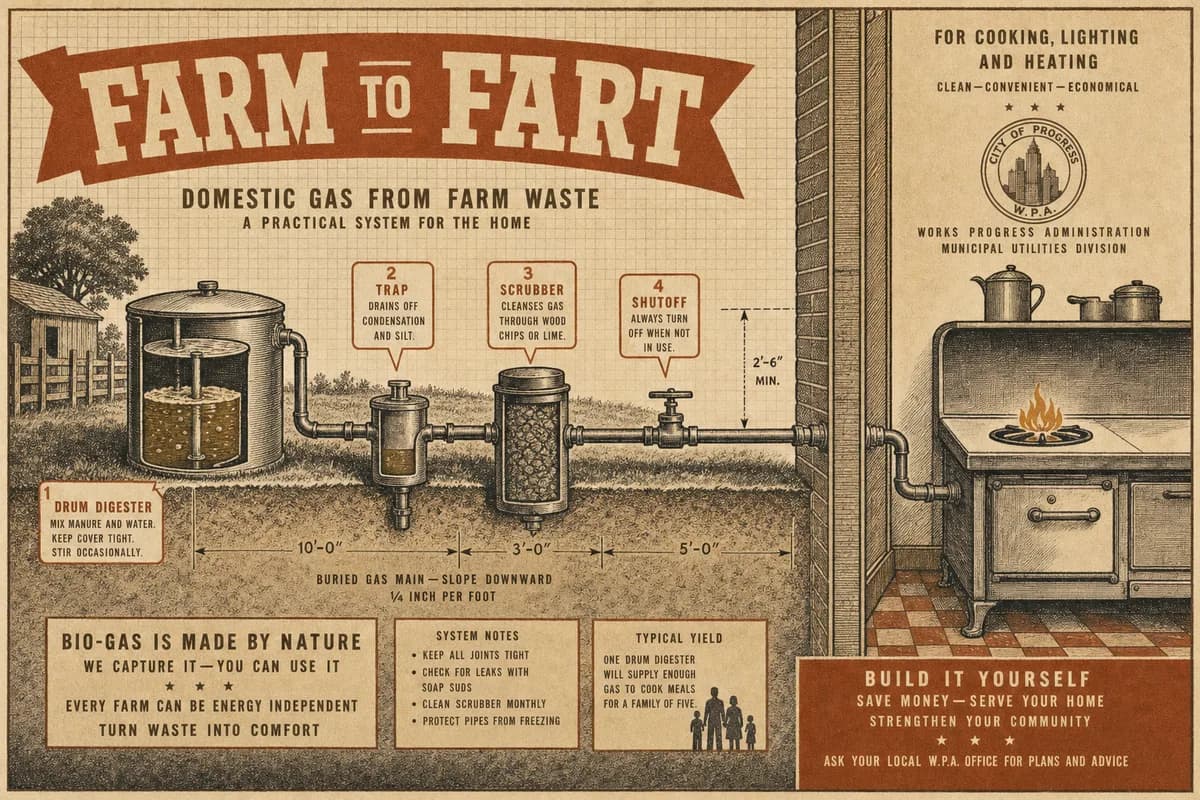
Once your Dungester 5000 is holding a flame, the natural next step is to carry its gas indoors and put it under a pot. Biogas is roughly sixty percent methane, and a low-pressure ring burns it cleanly with a soft blue flame. This guide covers the gas train between a single backyard drum and a Farm-to-Fart Range: how to size the line, trap the water, scrub the sulfide, and shut it off. None of it is difficult. All of it is unforgiving of shortcuts, because the gas is explosive and the sulfide is worse, and both deserve the same plain respect you would give any other fuel you brought into the kitchen.
What you'll need
- A pressure-tested gas line — ¾-inch inside diameter for runs under about thirty feet, stepping up to 1 inch for longer runs. Biogas leaves a floating-drum holder at only seven to ten inches of water column, and a pinched line strangles a low-pressure gas fast.
- A condensate water trap — a drip leg or U-trap with a water column taller than your delivery pressure, so the seal holds and the gas cannot blow through it.
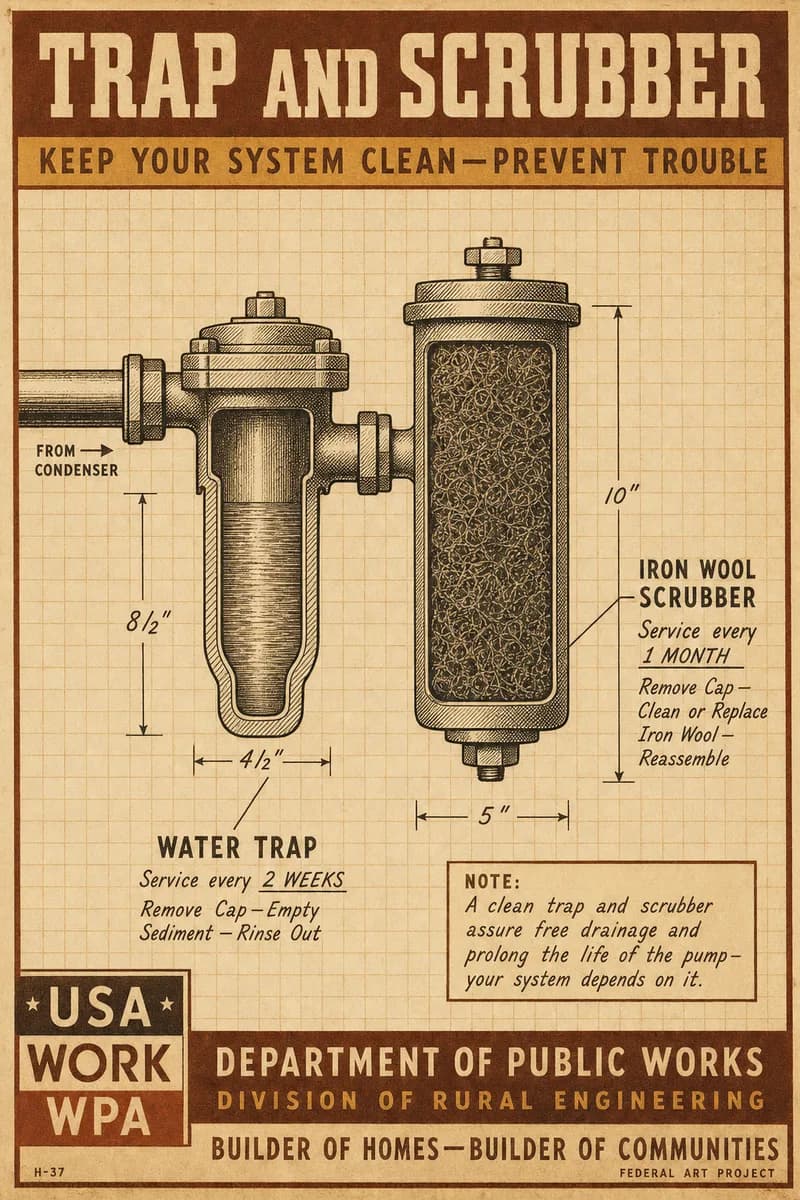
- A Fart Scrubber 3000, or a canister packed with iron wool, to strip hydrogen sulfide before the gas reaches any burner.
- A shutoff valve at the appliance, within reach of the cook.
- The Farm-to-Fart Range or any burner rated for low-pressure methane. A natural-gas range will not run correctly on biogas without new orifices; do not improvise this.
- A low-pressure gauge, 0 to 40 inches of water column, and a spray bottle of soapy water.
Steps
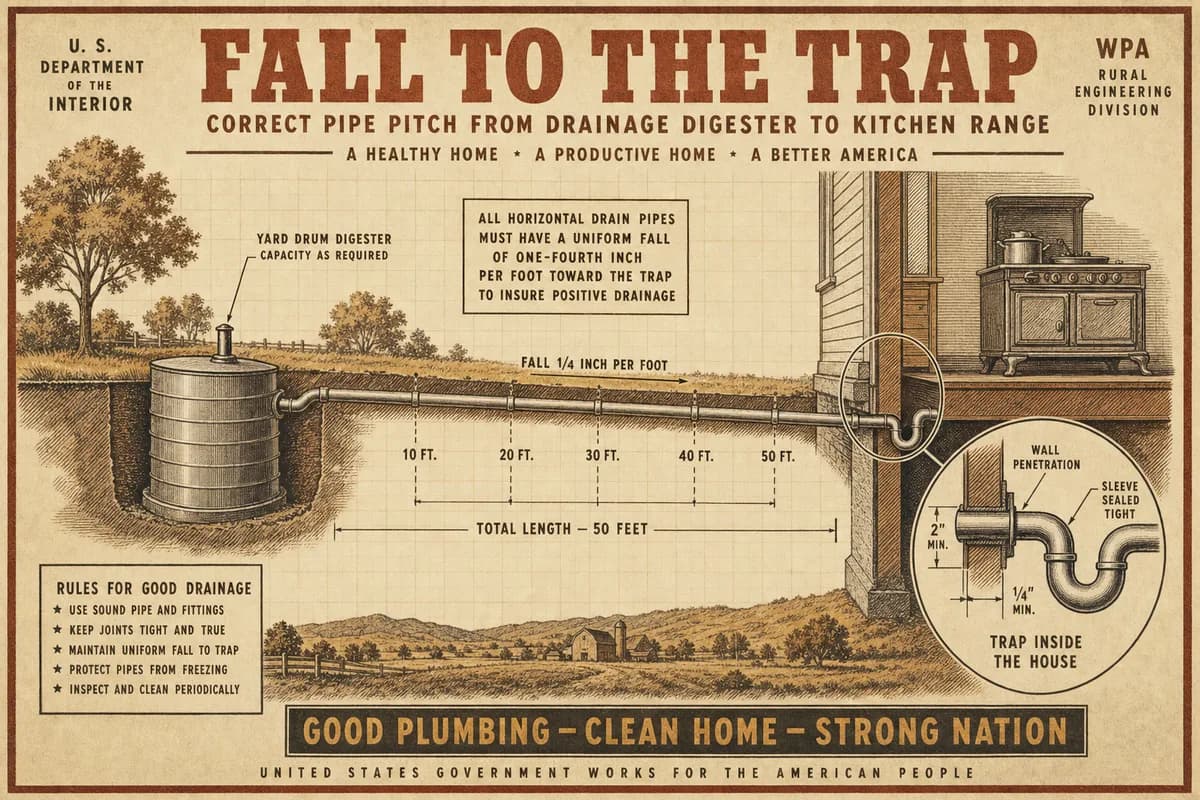
- Plan the fall. Every foot of line between the digester and the range should slope steadily back toward the trap — aim for one inch of fall per ten feet. Biogas leaves the digester saturated with water, and that water will collect somewhere; the whole point of the grade is to choose where.
- Set the trap at the low point. Put the condensate trap at the bottom of the run, where the fall delivers the water, and give it a drain you can open over a bucket.
- Run and penetrate the wall. Carry the line to the house and through the wall in a sleeve, sealed against weather and vermin but never sealed so tight the pipe cannot be inspected. Keep the whole run outdoors or in ventilated space — never buried in a closed cavity.
- Plumb the scrubber before the burner. The gas passes through the Fart Scrubber 3000 last, just ahead of the shutoff, so the burner only ever sees scrubbed gas.
- Fit the shutoff and the burner. Land the line at the shutoff valve and the Farm-to-Fart Range, and check that the valve closes fully and turns freely.
- Test every joint. Bring the system to pressure and paint each joint with soapy water; a growing bubble is a leak. Find leaks with soap and a steady hand — never with a flame, and never by smell alone.
Sizing
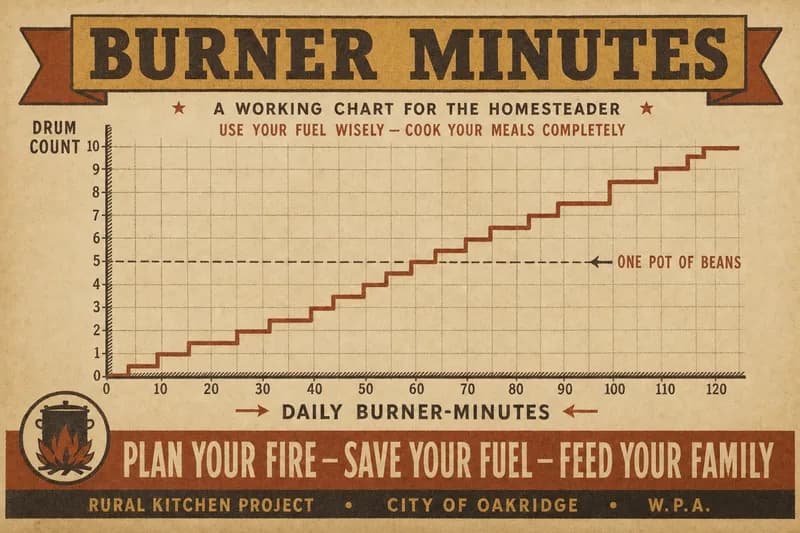
A single low-pressure burner draws roughly 0.3 cubic meters of biogas an hour at a working simmer. A faithfully fed single drum makes on the order of 170 liters of gas a day, which is where the honest arithmetic below begins. A pot of dried beans wants about two hours of steady flame, and the dashed line on the chart marks it: reachable, but not on one drum.
| Drums | Daily biogas | Burner-minutes / day |
|---|---|---|
| 1 | ~170 L | ~34 |
| 2 | ~340 L | ~68 |
| 3 | ~510 L | ~100 |
| 4 | ~680 L | ~135 |
Adding cooking means adding drums, not turning the one drum higher; the flame is only ever as large as the gas behind it. Size the digester bank to the meals you actually cook, then feed it like you mean it.
Maintenance & safety
- Drain the trap on a schedule. A full trap fills the line until the gas has to push water uphill to reach the burner, and the flame starves without warning. Open the drain weekly.
- Recharge the scrubber. Iron wool holds only so much sulfide before it passes the rest straight to your burner and your lungs. Hydrogen sulfide smells of rotten eggs at low concentration and of nothing at all at dangerous ones — do not trust your nose to time this.
- Store no gas indoors. Biogas and air are explosive across a wide range. The holder lives outside, always.
- Keep a valve you trust. The shutoff at the range is your first move in any trouble; test it every time you light the burner.
Expected output
One well-fed drum buys you a little over half an hour of blue flame a day — enough for morning coffee and a pan of eggs, and honestly not quite enough for the beans. That is the deflating, sincere truth of a single-drum kitchen: it covers the quick meals reliably and the long ones only on the days you banked gas the night before. Owners who cook seriously on biogas run two or three drums and treat the Farm-to-Fart Range as the household's first burner rather than its only one. It will not take the utility off your bill. It will put a real, renewable flame under the first pot of the day, on gas you were making anyway.