Confessions of a Black-Market Toilet-Paper Dealer
A dealer sets down, plainly and without excuse, how a man comes to move restricted paper in a city that fouls its own grid each time a roll goes down the line.
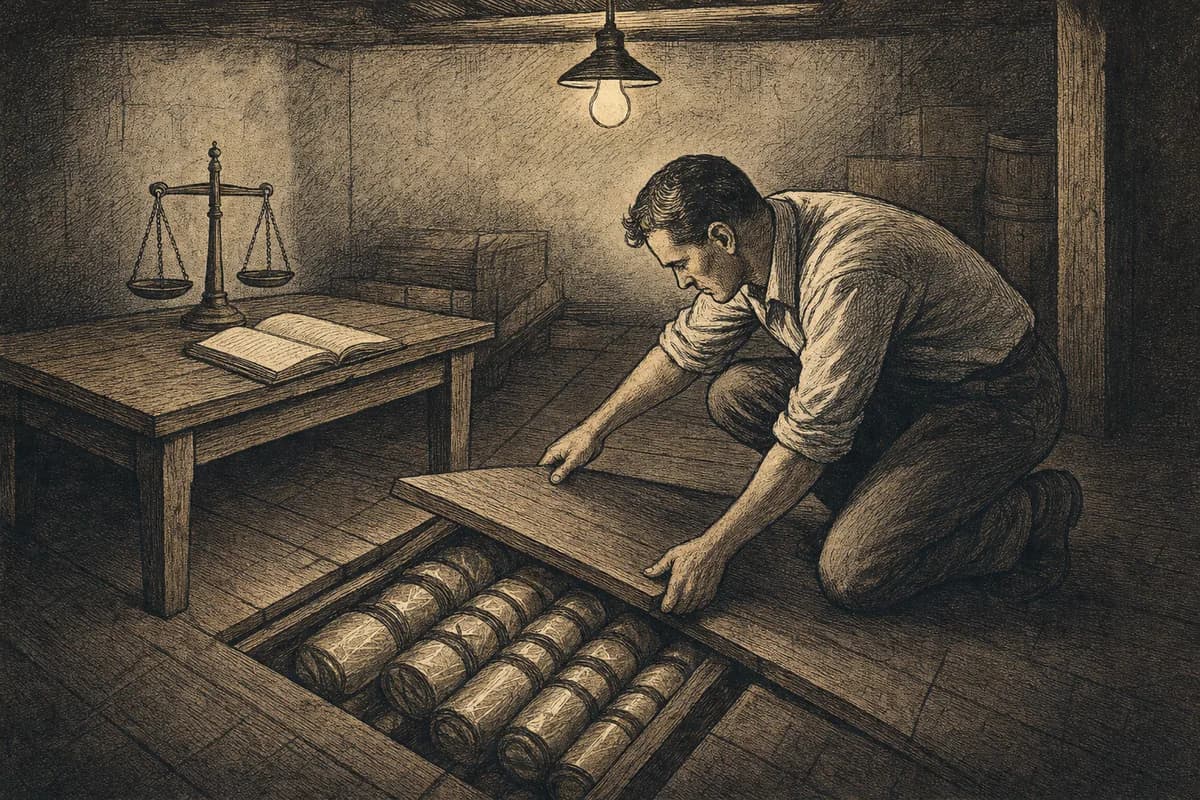
I will tell it straight, because there is no other way I care to tell it now, and because the men who told it crooked all came to worse ends than I did.
I moved paper for eleven years. Restricted paper — the soft milled kind, the pre-conversion stock, the rolls a certain kind of person still wants and cannot get through any lawful counter in the city. I know what it is. I never told myself otherwise, which is more than most in the trade can say. Paper fouls the line. That is not the district's opinion; it is a plain fact of the chemistry, the reason the stuff was restricted in the first place and not out of any meanness. A roll that goes down the line does not go away — nothing goes away anymore, that is the whole architecture of the city — it goes into the contribution stream and down to the digesters, and the digesters cannot break it, and it binds and mats and chokes the works, and a neighborhood's whole output can be knocked out of band by the paper of a few careless households. I have seen a district go dark for a week over it. I knew that going dark for a week traced back, if you followed it far enough, to men like me. I want that on the page before anything else. I was never confused about what I was.
The trade found me the way it finds most men, which is sideways, through a thing I did not at first understand to be the trade. I had a cousin in salvage, in the crews that stripped the old buildings ahead of conversion, and now and then a crew would come up, behind a sealed wall or in a bricked storeroom, on a run of pre-conversion stock — cases of the milled paper, still dry, still good, laid in before anyone thought it would ever be worth anything and forgotten when it became worth everything. Lawfully that stock goes to the salvage board and the salvage board destroys it. My cousin asked me one night whether I knew anyone who might want a case of it before the board did. I said I would ask. That is the whole of how it starts. It is never a decision. It is a question you say yes to before you have understood it was a question.
I learned the trade's real difficulty fast, and it is not the getting. The getting is easy; there is more old stock behind the city's walls than the board will ever find, and a mill or two still runs a quiet night shift for people like me, and I will name none of them because some are still running. The difficulty is the using. A man who buys paper from me cannot simply use it and be done. If it goes down his line, CommodeNet reads the fiber in his household's contribution the way a customs man reads a false floor — the anomaly flags, the ward gets a notice, an inspector calls. So the paper has to be used and then disposed of apart from the grid, burned or buried or carried out, which is its own risk, because a man carrying out what he will not put down the line is a man with something to hide, and the inspectors know that too. The whole danger of my trade lived not in the sale but in the forty minutes after, in what a nervous customer did with the evidence. I lost more clients to their own carelessness in the disposing than to anything I ever did.
I want to say plainly who bought from me, because the district likes to imagine it was profiteers and degenerates, and it was mostly the old. It was mostly people who had been born before the conversion and had used paper their whole early lives and could not, in some deep and wordless place, come to peace with the water and the fixtures and the sanctioned new way, no matter how much cleaner and wiser everyone told them it was. It was people going into the ground within a few years who wanted, at the end, the small ordinary comfort of the thing they had grown up with, and were willing to become, in their eighties, criminals to have it. I have sold to a retired warden of the contribution hall. I have sold to a woman whose son wrote the very telemetry that flagged the fiber. I do not say this to excuse the trade. I say it because it is true and because it taught me the one thing I know for certain about my former line of work: I never once sold a man anything he did not already want more than he wanted to be a good citizen. That is the whole of the trade, and I will not dress it up.
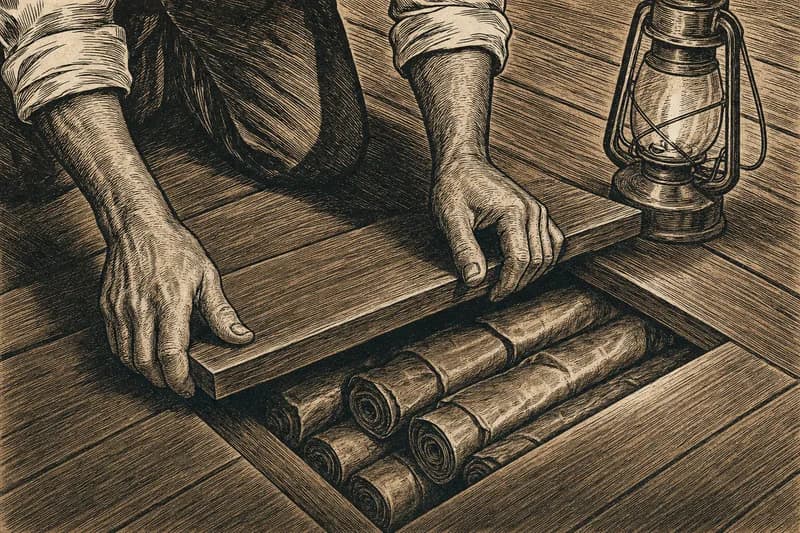
I was careful, which is why I am here to write this and not in a work camp cutting reeds for the scrubber beds. I kept no large stock — a small cache under the third board from the window, moved twice a year, never enough to hang a serious charge on. I never sold to anyone I had not known two years. I never sold to the young, who talk, and who did not want it anyway, having no memory to grieve. I turned away the ones who wanted volume, because a man who wants volume is either an informer or about to become a reason for one. And I got out, in the end, before the trade got me, which is the rarest thing in it, and I got out for the plainest reason: I got old enough to be one of my own customers, and I found I did not want it. Somewhere in the eleven years the water and the fixtures had become, without my consenting to it, simply the way one lived, and the paper I had built my whole hidden life around had become to me what it already was to everyone born after me, which is a thing behind glass in a museum, an object from a world that fouled its own grid without knowing any better and had, on the whole, been right to stop.
I am not sorry in the way the ward would want me sorry. I fouled no line myself and I forced nothing on anyone. But I know what a roll does when it goes down, and I know that some of mine went down, in the forty careless minutes I could not control, and I know a district went dark once for a week, and I have never told myself that these were not connected, because they were connected, and a man who lies to himself about the far end of the line has no business being trusted at the near end of it. That is my confession. It is not much of a defense. I never intended it as one.