Chickens, Goats, or Pigs: Choosing Your First Generation Herd
Choosing between chickens, goats, and pigs as your first biogas feedstock animal, weighing each one's honest daily output against the appetite behind it.
Overview
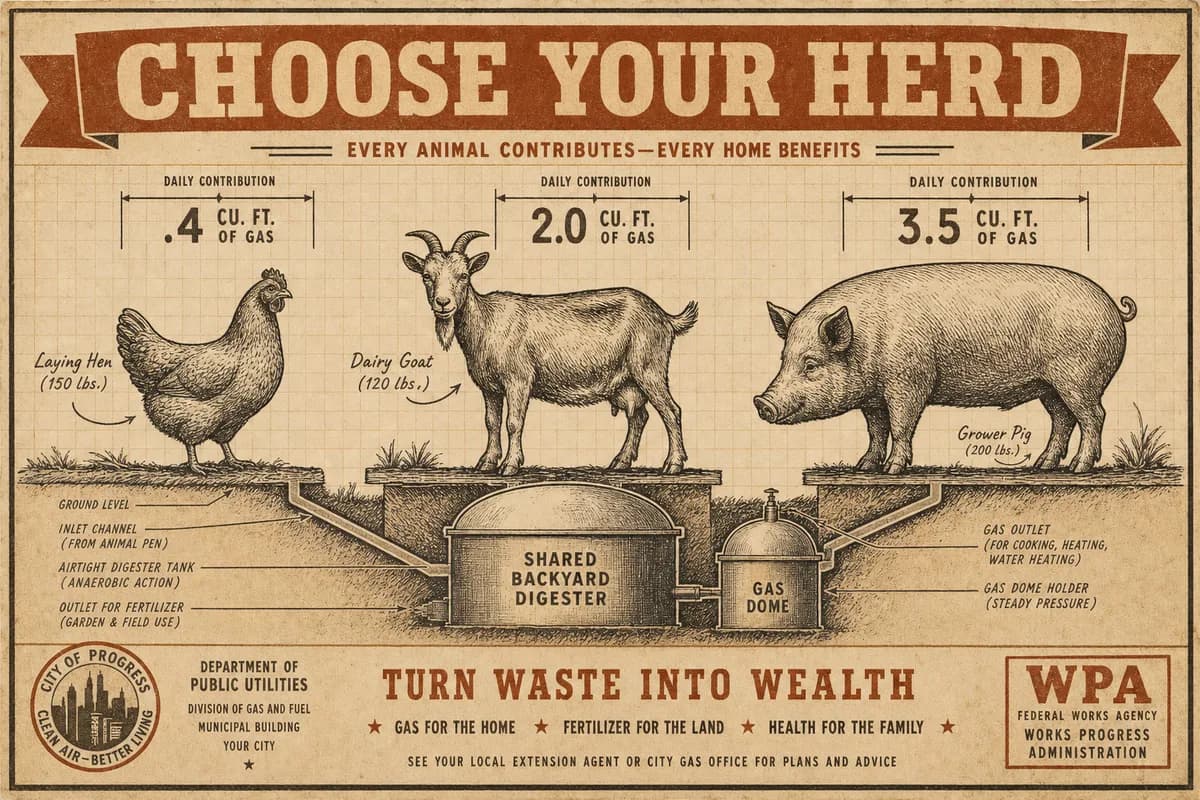
Every homestead digester runs on what its animals produce, so the first real decision in the brown economy is not which digester to build but which animal to keep. This guide weighs the three classic starter herds — chickens, goats, and pigs — as feedstock for a household Dungester 5000. Each makes gas; none makes it for free. The honest comparison is never the gas figure alone but the gas set against the appetite, the mess, and the care behind it. Choose the animal you will still be glad to feed on a cold February morning, and the gas will follow.
What you'll need
- A running or planned household digester — the animals feed it, not the other way around.
- Housing suited to the animal you choose: a coop and run for hens, browse and a stout fence for goats, a sound pen and a wallow for a pig.
- A way to collect the contribution cleanly — deep litter for the coop, a bedded pen you can muck daily, an apron that sluices to the digester.
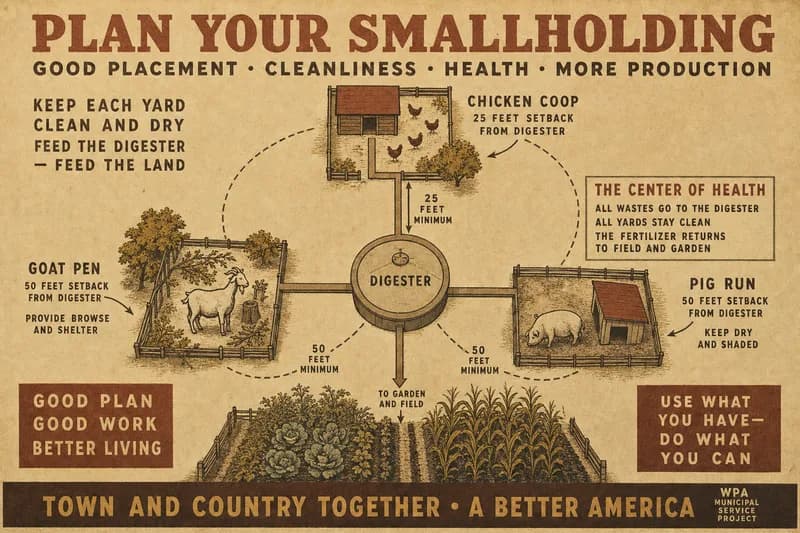
- The setbacks your jurisdiction asks for livestock, which are not the same as the setbacks for the digester; file for both.
- An honest accounting of your own time. The animal that makes the most gas is also the animal that asks the most of you, and the ledger has to close on labor as well as litres.
Steps
- Start with the load, not the animal. Decide what you want the gas to do — a burner, a trickle of power, a winter's supplement — and let the target size the herd. It is easy to keep too much animal for too little need.
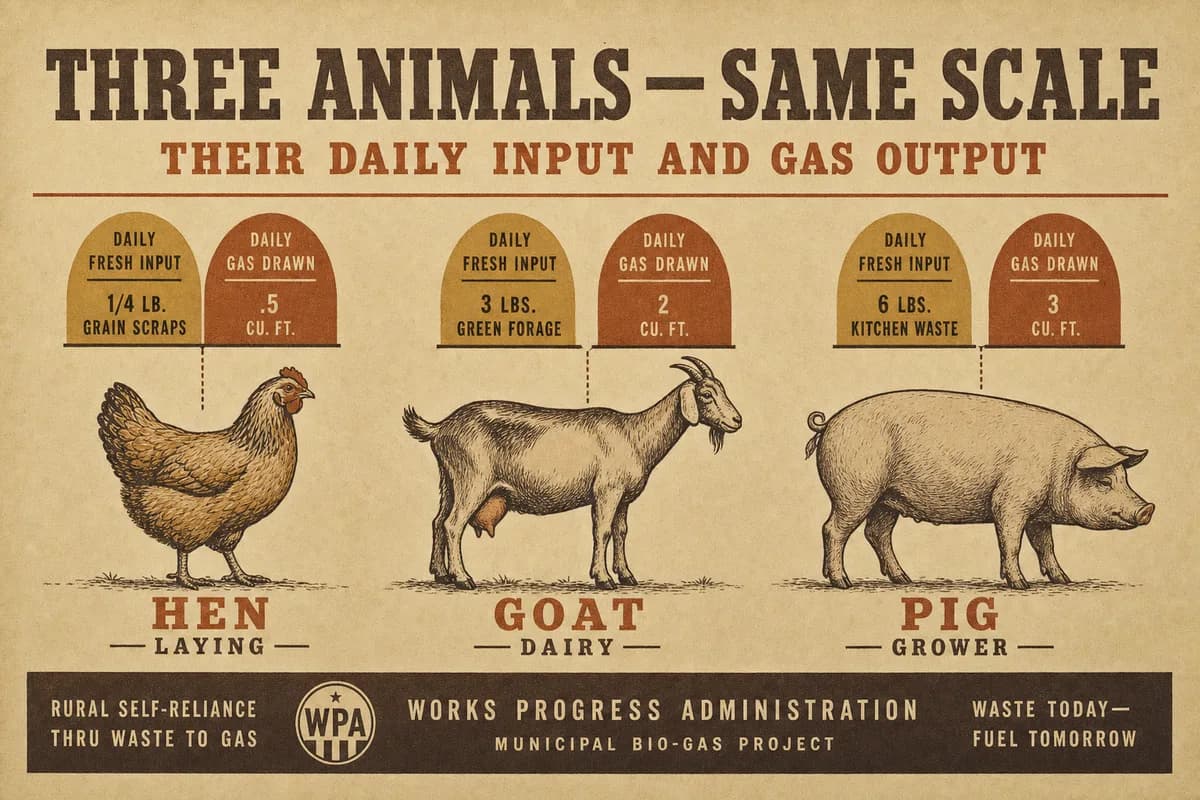
- Weigh output against appetite honestly. A pig makes real gas and eats a real amount to do it; a hen makes little and asks little. Neither is wrong; they are different trades.
- Match the animal to your land and your winter. Goats want browse and fall off in the cold season; pigs want feed year-round; hens carry through the winter at a low, steady level. Choose for the season you have, not the one you like.
- Site the collection close. Put the coop, pen, or run within a short run of the digester so the daily contribution travels a few steps, not a few hundred.
- Begin with fewer animals than you can house. A first-generation herd teaches you the rhythm of feeding, mucking, and reading a digester. Learn it small; scaling is a matter of more animals, not a bigger flame under the first.
Sizing
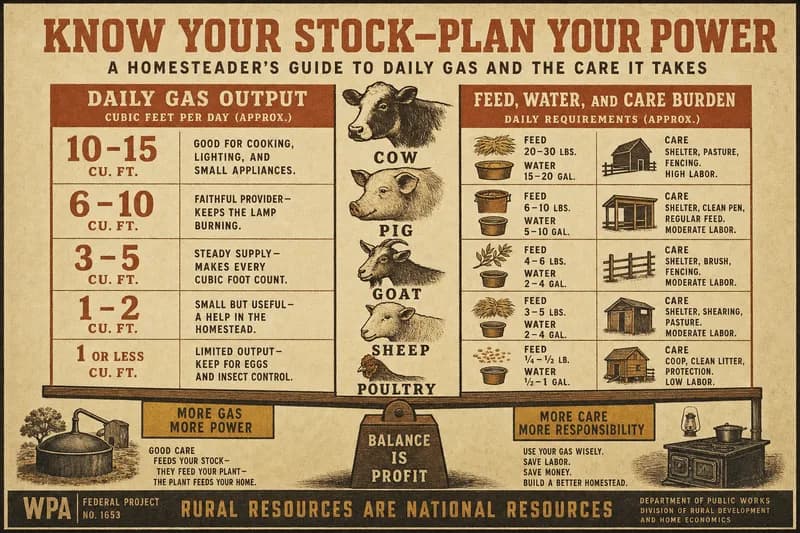
Honest daily figures for a well-established mesophilic digester, biogas at roughly six kilowatt-hours per cubic metre, net electrical stated after a twenty-percent conversion in a small generator. The dairy cow is not a starter animal — it is here only as the yardstick every homesteader eventually measures against.
| Animal | Fresh input/day | Biogas/day | Net electrical/day | Character |
|---|---|---|---|---|
| 4 laying hens (deep litter) | ~0.4 kg | ~30 L | ~0.04 kWh | Tiny, steady, year-round |
| 1 dairy goat (in milk) | ~2 kg | ~100 L | ~0.12 kWh | Strong, but seasonal |
| 1 grower pig | ~5 kg | ~300 L | ~0.35 kWh | Steady, with an appetite to match |
| 1 dairy cow (reference only) | ~30 kg | ~900 L | ~1.1 kWh | The yardstick, not a beginning |
Read the pig and cow rows together: a single grower pig nets roughly a third of what a dairy cow does, on a fraction of the land and feed, which is why the pig is the biggest producer most starter homesteads can actually keep. The hens make the least and ask the least; the goat makes more but gives much of it back in winter. There is no wrong row here — only the row whose appetite you are prepared to answer for.
Maintenance & safety
- Feed the animal before you feed the digester. A hungry or unwell animal is a welfare problem first and a feedstock problem a distant second. The gas is a byproduct of good animal keeping, never the reason for poor keeping.
- Keep the collection clean. Bedding, mud, and grit passed to the digester dilute the charge and settle as sludge. What you feed the drum should be manure, not the whole pen.
- Respect the gas. However the herd is composed, the drum makes biogas, which is explosive in air. Never store it indoors, and never chase a suspected leak with a lit match.
- Mind the winter. A goat that filled the holder in June will not in January. Plan the herd around the season it produces least, or the cold months will surprise you every year.
Expected output
The best first animal is not the one that makes the most gas; it is the one whose appetite and mess you will still cheerfully answer for in February. Hens will keep a modest flame flickering all year for almost no trouble; a goat will do more in the green season and less in the white one; a pig will out-produce both and expect to be fed like it. Match the animal to your land, your winter, and your patience, and the first-generation herd earns its keep.
Start with one kind of animal and one honest target, learn the rhythm, and add the second generation only once the first has taught you what a season really yields. The homesteaders who end up with a calm, productive digester almost never chose the animal that made the most gas on paper. They chose the one they were glad to keep, and let the gas be the reward for keeping it well.