Charging a Tesla on Household Output: A Feasibility Memorandum
Charging one 75 kWh electric vehicle from empty on household digestive output alone, sized from volatile solids and biogas to the kilowatt-hours delivered.
From the series: How Much Poop Would It Take?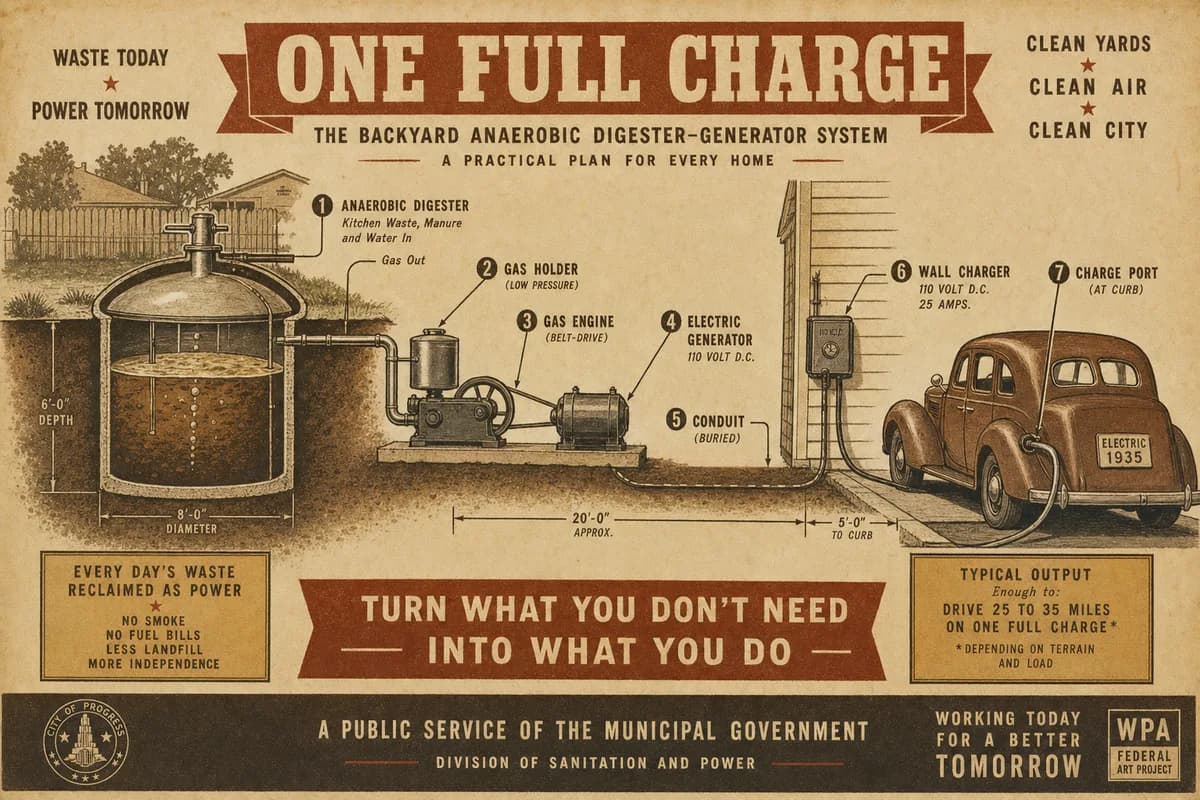
Abstract
This memorandum answers a question the Bureau receives in its correspondence more often than any other: How much poop would it take to charge a Tesla? We convert one household's daily digestive output to electricity by the standard chain — volatile solids to biogas to shaft power to kilowatt-hours — and measure that output against the energy a 75-kilowatt-hour vehicle battery requests when charged from empty to full. We find that a single full charge is supplied by 1,660 contributor-days, and that a household of four, contributing without lapse, assembles one such charge in roughly fourteen months.
Assumptions
- The pack. A usable capacity of 75 kWh. Onboard charging and battery losses run about 90% efficient, so a full charge draws 83 kWh at the meter. Consumption is taken at 0.30 kWh per mile, giving the pack a nominal range of 250 miles.
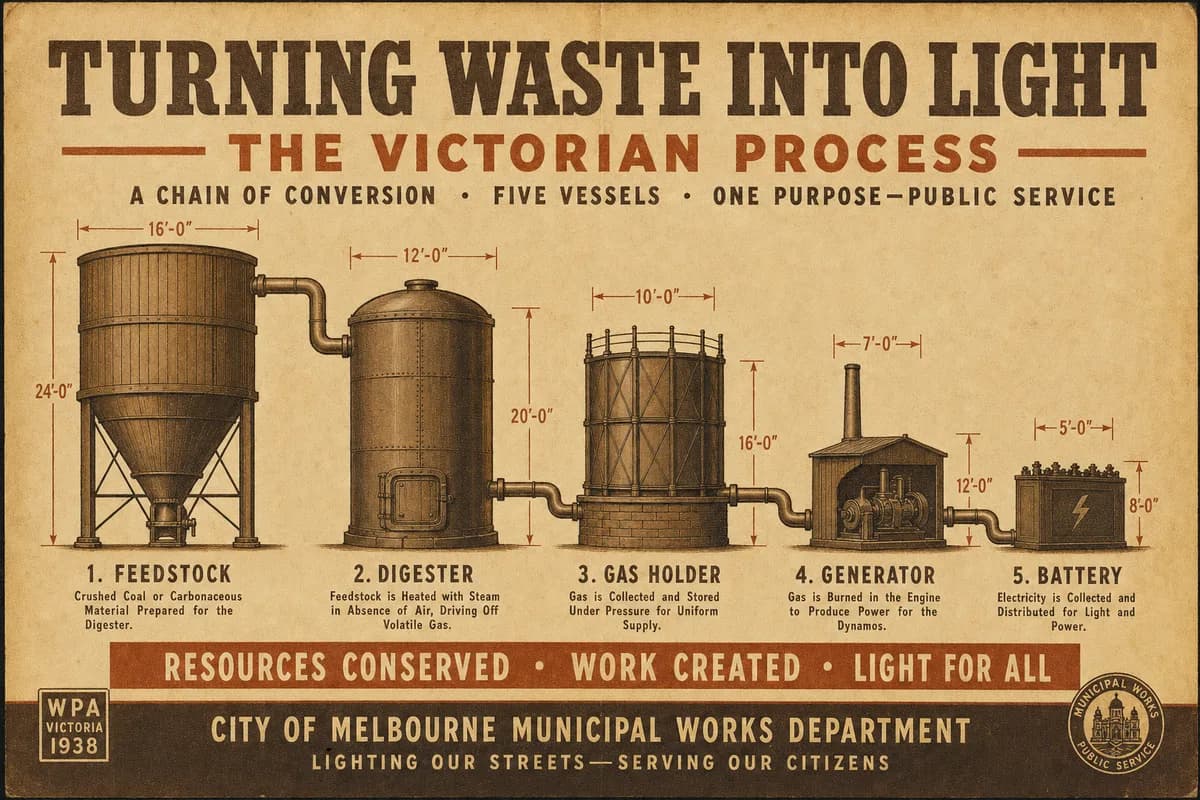
- The standard daily contribution. One contributor yields 0.5 kg of wet material a day, of which roughly one-fifth — 0.1 kg — is the volatile solids a digester can work on. At a conservative 0.3 m³ of biogas per kg, that is 0.03 m³ of gas, or 30 litres. At 6 kWh per m³ thermal and a generator efficiency of 30%, the day's contribution resolves to 0.054 kWh, which we carry through this series as 0.05 kWh of electricity per contributor per day.
- The household. Four contributors, feeding a Dungester 5000, with the charge port placed behind a Fecal Load Balancer as an interruptible circuit.
The Calculation
The arithmetic is a single division. A charge of 83 kWh, drawn from a supply that delivers 0.05 kWh per contributor per day, requires
83 kWh ÷ 0.05 kWh = 1,660 contributor-days.
A household of four supplies four contributor-days per calendar day, so the full charge arrives after 1,660 ÷ 4 = 415 days, or about fourteen months of uninterrupted participation. Stated as range, the household's 0.2 kWh of daily output, once through the charger, restores about 0.6 miles of driving. The vehicle therefore gains roughly six-tenths of a mile of range each day it is connected to the house — a figure that compares unfavorably to the distance from the charge post to the street.
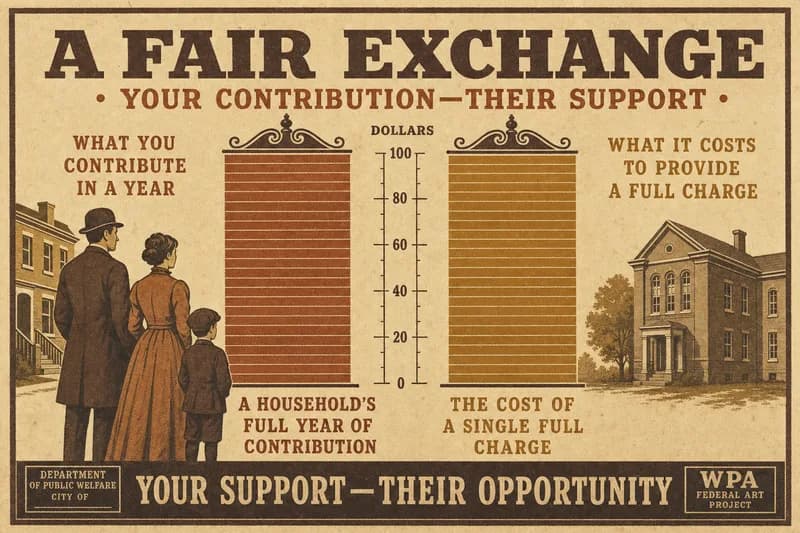
Placed against the calendar, a household's entire year of contribution and a single full charge are very nearly the same quantity of energy. The household spends twelve months assembling what the vehicle spends in a round trip to the regional airport.
Operational Concerns
Rate, not amount. The pack is not the obstacle; the tap is. A public Supercharger delivers up to 250 kW, a rate the household digester approaches only in the sense that both figures are positive. Biogas accumulates at the pace of anaerobic digestion — a trickle of a few watts per contributor — so the vehicle must be charged slowly, overnight, over many nights, and never on the way to anywhere.
Dispatch priority. Because the household's cooking, heating, and lighting have first claim on the gas, the Fecal Load Balancer should hold the charge port last in line, releasing it only against genuine surplus. In practice the charger draws power on the nights the household eats well and none on the nights it does not, which introduces a dietary variable into the commute that most drivers are unprepared to manage.
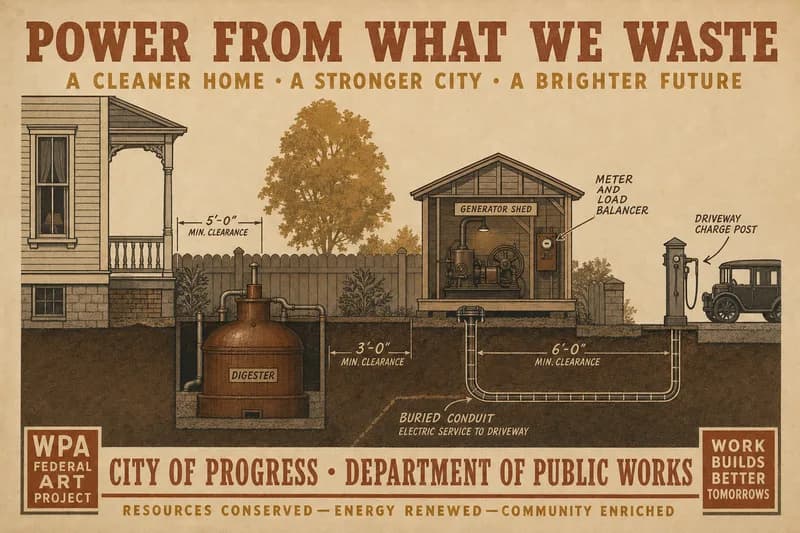
Compliance. The generator and its feedstock holder are accessory appliances under the Residential Digestive Contribution Act; file the interconnect accordingly and route the exhaust through a Fart Scrubber 3000. The vehicle itself the Office of Civic Digestion does not regulate, though it reserves the right to count the charge against the household's standing obligation.
Conclusion
Charging the vehicle on household output is feasible in the strict sense that the energy arrives and the pack fills. It is infeasible in every sense a driver cares about. Fourteen months of undivided household contribution yields one charge; the charge yields one long day's driving; the day's driving yields an empty pack and the beginning of another fourteen months. For households that must drive further than they contribute — which is all of them — the Bureau recommends the public grid for the vehicle and the digester for the water heater, where the trickle is welcome and the destination does not move.