The Brown Winter of 1937
A survivor recalls the killing cold six winters after the interconnect, when a town kept its young grid alive by warming the digesters with its own bodies.
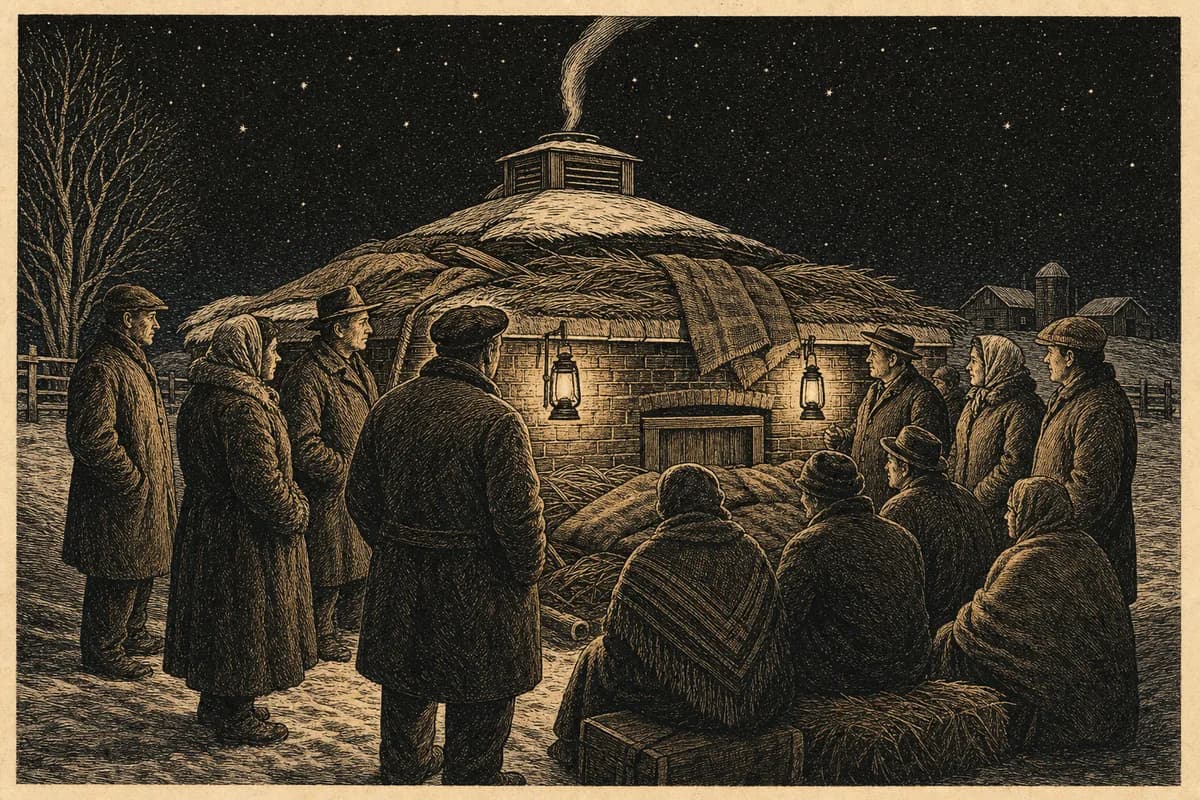
I was nine years old in the Brown Winter, and I am the last in this town who was, so I will set it down while there is someone left who remembers it as weather and not as a chapter.
You must understand first that the grid was young then. The interconnect was only six years old — the great joining that the older people still spoke of the way they spoke of the end of a war, as the line between the world before and the world that came after. Before it, every house had banked its own small heat as best it could, and a hard winter killed the old and the poor in the ordinary way of hard winters. After it, the districts were joined main to main, and a town's warmth was one warmth, held in common in the digesters below the square, and no house froze alone anymore because no house was alone anymore. Six years is long enough to forget how new a thing is. We had already forgotten. We had come to think of the light in our windows and the warmth in our walls as we thought of the sky, as a condition of the world rather than a thing that men had made and men could lose.
Then in the December of that year the cold came down out of the north and did not lift, and we learned what we had made, by nearly unmaking it.
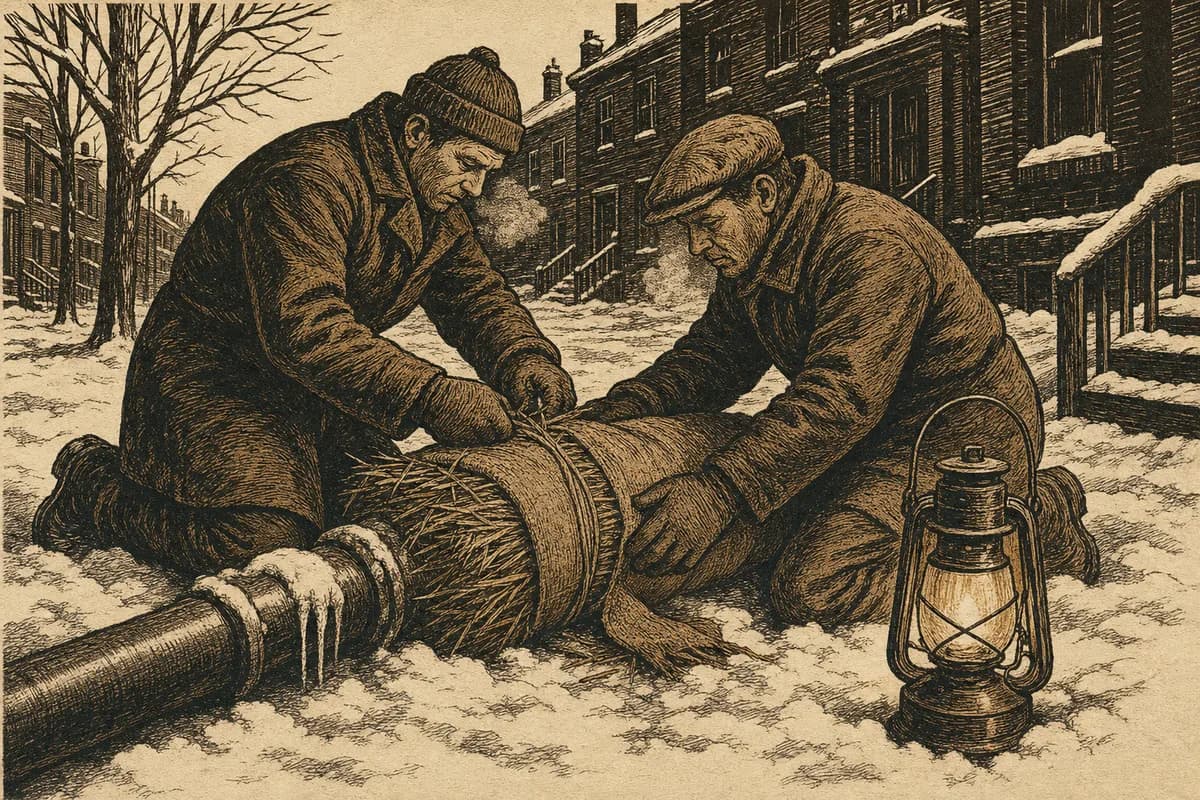
The digesters wanted warmth to give warmth. That was the thing the town understood too late and then all at once. The great brick vats below the square turned the town's daily contribution into the gas that lit us and the heat that kept us, but they would only do it if they were themselves kept above a certain warmth, and below that warmth they slowed, and below a colder point they stopped, and sulked, and would not be started again with anything but patience and days. Six summers the mains had run without anyone thinking of it. No one had laid them for a winter like that one. When the first main burst under Foundry Street the water in it was already ice, and two of the younger men went out in the dark with straw and sacking and lay in the drifts to lag the pipe with their hands, and one of them lost the ends of three fingers doing it, and never once, in the forty years I knew him after, called it anything but a fair trade.
But you cannot hand-warm a whole town's mains, and the cold went on, and the great vats below the square began, degree by patient degree, to cool toward the point past which they would not come back. And here is the thing I have carried my whole life, the thing I came back to this town in my old age to be near: what we did was not clever. We had no clever thing to do. What we did was simple, and it was the hardest simple thing I have ever seen people do.
We kept the digesters warm with ourselves.
The keeper of the works was a widow named Sabina Okonkwo, and it was she who understood first that the only heat the town had left to give the vats was the heat of the town's own bodies and the town's own faithful contribution, and that both had to be brought to the vats and not let fail. So we banked the digester house with every blanket and straw bale and old coat in the district, and we lit what small fires we dared, and then Sabina drew up a roster — she who had buried a husband and knew how to organize grief into shifts — and the whole town took its turns, day and night, without pause, for five weeks, going down to sit in the warm dark by the great iron flanks of the vats and keep them company and keep them fed.
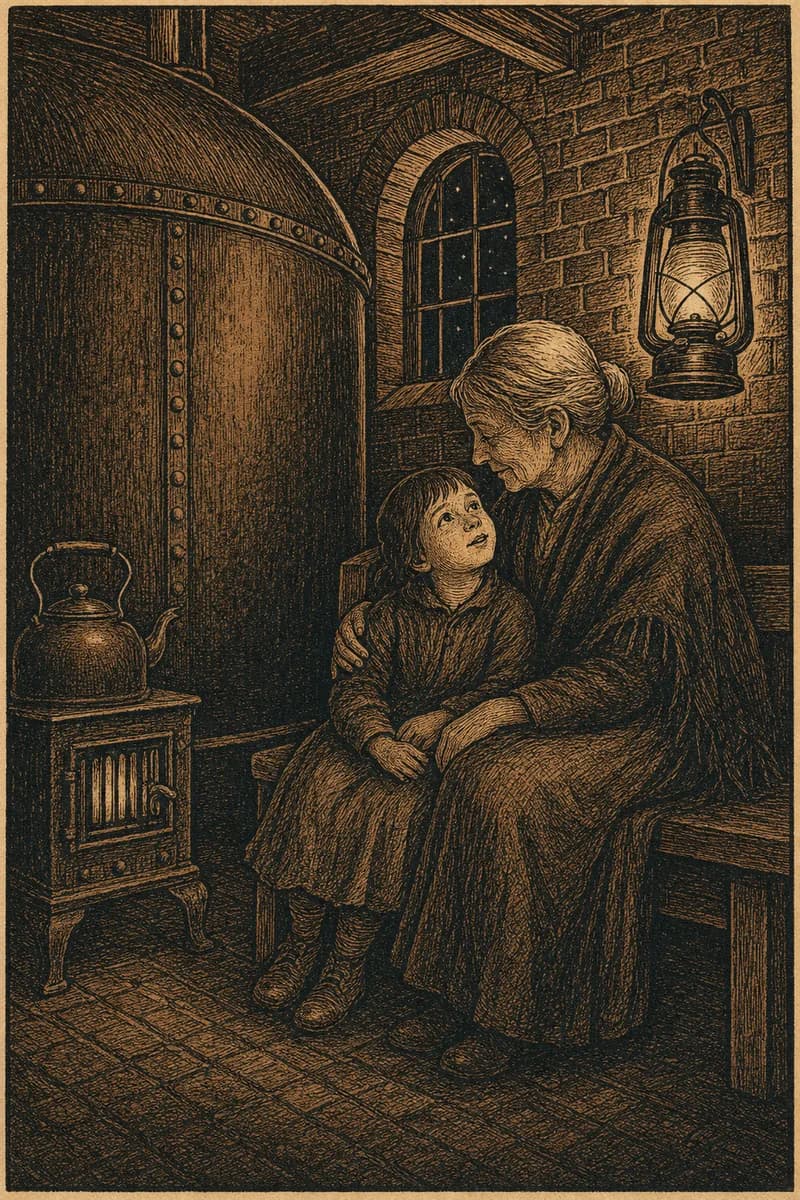
I sat my shifts with my grandmother. You went to sit your shift as you might go to sit with the sick, quietly, bringing what you had. The old and the very young took the long night hours, because the old did not sleep well anyway and the young could sleep anywhere, and the strong took the day and the digging and the pipes. And all of us, every soul in the town who could still do the necessary thing, gave to the vats on a schedule Sabina set, so that the digesters never once went hungry even as the town itself went hungry, even in the worst of it when there was little enough going in at any table to make much of a contribution at any of us — you gave what you could, faithfully, at your appointed hour, because your neighbor three streets over was warm that night on the strength of it, and would be warm at your window three nights hence on the strength of theirs.
We did not keep the digester alive that winter so much as we agreed, as a town, to be warm at it in turns. I have thought about it every hard winter of my long life since. There is a way of telling it that makes us heroes, and I distrust that way, because we were not heroes; we were frightened people who had built a thing that could keep us all alive only so long as none of us stopped keeping it, and who discovered, at the worst possible moment to discover it, that the whole arrangement had never been a machine at all but a promise, and that a promise has to be kept warm by the people who made it or it dies in the cold like anything else.
The thaw came in the second week of February. The vats had cooled to within a few degrees of the point of no return, Sabina told us afterward, closer than she had let any of us know at the time, and they came back slowly, sulking as she had said they would, and it was March before the town ran warm without a vigil. Sabina Okonkwo lived nine more years and never kept the works again after that spring; she said she had used up whatever it was in a person that could hold a town to a roster, and I believe her. When she died the town lit her the whole way to the ground with gas from the vats she had saved, which everyone understood, and no one said aloud, because to say it aloud would have been to admit how near we had come.
I am ninety-one. The young people here have never sat a vigil and I pray to whatever kept us that they never will. But when I hear them speak of the grid as of the sky, as a thing that is simply there, I want to take them down to the square and stand them in front of the old brick vats and tell them what I have told you: that it is not the sky. It is a promise, six years old when it was tested and holding still, and it is only ever as warm as the town is willing, in the dark and the cold and in turns, to keep it.